Everyone says "customer first". Almost nobody means it.
Years ago, I shared a few carbonated drinks with an SVP whose management philosophy fit on a bar napkin: "Be employee obsessed."
I was skeptical to the point of rudeness. So I asked him straight: "with that approach, how do you make sure customers get world-class service?"
He didn't blink. "If you hire top performers, you never have to worry about customer satisfaction. I have never once hired a talented support person who wasn't already customer obsessed. Nobody ends up in this job by accident. It's ingrained, or they'd have picked a role where humans don't call you when their week is on fire."
So the model was simple: hire people who are obsessed with customers, then spend your own energy protecting them. Not managing them. Protecting them. From three specific things: corporate nonsense, burnout, and what he cheerfully called "stupid customers".
Let me unpack all three, because each one had teeth.
Burnout is rarely about volume
His claim: information technology has one of the worst burnout rates in white collar work, and the cause is usually misdiagnosed as "too much work". Sometimes it genuinely is too much work. But more often, he said, people are either doing the wrong things, or doing the right things in a broken flow imposed on them by the company.
The strangest math in enterprise hiring: paying sports-car money for output you then throttle by hand
A while back I sat in a coffee shop with someone from a very large, very admired technology company. Nine-figure revenue per quarter, the kind of place that puts "we hire only the top 1%" in its recruiting deck without irony.
He told me his last quarter honestly. Two weeks of real engineering. Ten weeks of alignment.
His compensation, fully loaded, was roughly the price of a mid-range sports car per year. So the company paid sports-car money and received, in terms of the thing they actually hired him for, a used scooter. Not because he was lazy. Because 80% of his calendar was owned by people whose job was to make sure nobody did anything surprising.
I hear a version of this story from nearly everyone I talk to who works inside the big names. It is consistent enough that it stopped being anecdote and started being physics.
The idiot index of a knowledge worker
There is a useful little instrument from manufacturing: take the cost of a finished part and divide it by the cost of its raw materials. A machined bracket that costs 200 euros but contains 8 euros of aluminum tells you something. Not that aluminum is expensive. That your process is stupid.
The three words that reveal exactly how little we understand the machines we now depend on
The funniest prompt in modern computing is three words long, and it appears in production systems at companies with actual revenue.
"Don't make mistakes."
Sometimes with emphasis. DO NOT MAKE MISTAKES. Sometimes with a threat attached, as if the model has a family. Sometimes with a promise of a tip, which is my favorite genre of magical thinking - bribing a probability distribution.
Sit with the assumption for a second. Telling a system not to make mistakes implies the system was previously choosing to make them. Which means one of three things must be true: it was trained to err, it was instructed to err (perhaps by a vendor who bills per token - a delightfully paranoid theory that dies the moment you notice open-weight models behave identically), or errors are an opt-in feature that ships enabled by default.
None of it survives ten seconds of contact with how the thing actually works. A language model does not have a laziness dial. It has no intent to be sloppy, because it has no intent at all. It produces the statistically plausible continuation of your text. "Don't make mistakes" is not an instruction. It is a mood. It shifts the output slightly toward the register of text that appears near careful, hedged, authoritative-sounding language in the training data - which is why the response often sounds more confident while being exactly as wrong. You did not reduce the error rate. You upgraded the packaging.
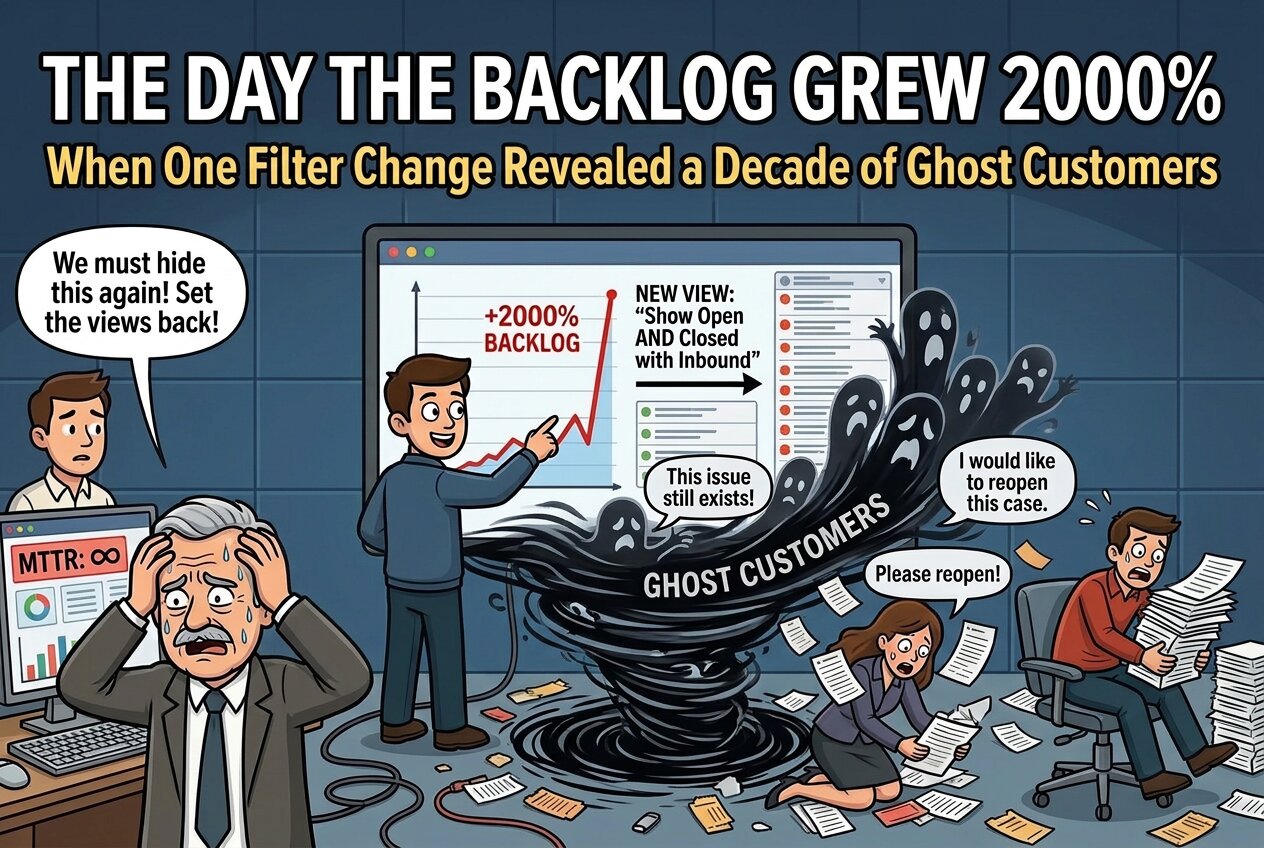
One saved filter hid a decade of ghost customers - and my reward for finding them was being asked to hide them again
Years ago, at a very large company with a very mature support organization, I picked up a side project: reduce our Mean Time To Resolution (MTTR - the average time from ticket opened to ticket solved). Standard stuff. Analyze the tooling, tighten the workflow, present slides, collect polite applause.
Instead I found a black hole.
The workflow was textbook. Customer opens a ticket, engineer resolves it, engineer closes it. Every engineer used the same saved filter - documented in the onboarding wiki, inherited by every new hire since roughly the invention of the smartphone: "Show my open tickets."
While rebuilding our views, I changed one line. My filter now read: "Show my open tickets AND closed tickets with an inbound customer message."
Hundreds of tickets appeared out of nowhere.
Most were harmless. "Thank you again for your support!" Lovely people, talking politely into a void. But scattered between the thank-yous: "This issue still exists, please help.""I would like to reopen this case.""Is anyone there?"
Hundreds of customers, across years, who came back after closure and received the corporate equivalent of a dial tone.
Why two equally talented people end up in completely different orbits - and what to do if you drew the short straw
There's a variable that matters more than your GPA, your interview skills, and your LinkedIn headline combined.
You can't study for it. You can't network around it. You can't optimize it with a better resume font.
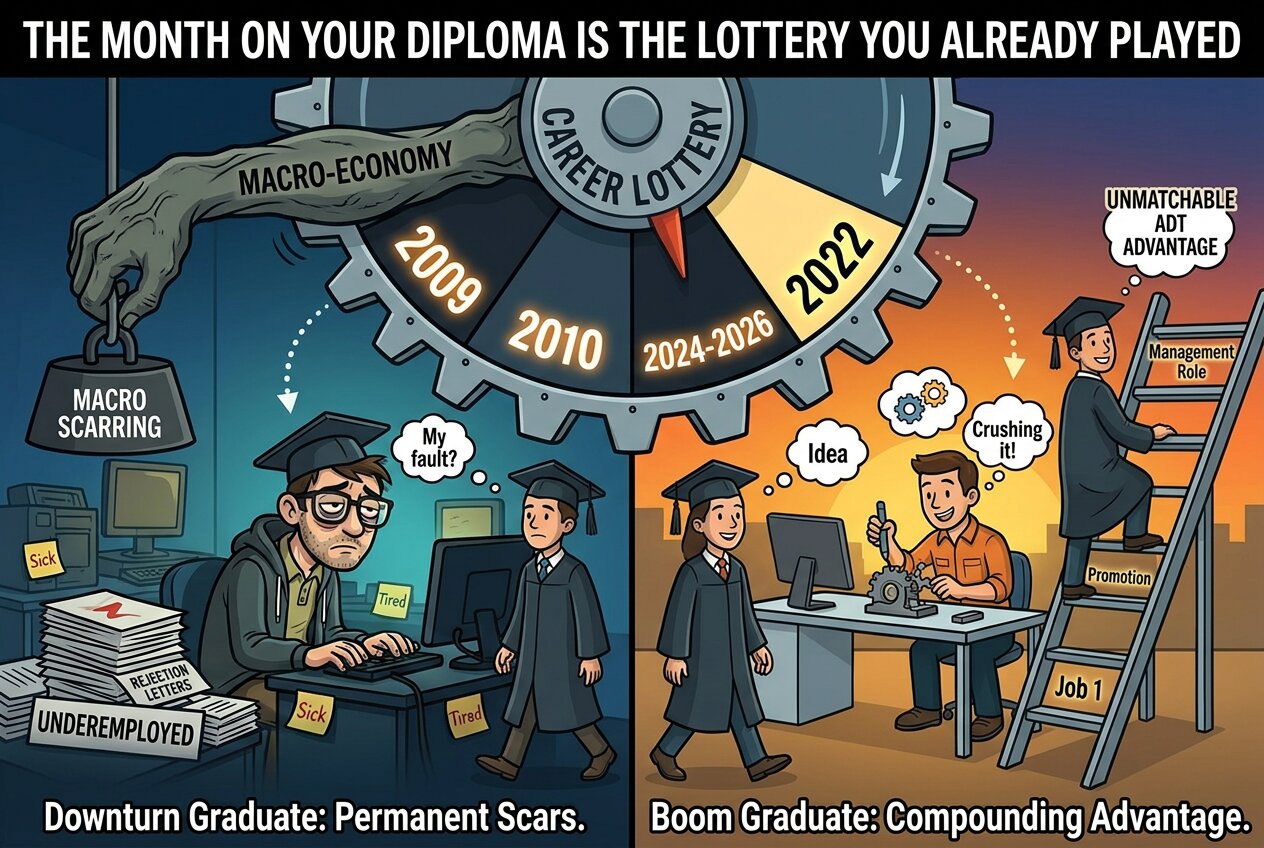
It's the month printed on your diploma.
The 2009 graduating class walked into the worst job market since the Great Depression. The jobseeker-to-opening ratio hit 8.5 to 1. Their average first-year wage? About $28,500. Fast forward to 2022 - graduates stepped into the tightest labor market on record, fewer jobseekers than openings, and landed average starting wages of $37,800. That's a 32% difference for doing the exact same degree, at the exact same school, with the exact same curriculum.
Same inputs. Wildly different outputs.
And here's where it gets darker: those recession graduates didn't just start lower. Research from the NBER shows that cohorts entering during downturns had lower employment rates throughout their entire careers. Not just for a year or two. Permanently. The wage gap? Studies document lasting losses for seven to fifteen years. Some effects dissipated after a decade. Some never did.
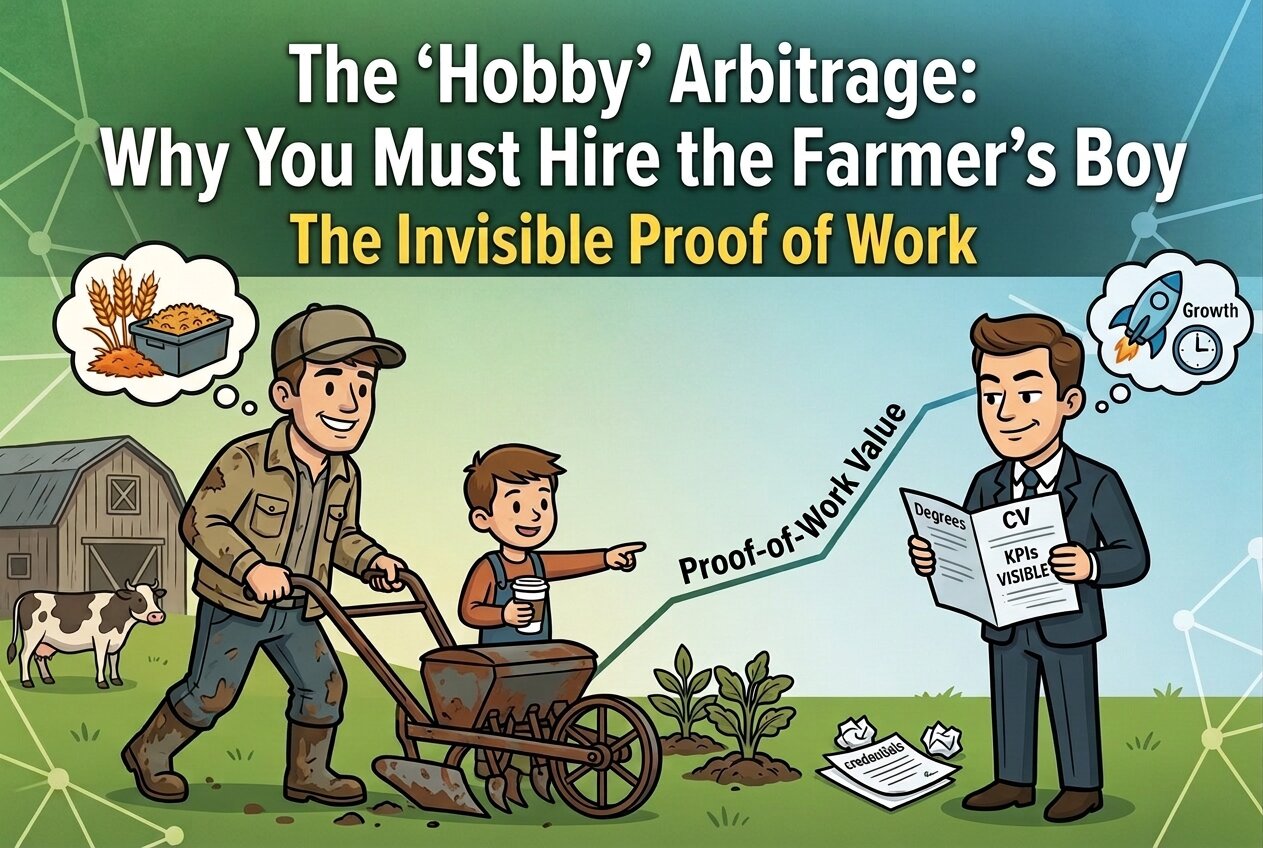
The best predictor of work ethic isn't on the CV. It's in the barn.
Engineering school, a lecture hall with bad acoustics, a course on people management and apprenticeship that most of us treated as a nap opportunity. One sentence from that semester survived everything else I learned that year:
"Always hire the farmer's boy."
The professor didn't explain it as a joke. He meant it operationally.
The setup
You're a company. You post an apprenticeship. You get a stack of applications ranging from "barely finished school" to "has a degree and, apparently, questionable life choices." During the dot-com boom this got absurd - big firms hiring university graduates as apprentices, because the applicant flow was that distorted.
So you sit there with two folders.
Folder A: three years of college, decent grades, a personal statement written in the dialect of LinkedIn. Ambitious. Articulate. Knows the vocabulary of professionalism.
Folder B: high school, that's it. But the address is out of town. Family runs a farm, or a bakery, or a two-truck plumbing operation. Started helping at an age that would make a labor inspector twitch.
The professor's point: Folder B is usually the better trade. Not because of virtue. Because of training.
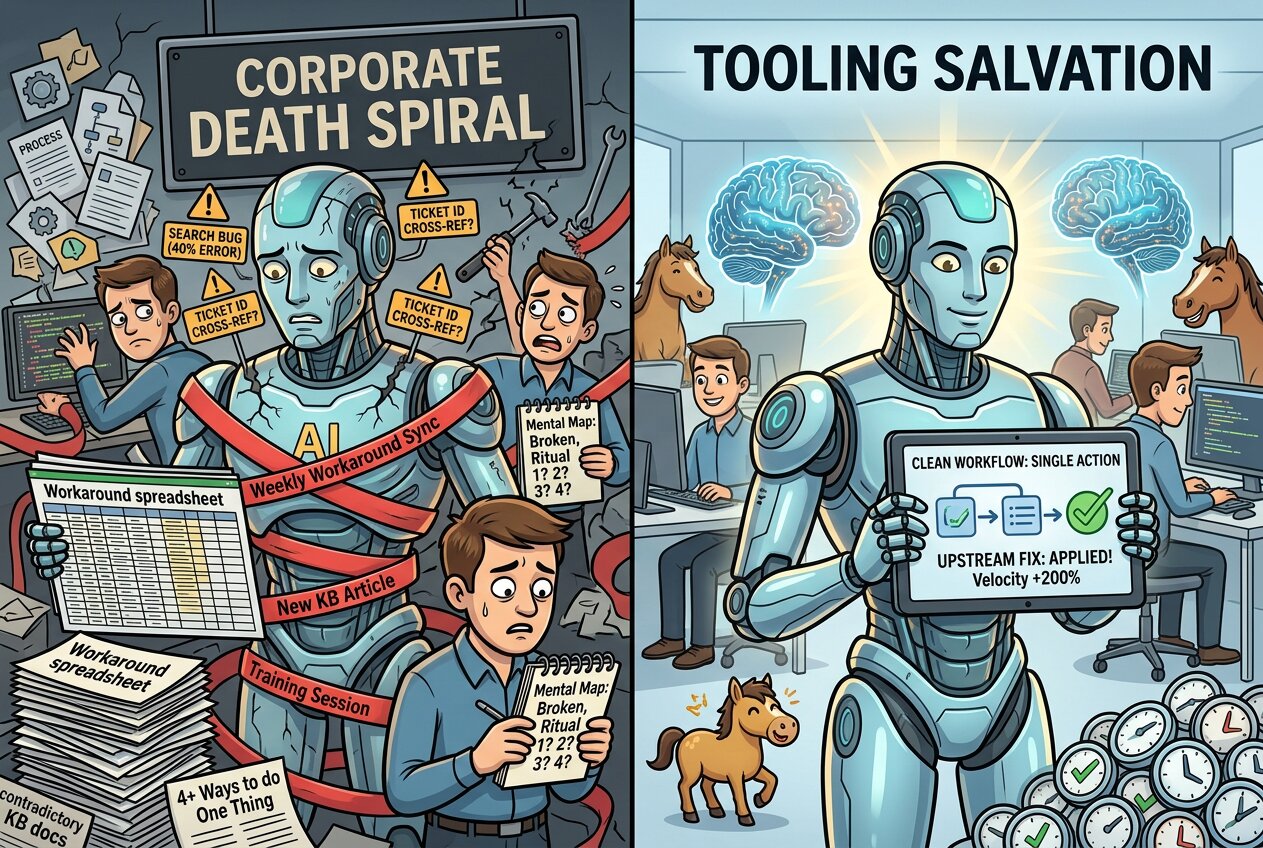
There's one unmistakable smell that tells you a company has quietly entered its death spiral. It isn't mass layoffs or missed earnings. It's the moment management looks at a genuinely broken tool, UI, script, or workflow and decides the easiest fix is... another process.
An email goes out. A new KB article appears. Someone records a TOI video. A fresh Slack channel is born. The wiki gets another page that nobody will read after next week. And just like that, the organization has chosen to compensate for bad tooling with human friction.
I watched this exact pattern play out at a mid-sized software company that, on paper, still looked healthy.
The internal escalation tool had a nasty bug in its search function. Simple queries returned incomplete results about 40 % of the time. It had been that way for months. Instead of fixing the underlying indexing issue (which the devs swore would take "only a couple of sprints"), leadership sent the classic memo: "Please use this new workaround when searching for escalations." The workaround involved three extra steps, copying ticket IDs into a separate spreadsheet, cross-referencing with another system, and then posting in a dedicated Slack channel so someone else could verify you hadn't missed anything.
Why "the teacher will notice" is not a talent strategy
The most important talent scout in the history of physics was a random customer with spare tickets.
London, 1812. A blacksmith's son named Michael Faraday is apprenticed to a bookbinder. No formal education worth mentioning. But he reads what he binds, and one day a customer hands him tickets to Humphry Davy's lectures at the Royal Institution. Faraday goes, takes obsessive notes, binds them into a book - of course he does - and sends them to Davy. Davy, who has just injured his eyes in a lab explosion and needs an assistant, hires him.
The result: electromagnetic induction, the electric motor, the generator. The device you are reading this on traces back to a stranger's spare tickets.
That was the net. One man's generosity. And here is the uncomfortable part: two centuries later, the net is still mostly luck. We just added paperwork.
In most countries, the entire identification infrastructure for exceptional young minds is this: a teacher notices. One adult, 25 to 30 kids, measured on class averages and standardized test results, with exactly zero KPIs called "outliers surfaced." A system does what it is paid to do. This one is paid to move the middle of the curve. The edges are rounding errors. Goodhart's law with a school bell, if you want the technical term.
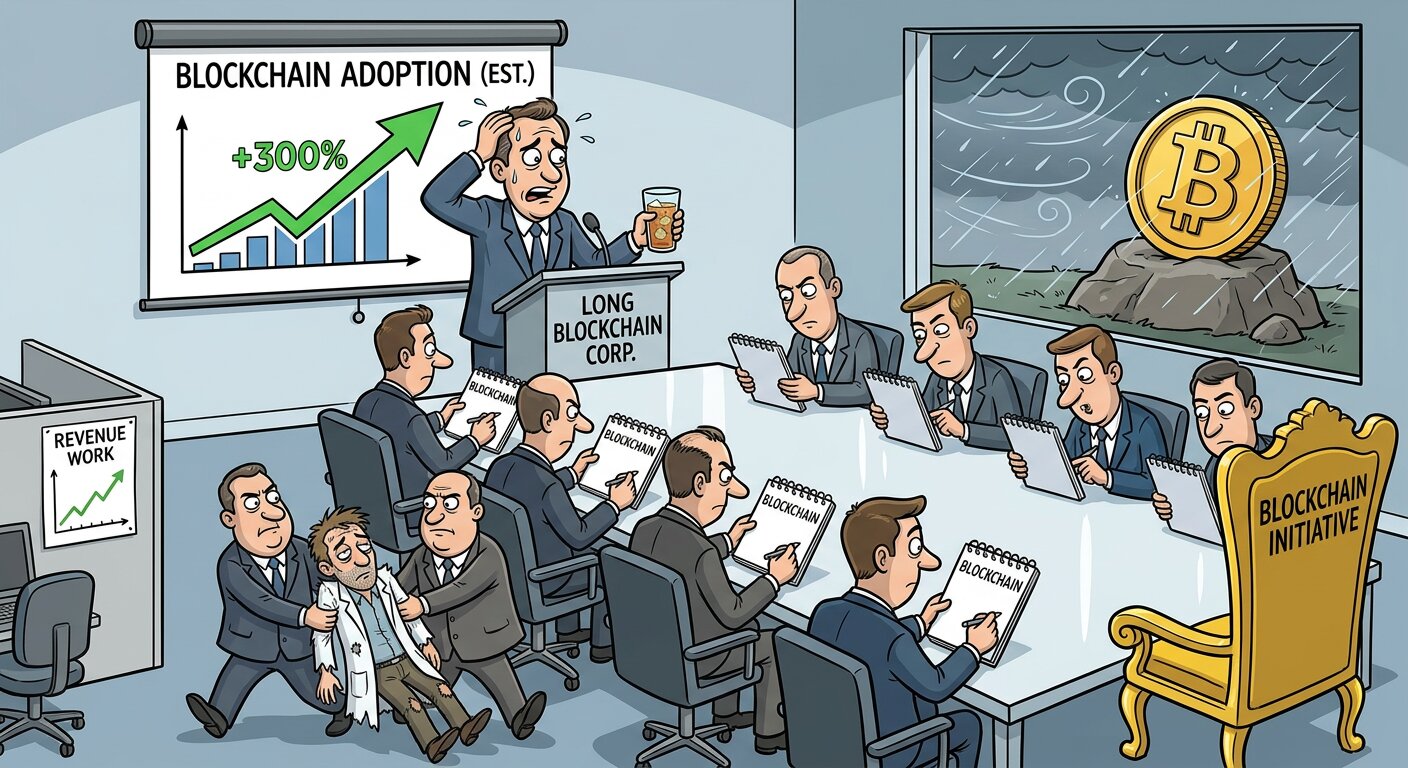
Some years back, a company that sold iced tea renamed itself "Long Blockchain Corp." The stock jumped almost 300% in a single day. They had no blockchain. They had no blockchain engineers. They had, to be fair, very drinkable iced tea. The company was later delisted, the SEC revoked its registration, and the whole episode ended with insider trading charges around the announcement.
Read that again: the announcement moved the price 300%. Not a product. Not a prototype. A word.
That number shouldn't exist. But it does, and it explains the entire era better than any whitepaper ever did.
The meeting I still think about
Mid-hype, a client asked me to evaluate putting their support knowledge base "on the blockchain." I asked my standard opening question, the one that has ended more projects than any budget cut: which problem does this solve that a database with an audit log doesn't?
Long silence. Then, honestly, to their credit: "Our biggest competitor announced a blockchain initiative last quarter."
There it is. The whole mechanism, in one sentence.
Nobody in that room wanted blockchain. Nobody had derived it from a problem, worked backwards from a customer pain, or hit a wall that only a distributed ledger could break through. They wanted it because someone else visibly wanted it. The desire was borrowed. The entire enterprise blockchain wave was one giant chain of companies watching each other's press releases and concluding "they must know something we don't" - while the other side of the chain was thinking the exact same thing about them.
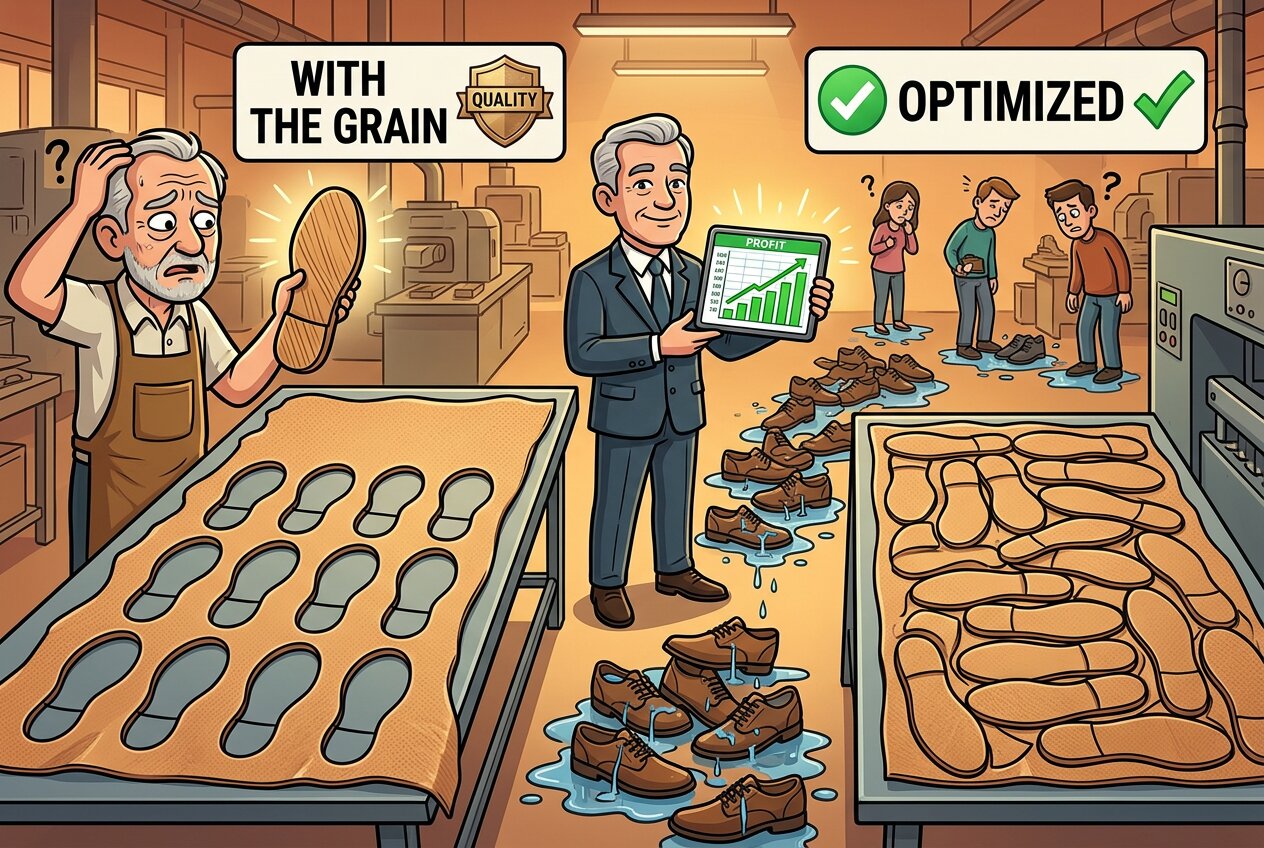
Many moons ago, back when I was an apprentice, a large shoe manufacturer walked into our software shop with a beautifully simple request: make our sole production more efficient.
Their process at the time: punch shoe soles out of the raw material in neat, ordered rows. Like cookies. All facing the same direction, with generous gaps in between. The gaps became scrap, the scrap became cost, and the cost became our project. The ask: write software that arranges the sole shapes in a randomized, compressed, rotated layout - Tetris for footwear - so almost nothing goes to waste.
Technically? A fun little optimization problem. A junior could have shipped it in a week.
But our senior developer did something that took twenty seconds and changed the entire meaning of the project. He picked up a piece of the raw material, squinted at it, and asked:
"Excuse me - I know nothing about shoemaking. But the fibers in this material seem to run in one direction. If we punch soles out at random angles, against the grain... could that hurt the quality of the shoe?"
The customer, without a millisecond of hesitation: "Absolutely. Every sole cut against the fiber flow will be subpar. Those shoes will most likely start leaking early."
 TrenchOps 🐎