Everyone says "customer first". Almost nobody means it.
Years ago, I shared a few carbonated drinks with an SVP whose management philosophy fit on a bar napkin: "Be employee obsessed."
I was skeptical to the point of rudeness. So I asked him straight: "with that approach, how do you make sure customers get world-class service?"
He didn't blink. "If you hire top performers, you never have to worry about customer satisfaction. I have never once hired a talented support person who wasn't already customer obsessed. Nobody ends up in this job by accident. It's ingrained, or they'd have picked a role where humans don't call you when their week is on fire."
So the model was simple: hire people who are obsessed with customers, then spend your own energy protecting them. Not managing them. Protecting them. From three specific things: corporate nonsense, burnout, and what he cheerfully called "stupid customers".
Let me unpack all three, because each one had teeth.
Burnout is rarely about volume
His claim: information technology has one of the worst burnout rates in white collar work, and the cause is usually misdiagnosed as "too much work". Sometimes it genuinely is too much work. But more often, he said, people are either doing the wrong things, or doing the right things in a broken flow imposed on them by the company.
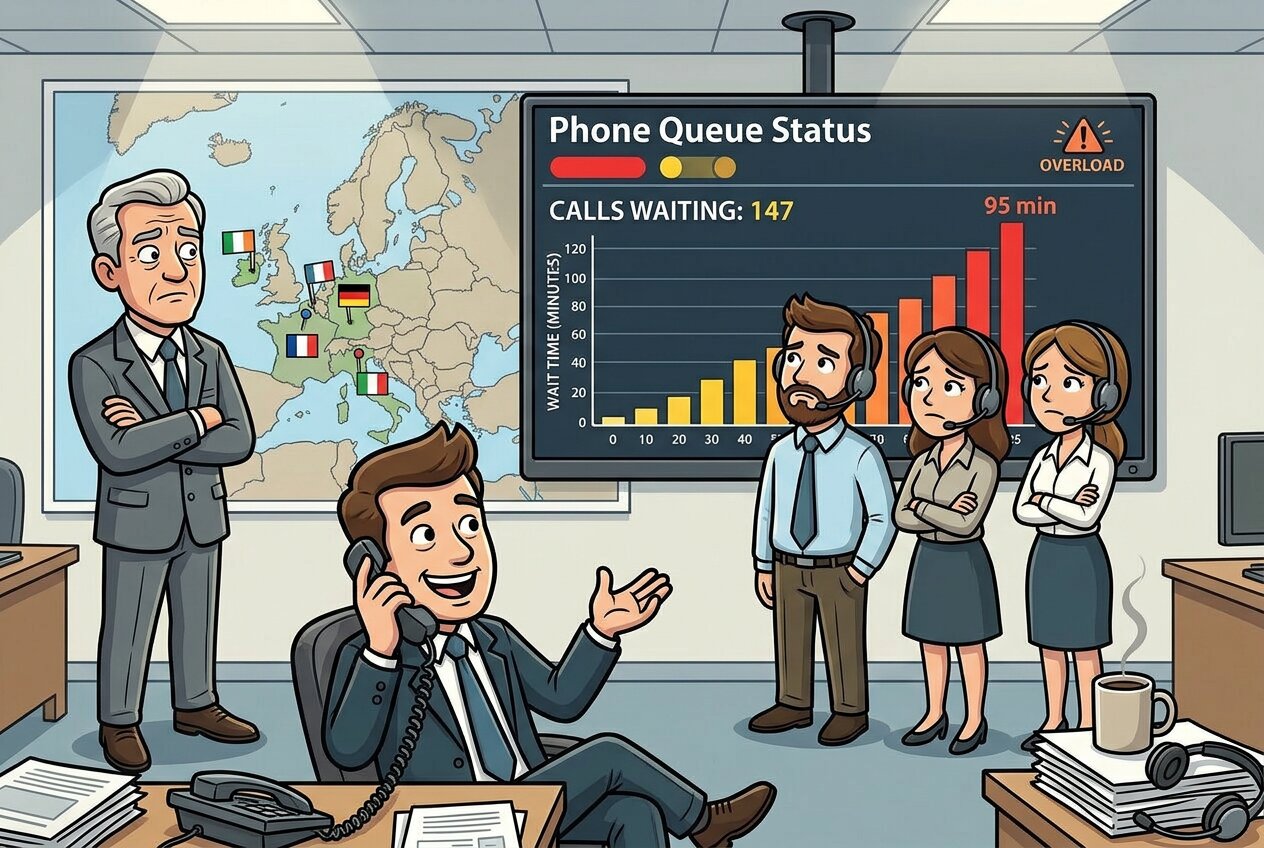
What happens when a company discovers that other countries are not just America with worse coffee
Years ago I moved from Germany to Ireland for work. My actual plan had been Sweden - some call it Germany without the historical baggage - but the offer came from Ireland, which is also green, also rainy, and considerably more relaxed about deadlines. Fine. Adventure accepted.
What I got was a masterclass in something no onboarding deck ever covers: how much money a company will burn to avoid learning that other cultures exist.
Exhibit A: the man who discovered Italy
A colleague came back from his first holiday on the European mainland genuinely shaken. Not by the food, not by the driving (the Irish drive on the wrong side like the British). By the fact that Italians, in Italy, mostly speak Italian.
He had assumed English was the continental default. Second language, worst case. The idea that a bakery in Naples might not have a fluent English speaker on staff had never crossed his mind. I like to think he still managed to relax. Eventually. Somewhere around day four, probably with the help of the wine, which needs no translation.
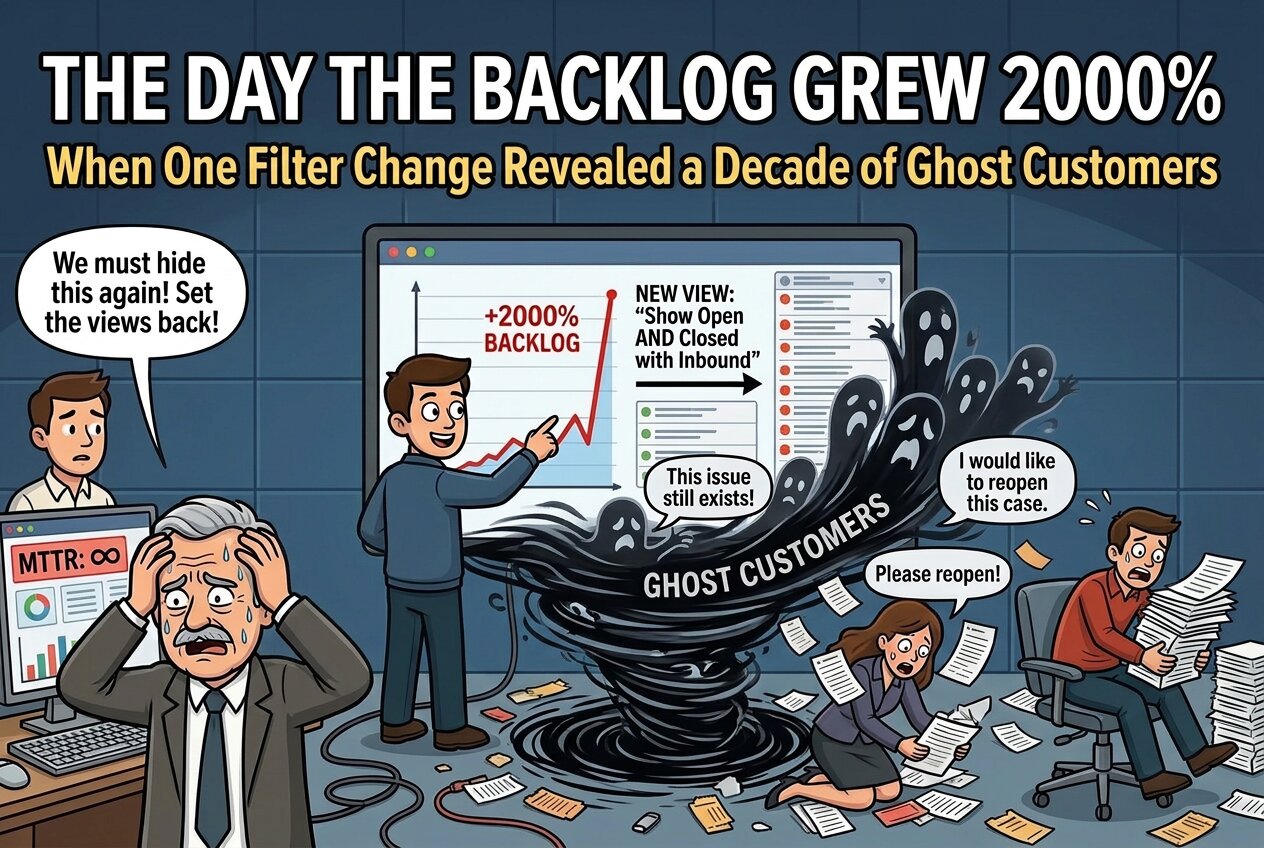
One saved filter hid a decade of ghost customers - and my reward for finding them was being asked to hide them again
Years ago, at a very large company with a very mature support organization, I picked up a side project: reduce our Mean Time To Resolution (MTTR - the average time from ticket opened to ticket solved). Standard stuff. Analyze the tooling, tighten the workflow, present slides, collect polite applause.
Instead I found a black hole.
The workflow was textbook. Customer opens a ticket, engineer resolves it, engineer closes it. Every engineer used the same saved filter - documented in the onboarding wiki, inherited by every new hire since roughly the invention of the smartphone: "Show my open tickets."
While rebuilding our views, I changed one line. My filter now read: "Show my open tickets AND closed tickets with an inbound customer message."
Hundreds of tickets appeared out of nowhere.
Most were harmless. "Thank you again for your support!" Lovely people, talking politely into a void. But scattered between the thank-yous: "This issue still exists, please help.""I would like to reopen this case.""Is anyone there?"
Hundreds of customers, across years, who came back after closure and received the corporate equivalent of a dial tone.
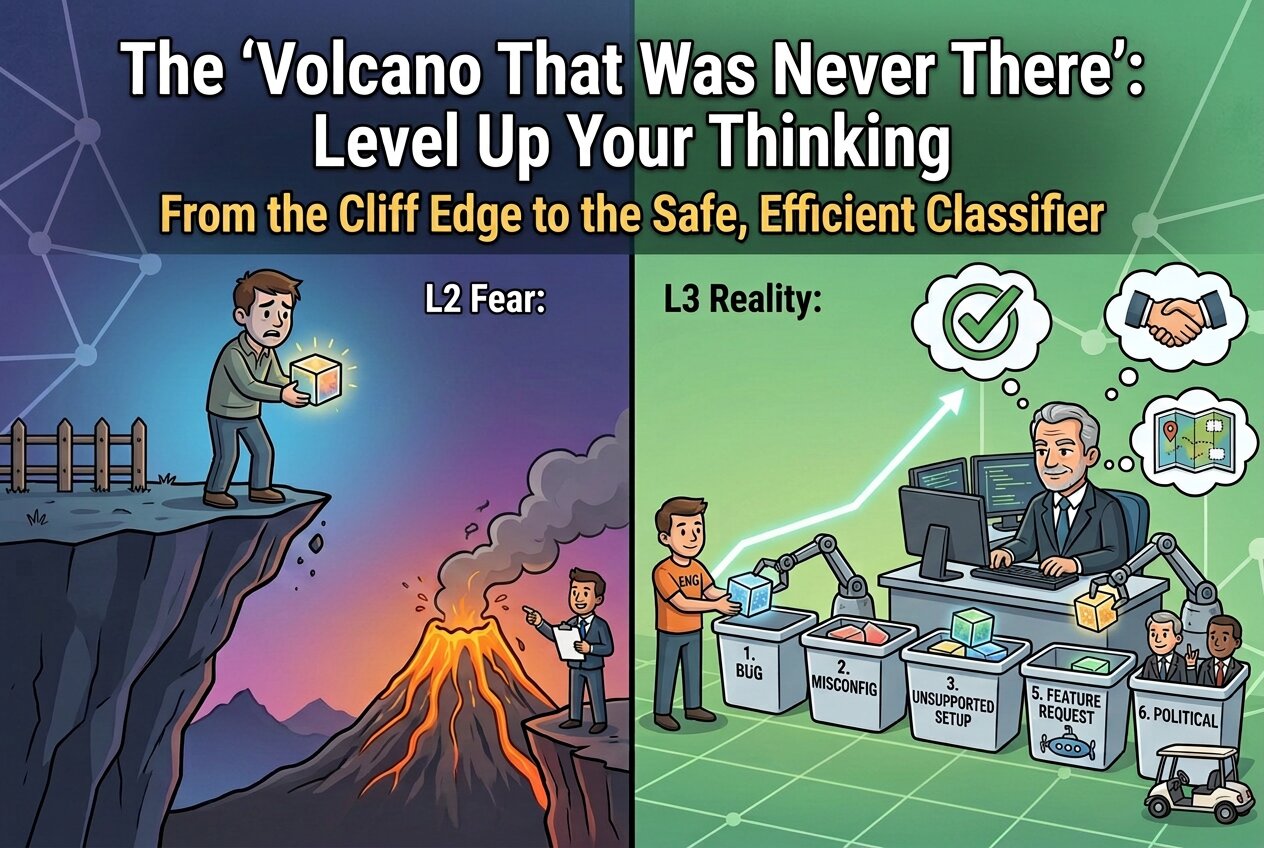
Years ago I was very comfortable in L2. Good numbers, good reputation, the kind of comfort where you know which log file lies to you and which one just gets confused. And I wanted L3. Badly.
There was exactly one problem with L3 at that company: it was the end of the pole. Nothing behind it. No L3.5, no "Advanced Advanced Support", no polite conveyor belt to somebody smarter in a different time zone. There was an L4, but L4 did support ops and red escalations - process people with fire extinguishers, not case work.
So the promotion looked less like a career step and more like a career cliff. Because L2 has a wonderful, unspoken superpower: the fence. Every truly horrible case - the intermittent one, the one that only happens on Tuesdays in one data center, the one where the customer's environment violates three laws of physics - can be documented, packaged neatly, and lofted over the fence. Not out of laziness. That is what the tier model is for. But it does mean somebody else eventually opens that gift.
At L3, I would be somebody else.
I spent weeks running the movie in my head. Me, typing "unfortunately, there is no solution" into a ticket. The customer reading it. The DSat (dissatisfied customer) survey arriving with a score that looks like a rounding error. Then management, holding a clipboard, gently guiding me toward an active volcano while thanking me for my service.
The fastest way to make yourself worth exactly zero
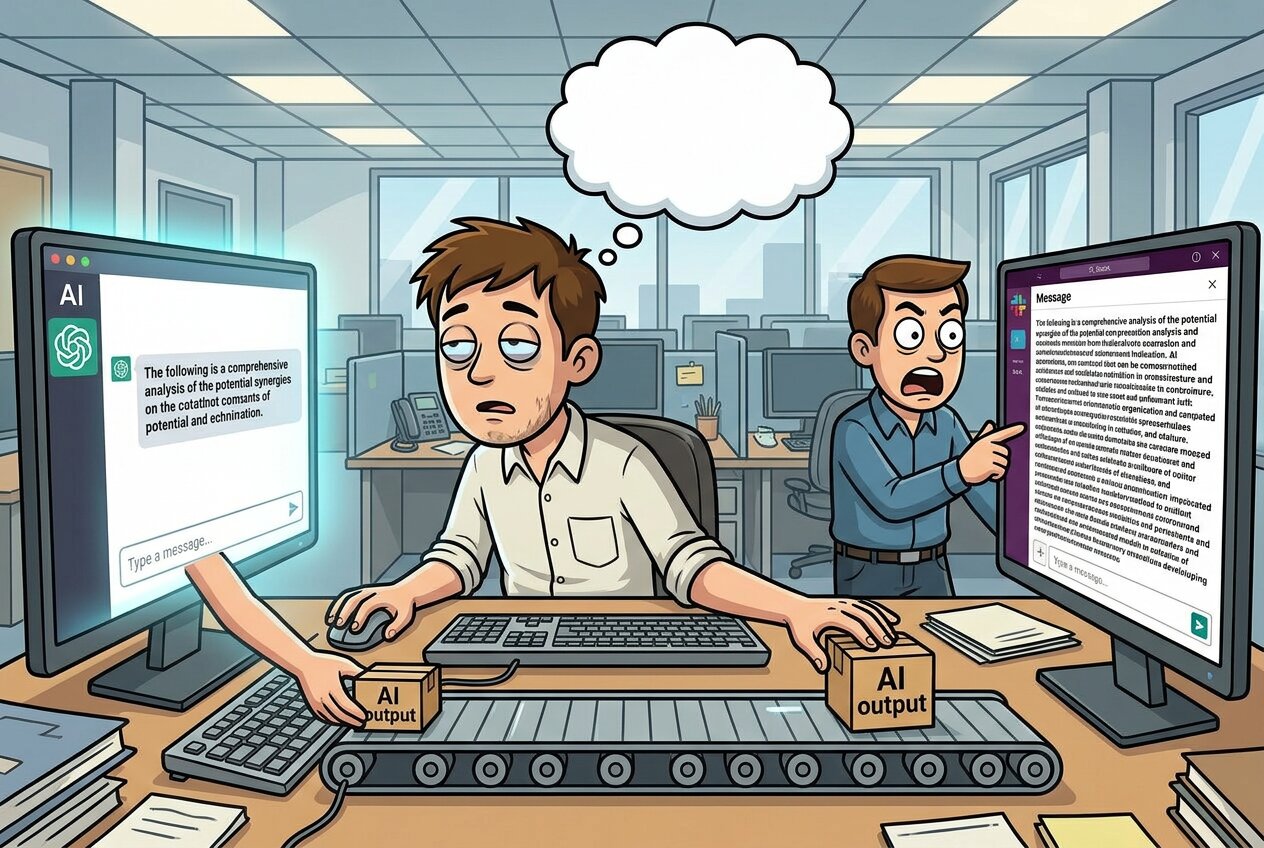
There is a new job title nobody applied for: meat proxy. A person who forwards AI-generated text, code, or output without reading, understanding, or validating it. A relay. A biological USB cable between a language model and a recipient who has the same model open in another tab.
I first noticed one in a ticket queue. A customer escalation, priority high, angry-but-still-polite tone, the kind you can fix in twenty minutes if you actually read the logs. The response that went out was 900 words of immaculate structure. Bullet points. A summary. A "next steps" section. Three suggestions, all technically plausible, none of them relevant, because the product had not behaved that way since two major versions earlier.
The customer replied in one line: "Did a human read this?"
That question is the whole problem. Once it gets asked, you never fully recover. Because the customer's next thought is the dangerous one: if a machine is answering me, why am I paying for you?
The economics are brutal and simple
Value comes from what is scarce. Text is not scarce anymore. Text is now a utility, like tap water, and roughly as expensive.
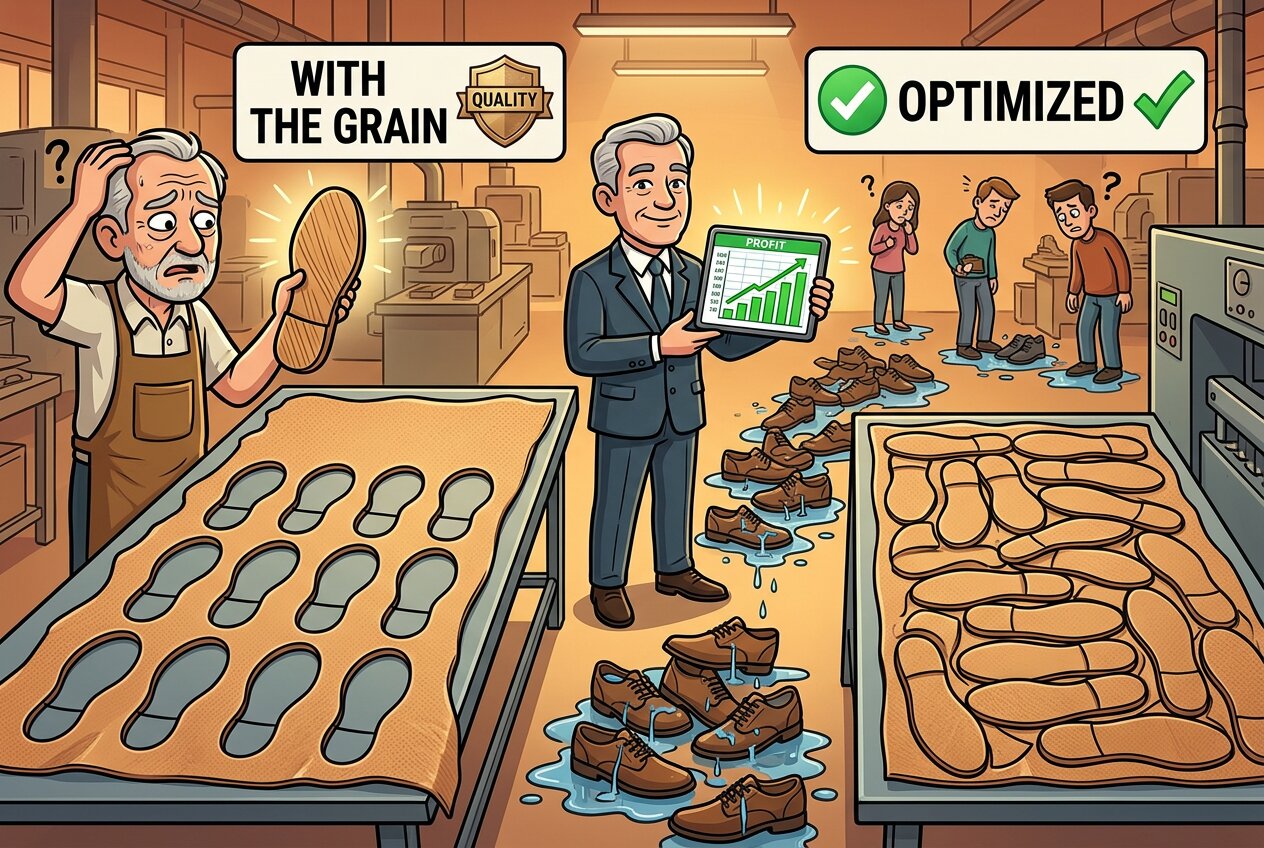
Many moons ago, back when I was an apprentice, a large shoe manufacturer walked into our software shop with a beautifully simple request: make our sole production more efficient.
Their process at the time: punch shoe soles out of the raw material in neat, ordered rows. Like cookies. All facing the same direction, with generous gaps in between. The gaps became scrap, the scrap became cost, and the cost became our project. The ask: write software that arranges the sole shapes in a randomized, compressed, rotated layout - Tetris for footwear - so almost nothing goes to waste.
Technically? A fun little optimization problem. A junior could have shipped it in a week.
But our senior developer did something that took twenty seconds and changed the entire meaning of the project. He picked up a piece of the raw material, squinted at it, and asked:
"Excuse me - I know nothing about shoemaking. But the fibers in this material seem to run in one direction. If we punch soles out at random angles, against the grain... could that hurt the quality of the shoe?"
The customer, without a millisecond of hesitation: "Absolutely. Every sole cut against the fiber flow will be subpar. Those shoes will most likely start leaking early."
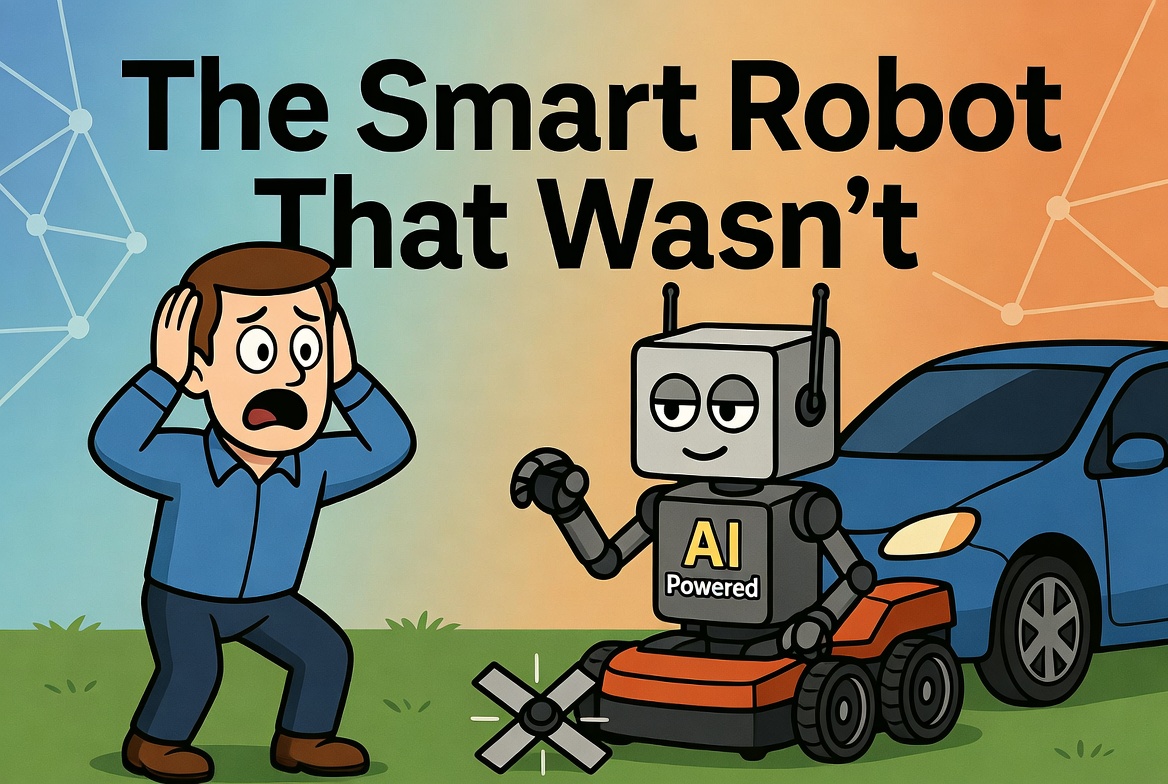
My wife loves our lawn mowing robot. She sees a robot quietly mowing the lawn and thinks "Finally, less work and a pretty lawn." I see a very expensive, very opinionated Roomba with blades that decides on its own which parts of the garden are worth mowing.
The marketing is excellent. It promises a smart, autonomous, AI-powered lawn butler that will handle everything while you sip coffee. The reality is a machine that regularly gets stuck on paths it has driven over a hundred times, parks itself under the car (because apparently cars are not obstacles), and occasionally loses its blades so you can never walk barefoot in your garden ever again.
It also has a special talent: finding the exact same spot to get stuck in, over and over. You rescue it, send it back to the charger, and it immediately heads straight back to the same stupid corner like it's on a personal mission. The RTK antenna is so sensitive that losing the signal makes it panic - but instead of waiting patiently like any sensible machine, it tries to start mowing anyway. And don't even think about tall grass or paths narrower than one meter. The robot itself is only 60 cm wide, yet it still needs a full meter of clearance. So I still end up manually mowing between the raised beds like some kind of 19th-century peasant.
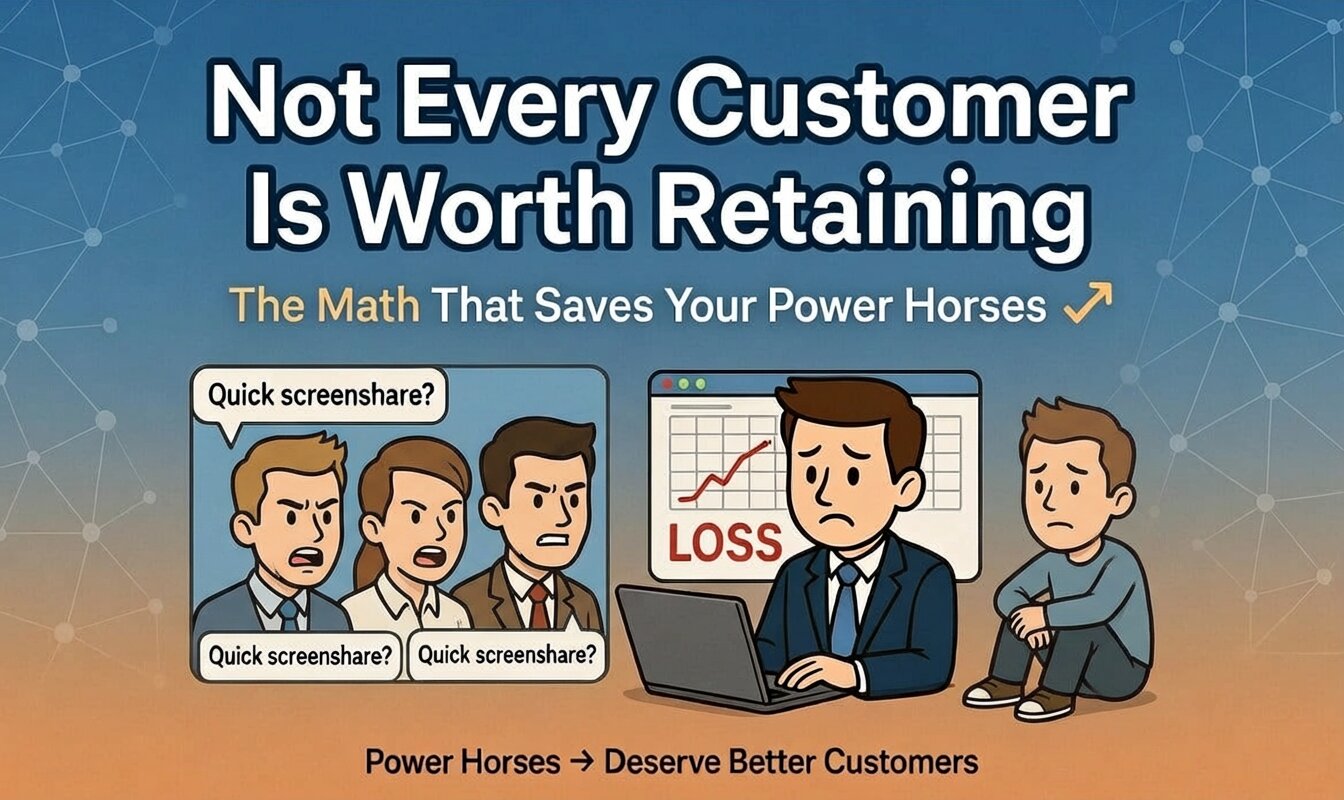
The Math That Saves Your Power Horses 🐎 and Your Bottom Line
We serve customers big and small. Some drop millions with us every year, some just the bare minimum. That's fine - revenue is revenue.
But there comes a point where the relationship stops being about delivering the product and renewing the deal. It becomes a slow bleed.
I once managed a cluster of "small but vocal" accounts. One in particular spent €2,000 a year. After passing the CSP (Cloud Service Provider) fees straight through, we kept roughly €400 in real margin - license plus support.
Now do the simple math every support leader should know by heart: A Level 2 or Level 3 engineer costs the company between €30 and €90 per hour. The average support case takes about two hours. That means every single ticket costs you somewhere between €60 and €180 - and that's before you count the emotional tax.
Two tickets. Just two. And your €400 margin is gone.
The third ticket? You're officially paying the customer to use your product.
Some of those tickets are legitimate - nasty bugs, missing docs, confusing UI. We're happy to help. Misconfigurations happen, and we fix them.
A few months ago our family outgrew our old car. We wanted something practical but a bit more comfortable - proper A/C, decent seats, and some modern safety features. Being the loving husband I am, I let my wife talk me into a German brand instead of my beloved "no unnecessary tech" Dacia special.
The sales guy at the dealership was actually great. Chill, honest about the budget, and patient when we changed our minds three times after the order was placed. We left the dealership excited. The car was ordered, a tracking link appeared, and we even bought accessories in advance like proud new parents.
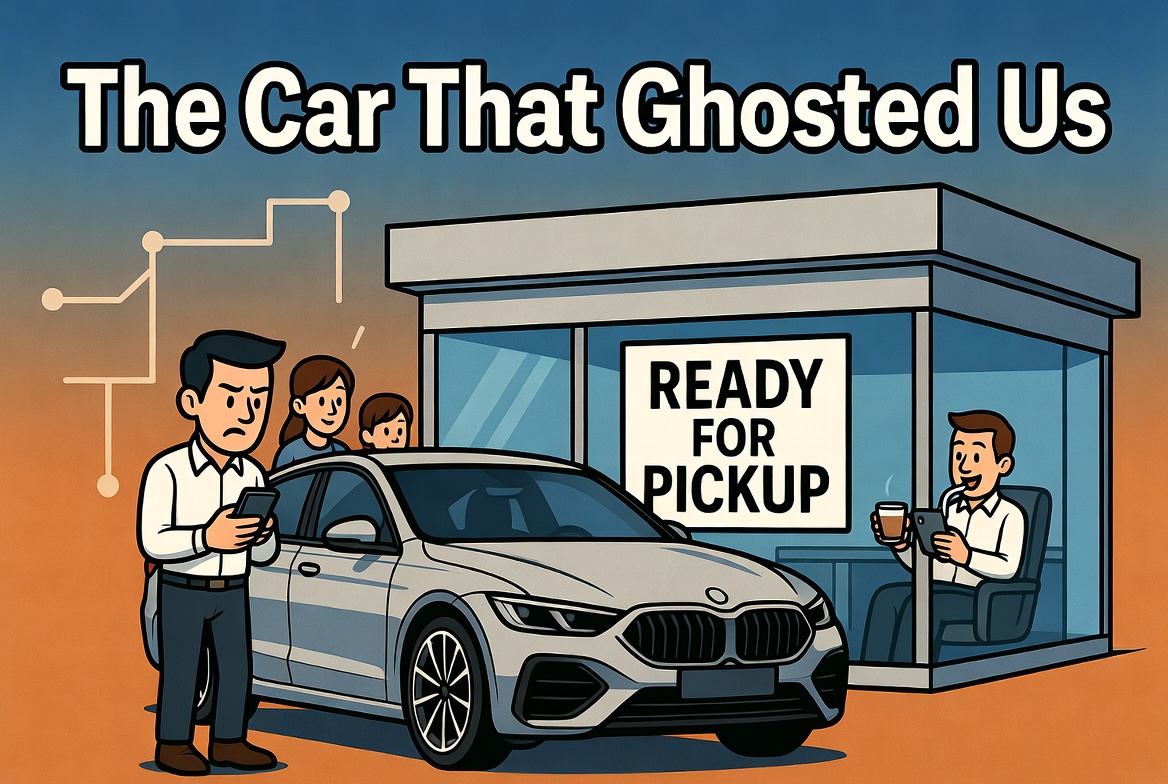
Then the car arrived at the dealership... and the communication died.
For three full weeks the car sat there while we got nothing but radio silence. I sent polite emails. I called multiple times. Every time the guy said the same thing: "I'll check and get back to you."
He never did.
The car was physically ready. The only thing missing was basic human accountability. All I wanted was a simple update - "It'll be ready in two weeks" "There's a small delay" or even "I don't know yet, but I'll check tomorrow." Instead, we got ghosted by the very person who had been so helpful during the sales process.
 TrenchOps 🐎