I once watched a senior engineer - twenty years of experience, could read a stack trace like a bedtime story - try to learn to juggle at a company offsite. Three balls, two hands, zero dignity. She dropped everything for twenty minutes straight while interns filmed it.
Six months later she told me that offsite was the week she finally cracked a certification she'd been stuck on for a year. She was convinced it was the juggling. She might have been right.
Here's the mechanism, and it's backwards from what most people believe: the adult brain doesn't rewire because you feed it information. It rewires because you feed it errors. When your predictions about the world fail hard and repeatedly, your nervous system releases the neuromodulators - dopamine, norepinephrine - that mark active circuits for change. No errors, no chemical signal, no rewiring. Recent neuroscience even points to a dedicated brain-wide "model failure" alarm system (the locus coeruleus) whose whole job is shouting "your predictions are garbage, update everything."
That feeling of frustration? That's not a bug. That's the smell of the signal being released. The brain games industry sells you comfortable puzzles you're already decent at. Comfortable means low error rate. Low error rate means the alarm never fires. You're paying a subscription to not learn.
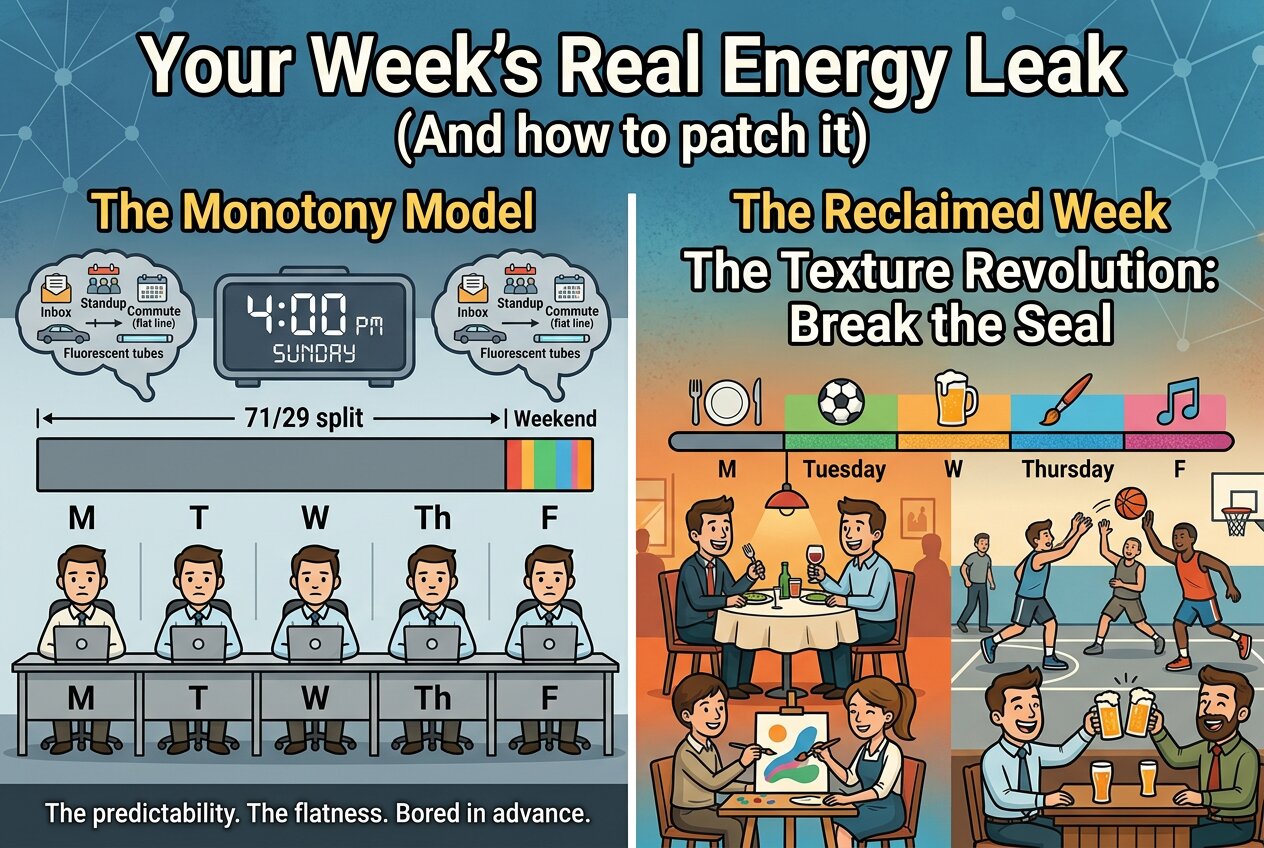
Your week has an energy leak - and it's not where you think it is
That creeping dread hits somewhere around 4 PM on a Sunday. You're on the couch, half-watching something you already forgot the title of, and your stomach starts doing that thing. Not hunger. Something worse. The mental preview reel of Monday morning. The commute. The standup. The inbox. The fluorescent lighting that somehow makes everyone look like they're starring in a low-budget zombie film.
Roughly 80% of professionals report experiencing what psychologists call "anticipatory anxiety" on Sunday evenings. The internet is full of advice about it. Meditate. Journal. Do breathing exercises. Practice gratitude. Light a candle and whisper affirmations to your houseplant.
All of which is the emotional equivalent of putting a bucket under a leaky roof and calling it fixed.
Here's the thing nobody tells you: the Sunday blues aren't actually about Sunday. They're about Monday through Friday.
The real diagnosis
Think about what's actually happening in your head at 4 PM on a Sunday. You're not dreading one specific meeting or one terrible boss (though if you are - different article, different problem). You're dreading the shape of the next five days. The predictability. The flatness. Wake up, commute, work, commute, eat, sleep, repeat. Five times. Then two days of actual life. Then five more days. Until retirement or heat death of the universe, whichever comes first.
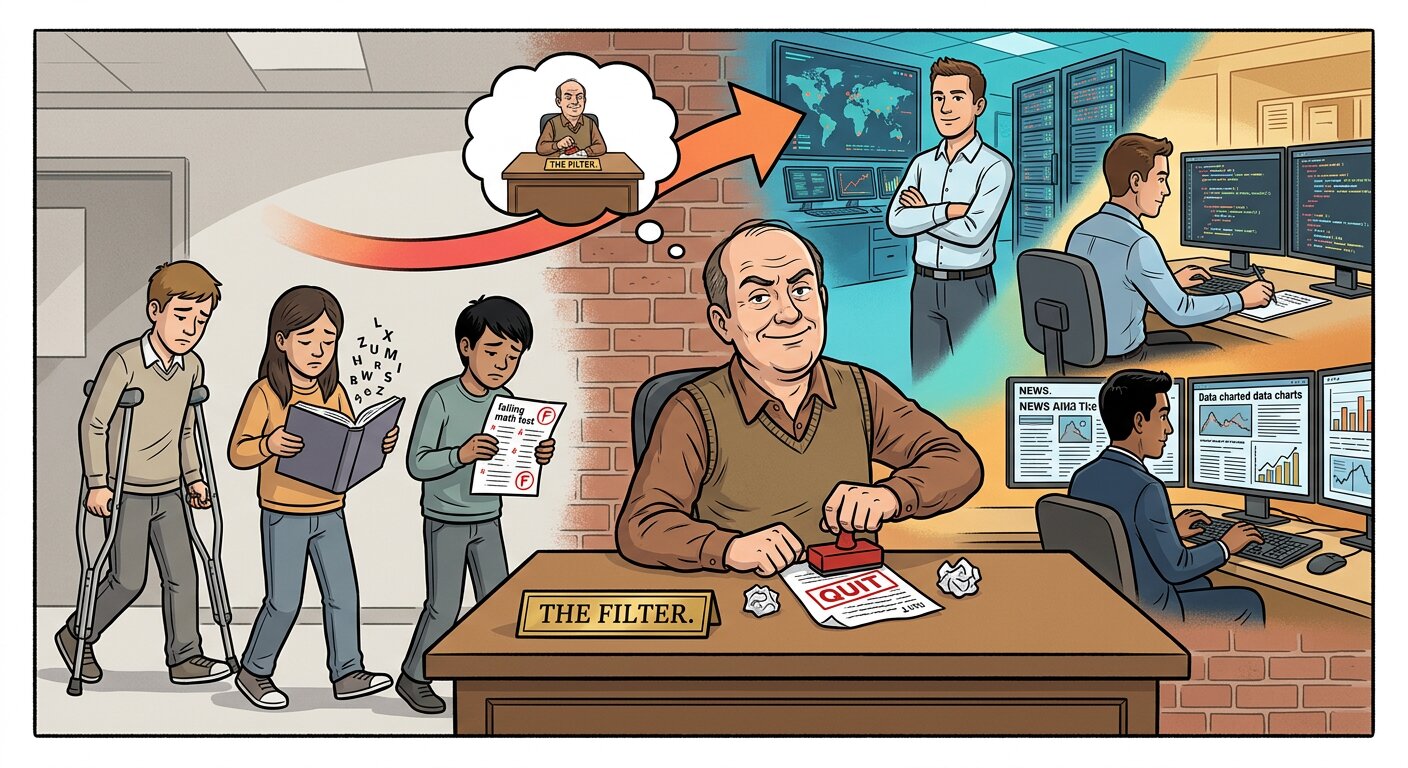
Here is a fun statistic nobody keeps: how many careers get quietly strangled in a classroom before they ever begin. No dashboard for that. No postmortem. Just a tired adult with tenure telling a kid to give up, and the kid believing them.
Many years ago I attended a vocational school for information technology. It was there, ironically, that I met some of the most incompetent people I have ever encountered in IT. Not the students. The teachers.
They were all civil servants. Which in Germany means roughly the professional equivalent of a load-bearing wall - you can repaint it, you can complain about it, but you are not removing it. Performance was optional. Consequences were theoretical. And a few of them wore this like a medal. One openly bragged about his failure rates, as if drowning students early was a public service. In his mind he was a filter, weeding out the untalented before they could embarrass the profession.
Let me introduce you to three of the people he filtered.
👉 The foreigner who came to IT through a broken body.
The first kid had already finished an apprenticeship in a skilled trade. Loved it, was good at it, had a plan. Then a village festival, a fight he did not start, and an injury that ended his ability to do the work he had trained for. The employment office paid for a two year retraining program into IT. That was the deal, and the deal had no plan B. No completion meant no more support. On top of that, he carried a very specific cultural weight - the fear of disappointing his family, which for him was not a mood but a load-bearing beam of his entire identity.
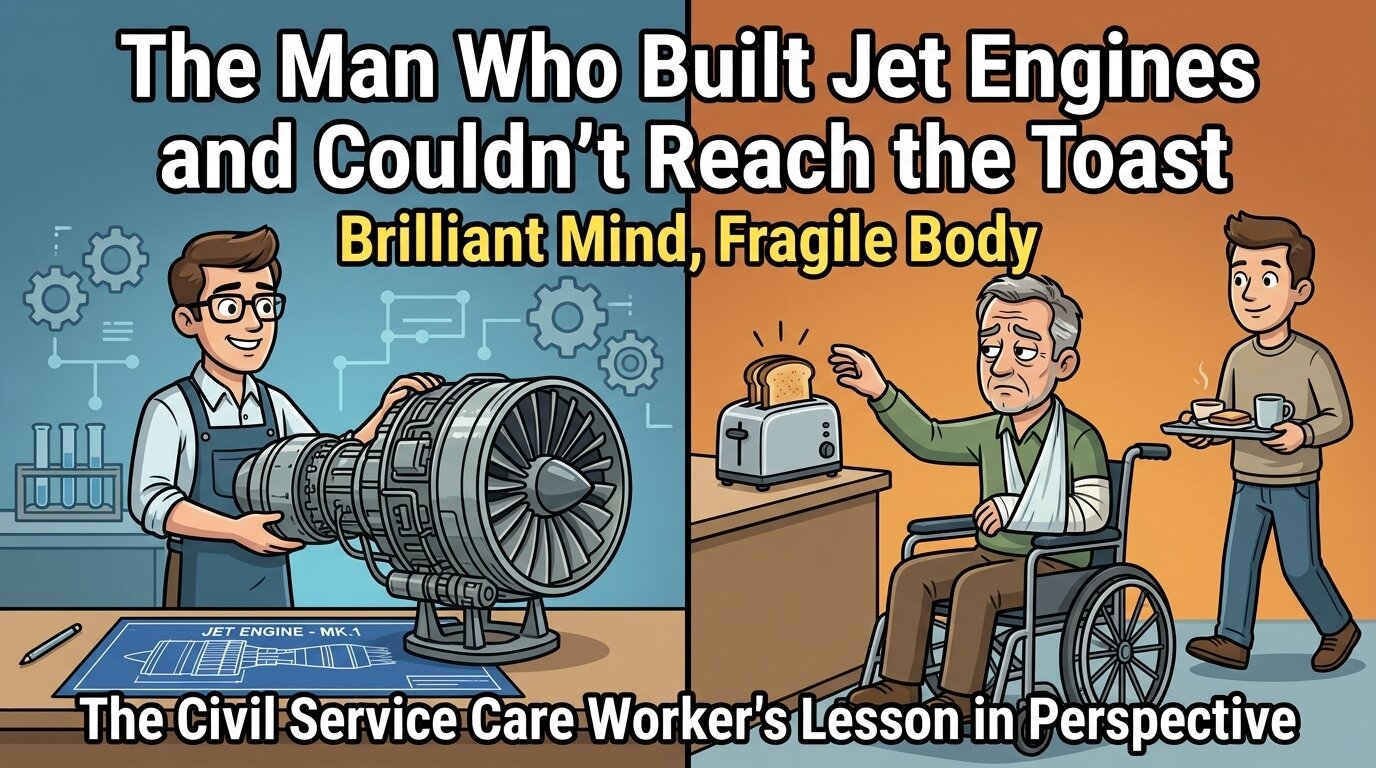
I was eighteen, doing my civil service in Germany. My assignment was a temporary substitute gig - a few weeks covering for someone's vacation. My patient was a man in his early sixties, sitting in a wheelchair, partially paralyzed on one side. He needed help with breakfast. He needed help with the morning toilet routine. Not glamorous work, but someone had to do it.
Every morning started the same way. His wife would prepare a modest portion of bread, cheese, and cold cuts. And every morning he would insist he was still hungry. She would hold the line - firmly, not cruelly - explaining that wheelchair-bound patients gain weight easily, that it would hurt his rehabilitation, that the doctors were clear about his diet. He would argue, push back, and sometimes sulk like a child caught sneaking cookies. She would stay calm and patient, but she never gave in.
I watched this dance and felt uncomfortable. Here was a grown man, a man who had done important things, being treated like a little boy about toast and butter. It felt degrading. But she was right. And he knew it. That only made it worse.
The daily rehabilitation sessions were brutal. He had to relearn how to walk. A man in his early sixties, trying to convince his paralyzed side to cooperate, lifting one leg with his hands, sweating through the simplest exercises. You could see the frustration in his eyes. He had climbed mountains once. Now he struggled to shuffle ten feet with a walker.
I used to think being genuinely friendly with the people you work with was a good idea.
Then I learned the hard way that there's a massive difference between being friendly and being friends.
Friendly is professional. Friends is dangerous.
Here's the controversial truth nobody wants to say out loud in the team chat:
Actual friendship with coworkers is almost always a terrible deal.
You already spend 8+ hours a day with these people. You share the same stressful environment, the same ridiculous processes, and the same dysfunctional leadership. Why on earth would you invite them any deeper into your life?
Because once you cross that line, the risks are real and the downside is brutal.
They know too much. You vent about your family problems, your money stress, your occasional substance-use coping mechanisms, or that fight you had with your partner. One day you have a disagreement at work - maybe even a completely legitimate professional one - and suddenly that private information becomes ammunition. Office politics turns personal real fast when someone knows exactly which buttons to push.
Fights don't stay at work. When you're just colleagues, a disagreement is a disagreement. When you're "work besties," the same disagreement feels like betrayal. The tension follows you home. Slack messages get passive-aggressive. Performance reviews get weird. And suddenly your actual job performance suffers because you're navigating a personal drama with the person who controls part of your backlog.
The annual self-review season rolls around again like a bad case of the corporate flu. You know the drill. The calendar invite lands with all the charm of a root canal reminder. "Reflect on your achievements." "Set SMART goals for the coming year." Meanwhile, your real goal hasn't changed since you started: collect the paycheck, keep the lights on, and maybe sneak out early on Friday before the European colleagues log off.
I've sat on both sides of that table in my time. The engineer staring at a blank form, wondering how to spin "kept production running while the business doubled the ticket volume and halved the headcount" into something that sounds humble yet heroic. And the manager on the other side, secretly praying the whole process finishes before their own review deadline. Nobody wins. Except maybe HR, who gets to file another folder of perfectly formatted theater.
One particular year stands out. Picture a solid power horse 🐎 in second-line support. This guy had spent the last twelve months single-handedly nursing a legacy system that should have been retired in 2012. He handled escalations that made senior architects sweat, documented workarounds so good the product team quietly copied them, and still found time to mentor the new hires who kept quitting for better pay. Come review time, he sits down, opens the template, and writes the honest version first: "Continued delivering under increasing load with static resources. KPI: didn't rage-quit on a Monday." Then he deletes it and replaces it with the approved corporate dialect. "Demonstrated commitment to operational excellence while embracing cross-functional synergies."
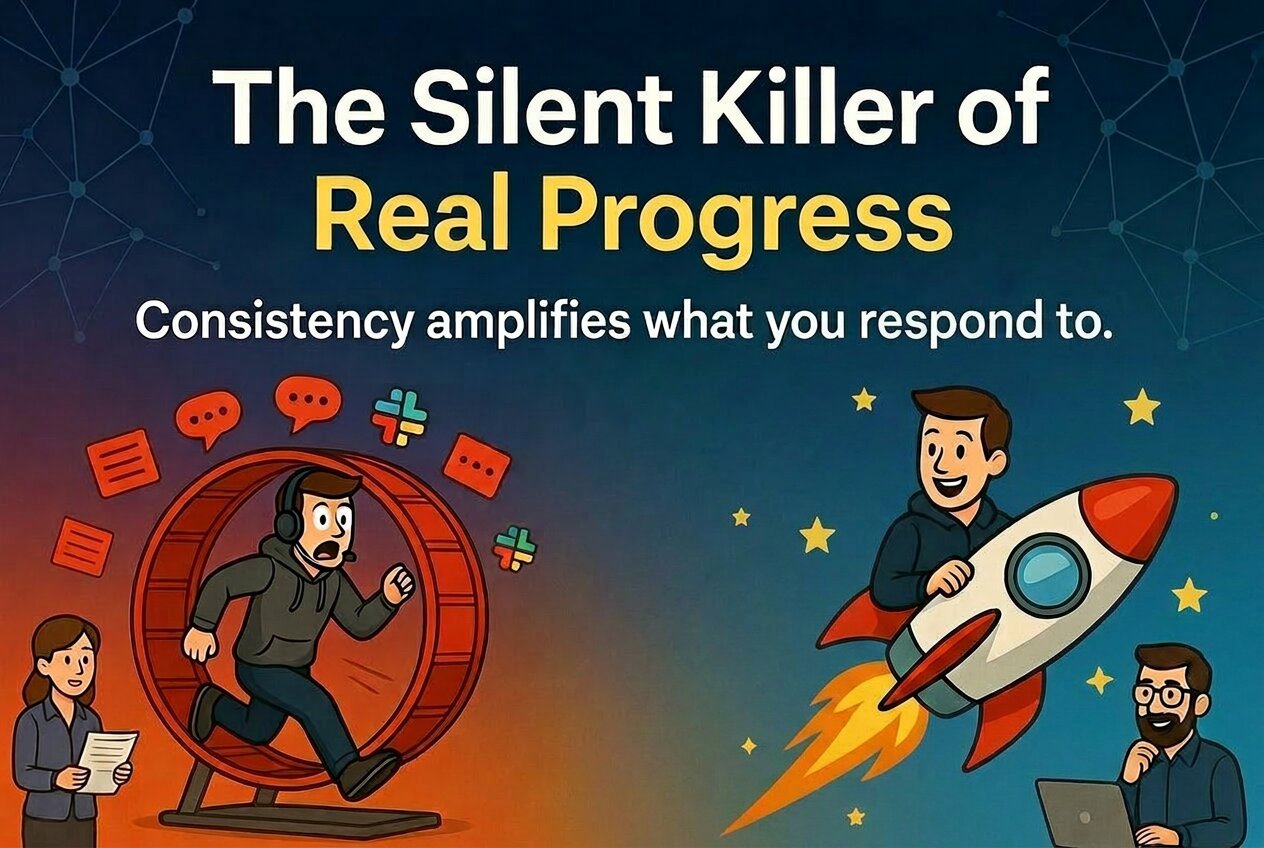
Why Most "Hard Workers" Stay Stuck on the Hamster Wheel
The inbox hits at 8:03 a.m. like clockwork. Twenty new tickets, three "urgent" Slacks from people who clearly didn't read yesterday's update, a fresh vanity dashboard from leadership showing likes on the internal town-hall post, and one passive-aggressive calendar invite titled "Quick sync on priorities." By 9 a.m. you're already exhausted, yet somehow the needle on actual customer outcomes hasn't moved a millimeter.
Welcome to the hamster wheel sponsored by modern corporate life. Most of us are reacting to noise and calling it productivity. The quiet power horses 🐎 figured out years ago that consistency doesn't amplify effort. It amplifies whatever you choose to respond to. Ignore that distinction, and you stay busy forever. Get it right, and you start moving like a rocket with afterburners.
I once watched a second-line support engineer I'll call Marcus live both versions in real time. Year one he was the ultimate firefighter: every ticket spike, every minor SLA blip, every random customer complaint got his full attention. He answered every Slack, joined every optional sync, chased every daily fluctuation in the support metrics. By December he was burned out, his actual impact flatlined, and the performance review read like a participation trophy: "Reliable team player who responds quickly." Translation: stayed on the wheel.
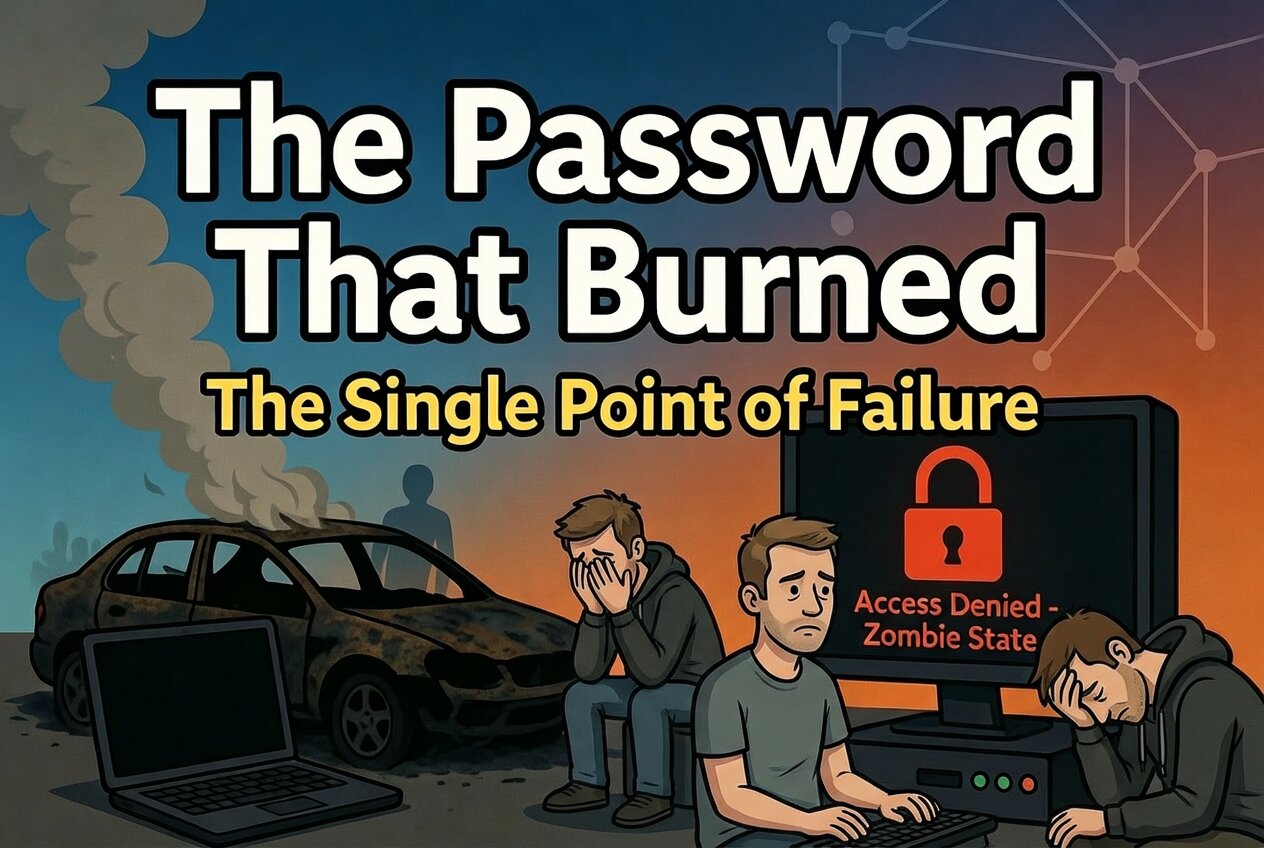
Early in my 1st-level support days I got the classic "we lost the admin password" ticket.
Business-critical application. Low-level software. No backdoor, no recovery flag, no magic command. The only way forward was the one we always gave: reinstall and restore the data from backup. I sent the standard template, closed the ticket in my head, and moved on.
This customer didn't close it.
He pushed back hard, so I scheduled a call. On the line he sounded desperate in a way most tickets never reach. I walked him through the security reasons again, step by step, expecting the usual frustrated "fine, we'll do the reinstall." Instead, he went quiet for a long second and then told me the real story.
One of his colleagues - the only guy who managed the entire infrastructure - had died in a car accident a few weeks earlier. The laptop with every password, every recovery key, and every piece of documentation went up in flames with the car. No off-site copy. No shared vault. No second person who knew the master credentials. The whole company's core systems were now running in a zombie state: accessible to nobody, restorable by nobody.
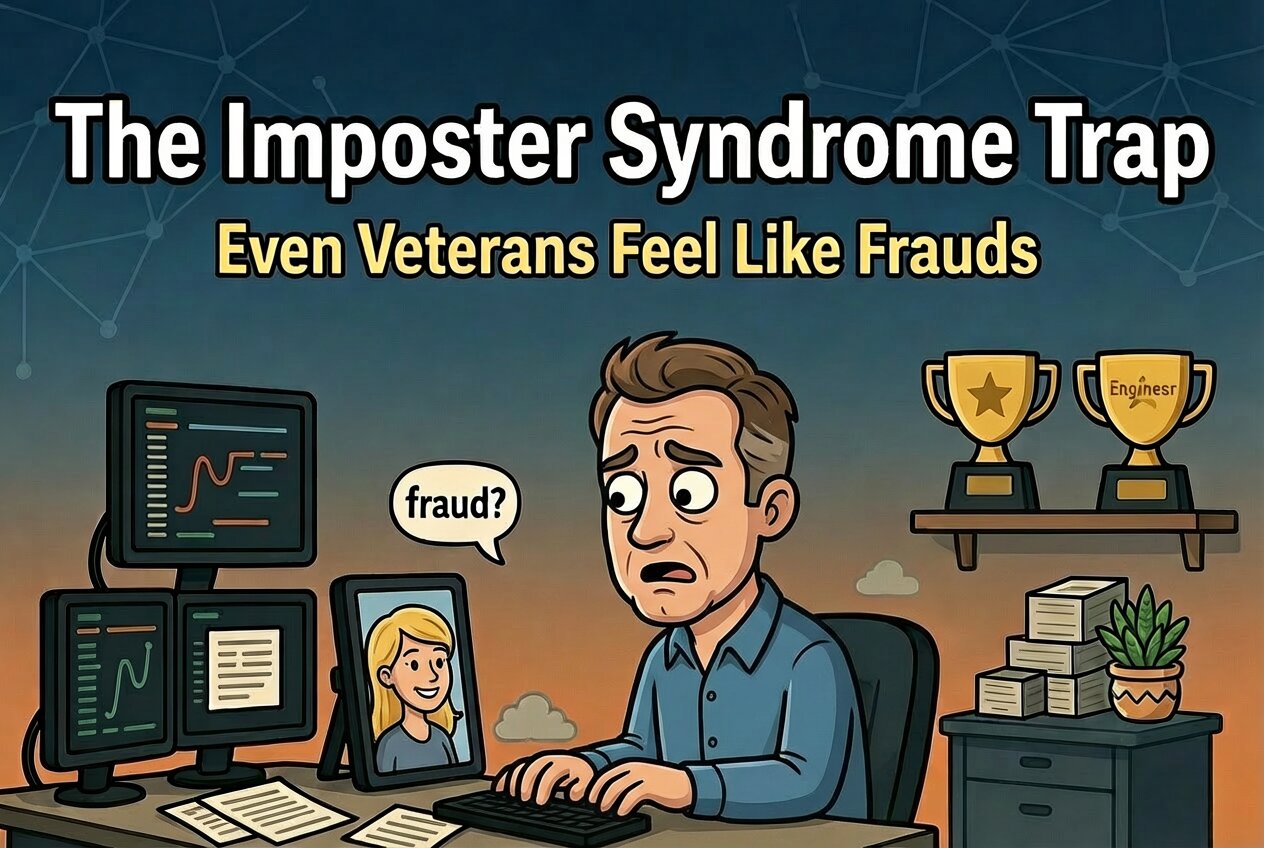
(Why even 15-year veterans in support suddenly feel like frauds)
I watched a senior escalation engineer - 15 years deep, multiple "Engineer of the Year" awards, the person everyone pinged when the cluster was on fire and lawyers were already looped in - sit in the team room and quietly say:
"I think I'm losing my edge."
He was staring at a fresh ticket the same way a new hire stares at their first production incident: convinced he should already know the answer and quietly panicking because he didn't.
This is imposter syndrome in support - and it hits the best people hardest.
Tickets are never static. Most days you're facing a brand-new mix of the latest hotfix, an obscure customer config, and a dependency that changed without notice. The triage overhead is almost identical whether you have 2 years or 12. Experience gives you sharper questions and faster pattern recognition, but it doesn't magically shrink investigation time to zero.
Meanwhile, the tech keeps moving. You were the Windows Server 2003 god. Now the new kid casually drops a PowerShell cmdlet you've never seen, and your brain whispers the lie: "If you were really good, you'd already know this."
The strongest performers start second-guessing every answer, hesitate to escalate ("I should figure this out myself"), and stay late chasing ghosts. The job that once felt like a craft starts feeling like an endless audition they're secretly failing.
I once got dropped into a major customer site as an on-site engineer because our products were failing and contracts were on the line. The customer was frustrated, the project was bleeding, and leadership needed someone who could actually see the mess from the inside.
So I was embedded directly into their project management, architecture, and SysOps teams. They treated me like one of their own - invited me to the Christmas party, shared lunches, and made the whole intense situation feel almost human. One colleague stood out: a senior consultant on a freelance contract, mid-to-late fifties, living several hundred kilometers away.
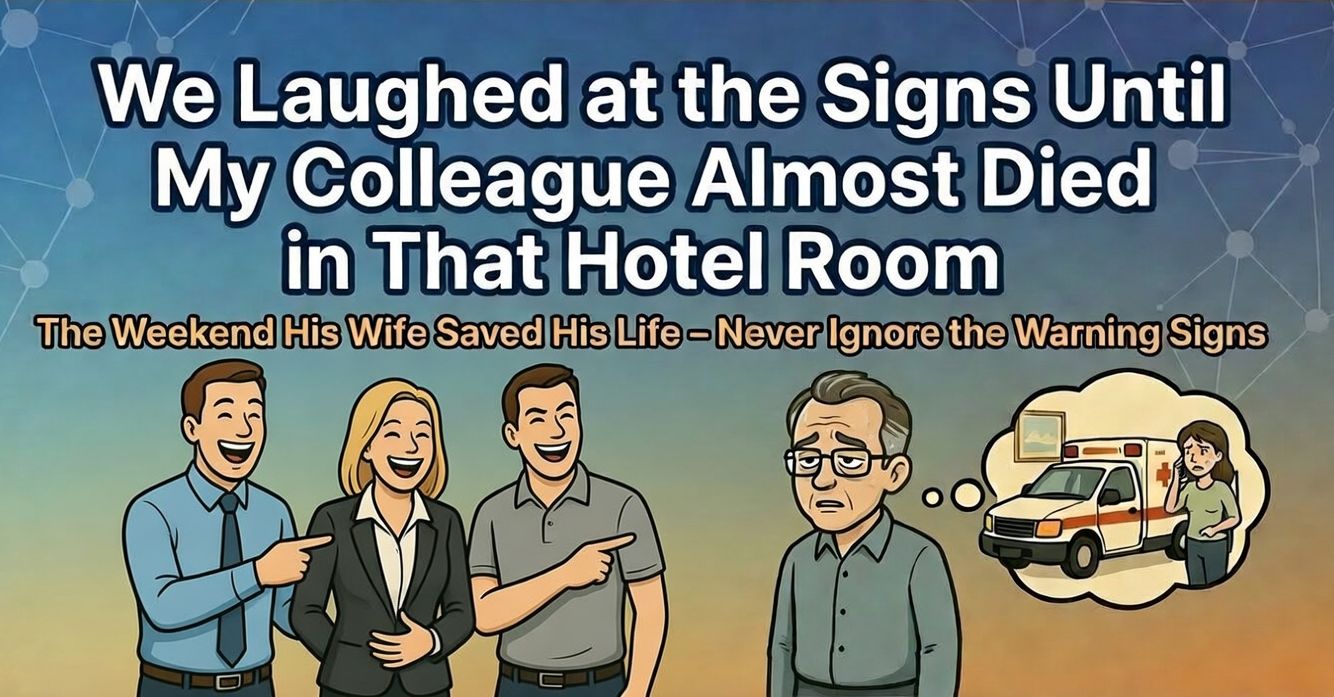
Every week he drove in on Sunday night, stayed in a cheap hotel Monday to Friday, then drove home to his wife on Friday evening. Two weekends a year his wife came to the city to spend time with him in that same hotel. We clicked immediately - same dry humor, same way of seeing the absurdity in the chaos. Most days we grabbed lunch together.
Over time things started to shift. Small mistakes crept in. He seemed a little confused at times. Hair unkempt, arriving later each morning. The team noticed. Jokes started flying - light ones about him "exploring the local nightlife".
 TrenchOps 🐎