The internet already ran this experiment. We just didn't like the results.
Do you remember dial-up? Paying per minute to access the sum of human knowledge, and using those precious minutes to download a 400x300 JPEG of a cat in a shoebox?
Then the meter went away. Flat rate. Then mobile. Then free WiFi in the average bakery. Suddenly every human on the planet had a portal to every library, every lecture, every tutorial, every trade skill ever documented. Universities put their entire curriculum online for free. MIT did it. Harvard did it. Nobody had to ask permission anymore.
And what happened?
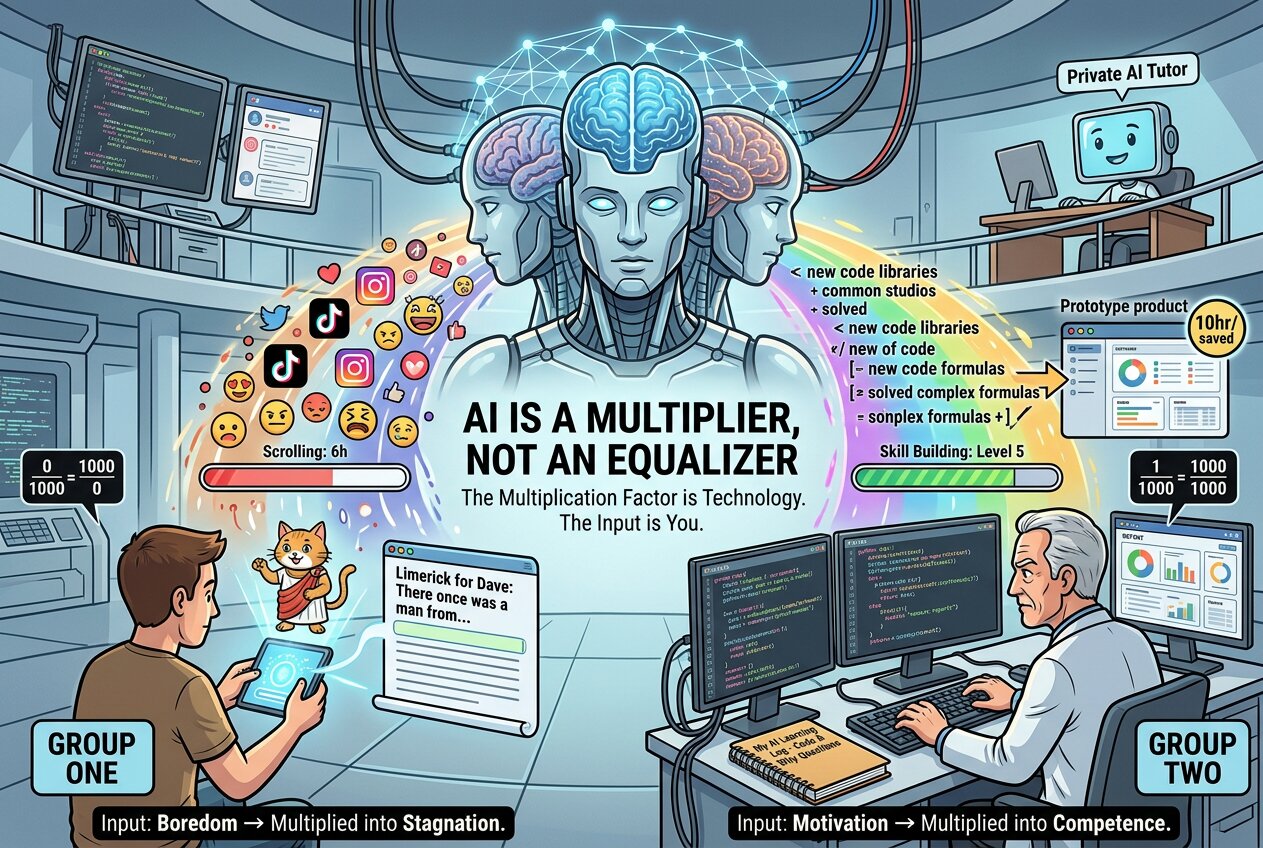
TikTok happened. Instagram happened. LinkedIn happened, which is basically Instagram for people who own a blazer. Millions of educational videos exist on YouTube, and the most watched content is people reacting to other people reacting to video games.
This is not a rant. I like cat pictures. I have watched a man restore a rusty axe for 22 minutes and felt genuine peace afterwards. The observation is colder than judgment: unlimited access to knowledge did not redistribute outcomes. The people who were competent before the internet were mostly competent after it. The people who were drifting kept drifting, just with better graphics.
For fifteen years, "the cloud is infinite" was the most reliable lie in enterprise IT. Not a malicious lie. A useful one. It let architects design for peak load without capacity planning, let CFOs treat compute as opex, and let me tell customers "just scale out" with a straight face.
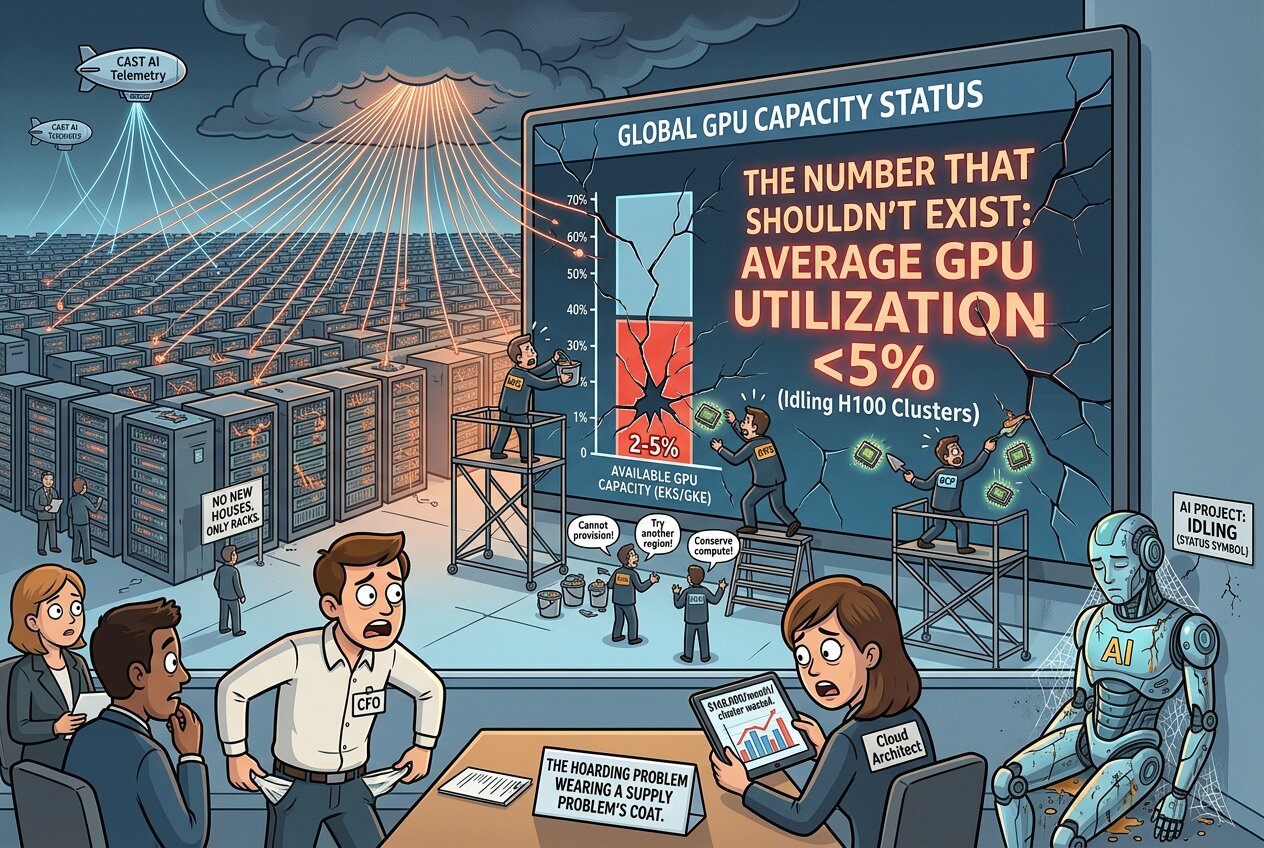
Then customers in North America and the UK started filing tickets that read like they came from 2004. "Cannot provision." "Cannot reschedule." "Try another region." Across all three hyperscalers, in specific regions, at specific instance families. AWS reportedly told its own engineers to conserve compute "however they can" - internal teams waiting days for CPUs, because customer workloads come first. Which is the correct priority and also a sentence that should not exist in a business built on the promise of on-demand.
Ten years ago I would have laughed at anyone predicting this. The whole pitch was that Amazon, Google and Microsoft had so much spare iron that your workload was a rounding error. And they did. They just sold the rounding error to language models.
The number that shouldn't exist
Here is the part that should make every architect uncomfortable. Cast AI's 2026 telemetry across 23,000+ production clusters puts average GPU utilization at about 5%. On AKS, 2%. On EKS, 5%. On GKE, 6%.
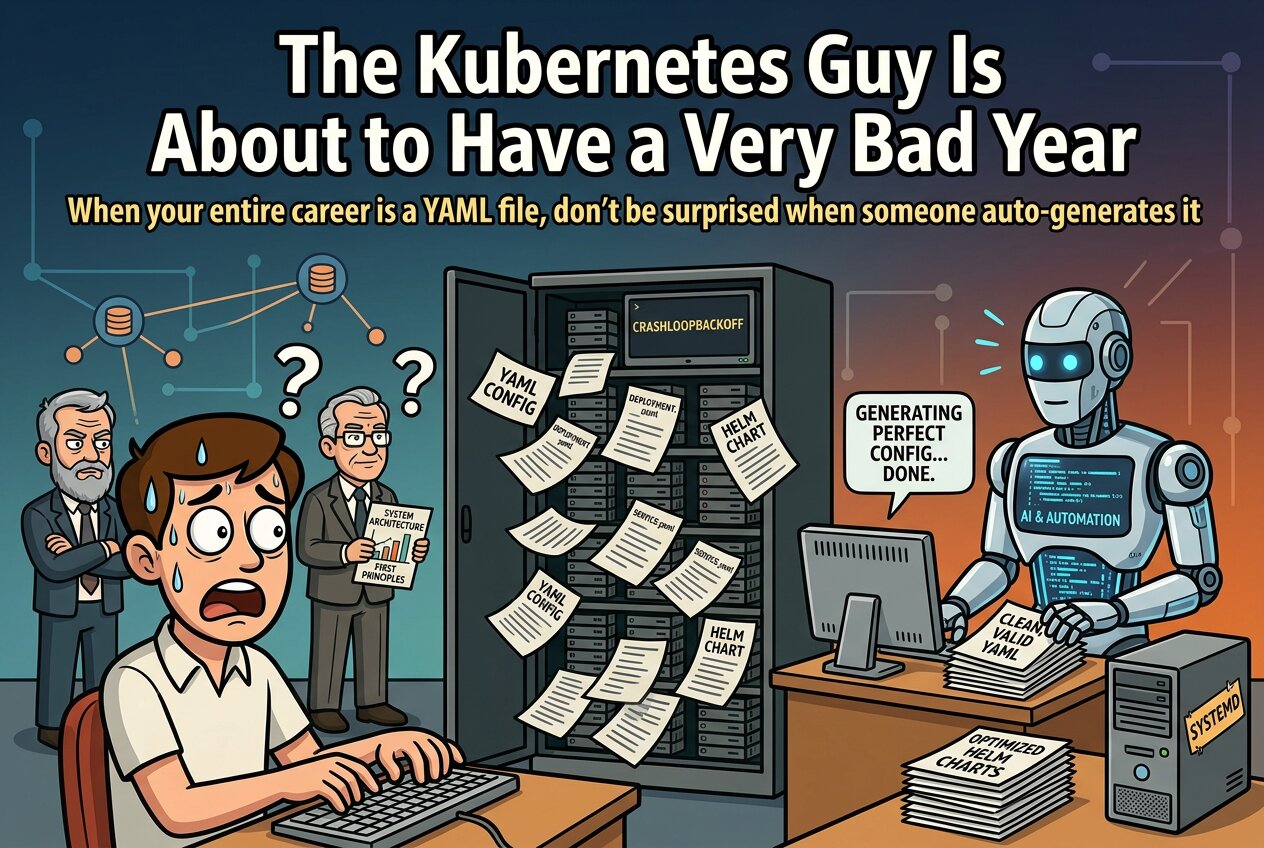
When your entire career is a YAML file, don't be surprised when someone auto-generates it
A while back, I made an offhand remark somewhere about Kubernetes being overkill for a particular use case. Nothing radical. Just pointing out that a single application serving a few thousand users probably doesn't need a container orchestration platform designed to run Google's entire production fleet.
Within minutes, the clergy arrived.
"C'mon bro. Just pipe your Jsonnet through the Kluster Konfig Kompiler, deploy the sidecar injector via a mutating webhook, add the ChaosMonkeyMesh operator for resilience testing, sync your GitOps state through FluxKapacitor, and tail the logs from the Kloud-Native Kombined Kockpit. It's literally five steps. Why are you so afraid of YAML?"
I'm not afraid of YAML. I'm afraid of people who think memorizing a toolchain is the same as understanding infrastructure.
Here's the thing about Kubernetes. It's a genuinely good piece of technology. Google donated it to the world, the CNCF nurtured it, and it solved a real problem - orchestrating containers at scale across distributed systems. If you're running hundreds of microservices across multiple regions with complex networking, auto-scaling requirements, and zero-downtime deployments, Kubernetes is probably the right call.
But somewhere along the way, "right tool for certain jobs" became "the only tool for every job." And an entire professional subculture emerged around that confusion.
And that silence is the most accurate forecast we have for AI content
Remember when installing a free screensaver was an act of war?
Twenty years ago, the internet had a moral panic with its own industry attached: spyware. Purple gorillas reading your email. Browser toolbars reproducing like rabbits. People wrote furious forum posts. Lawmakers held hearings. Anti-spyware was an entire software category with boxed products and annual renewals.
Today your TV, your car, your phone, and - God help us - your fridge all phone home continuously, and the strongest public reaction is a mildly annoyed click on "Accept all."
What happened? The users didn't win. The word lost.
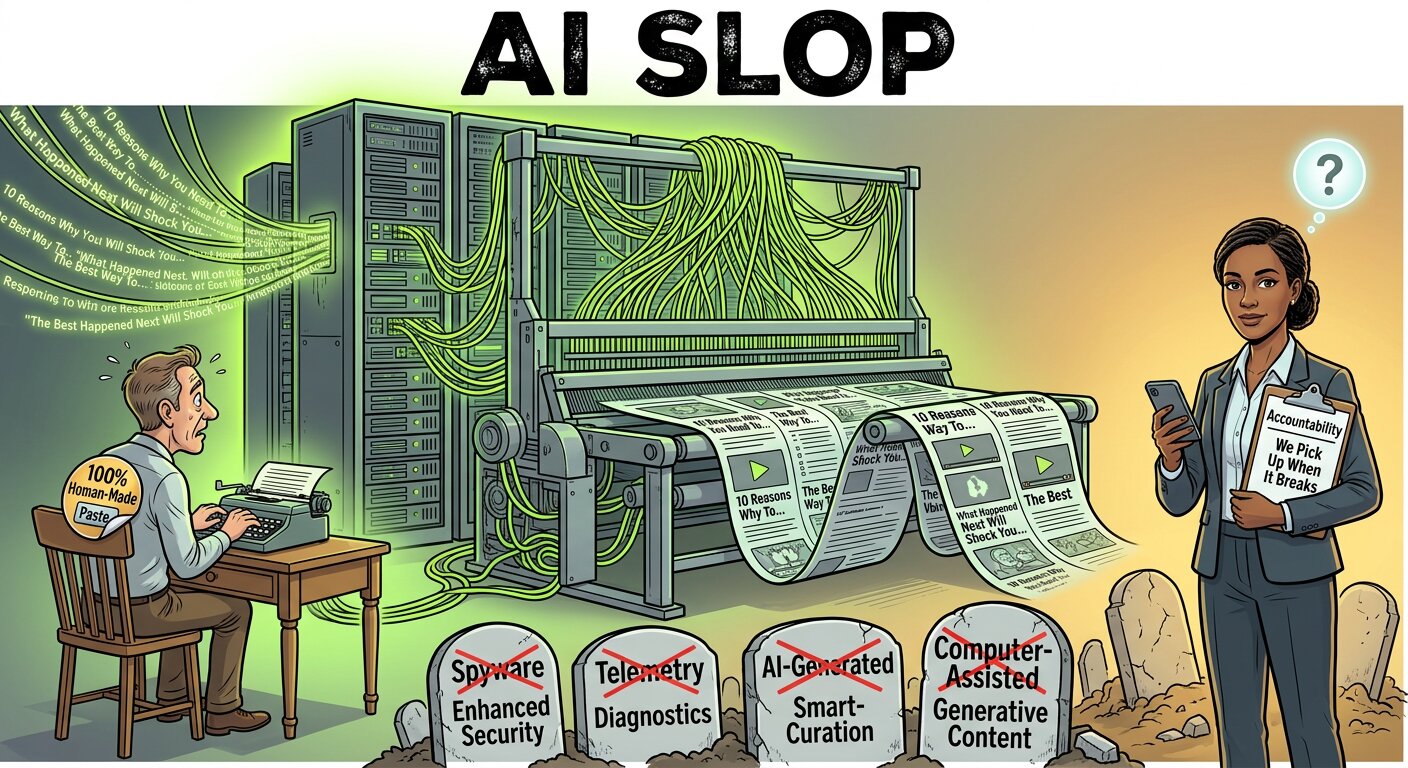
Spyware became "telemetry." Telemetry became "diagnostics." Diagnostics became "personalized experiences." The practice never changed - the vocabulary did. A controversial technology doesn't need to be accepted to win. It just needs its name retired. Once nobody can say the old word without sounding like a crank in a tinfoil hat, the practice has become infrastructure.
Now watch the same movie on 4x speed.
Stage one: ridicule. Hands with seven fingers. A Hollywood star unhinging his jaw over a plate of spaghetti. That was the golden age - spotting AI was a party trick, and some of us pattern-matchers enjoyed it the way birdwatchers enjoy rare warblers.
Why "the teacher will notice" is not a talent strategy
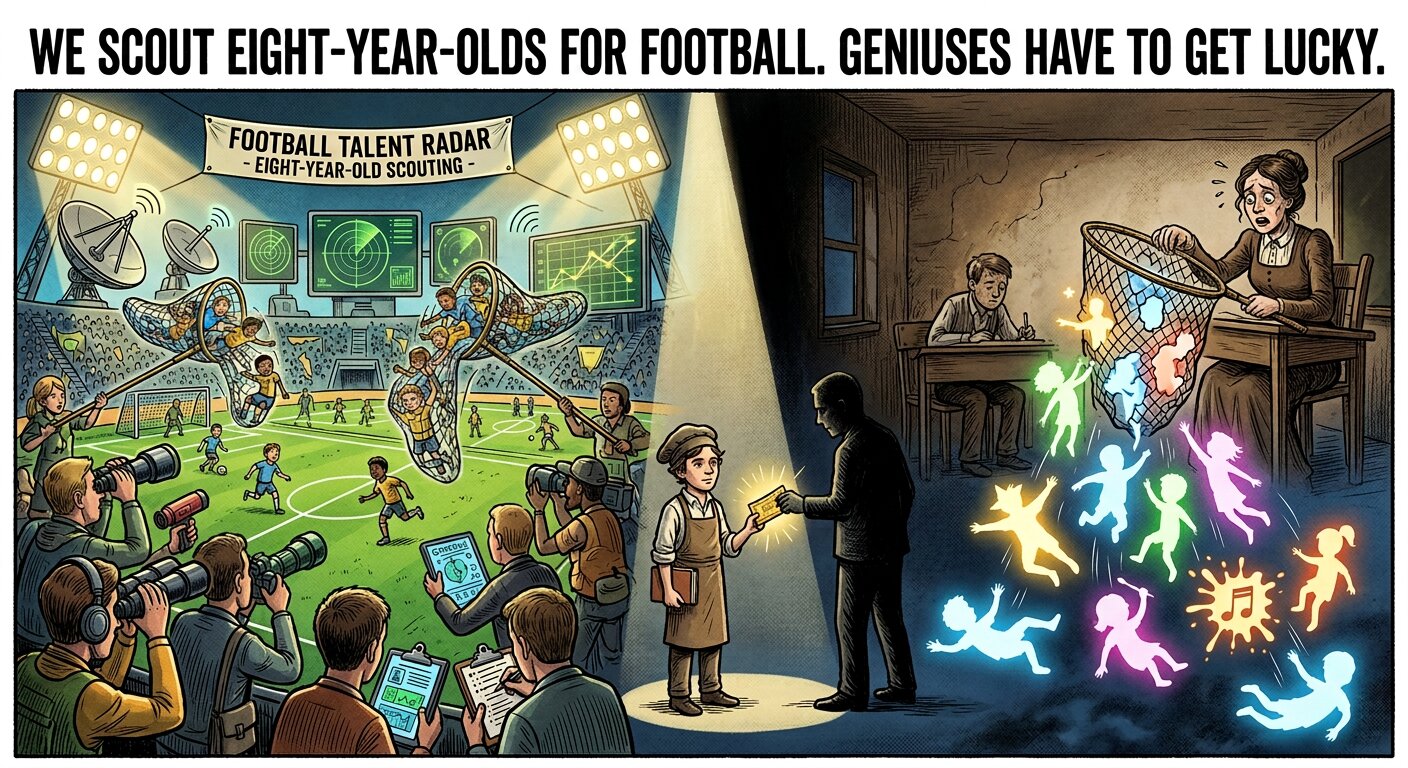
The most important talent scout in the history of physics was a random customer with spare tickets.
London, 1812. A blacksmith's son named Michael Faraday is apprenticed to a bookbinder. No formal education worth mentioning. But he reads what he binds, and one day a customer hands him tickets to Humphry Davy's lectures at the Royal Institution. Faraday goes, takes obsessive notes, binds them into a book - of course he does - and sends them to Davy. Davy, who has just injured his eyes in a lab explosion and needs an assistant, hires him.
The result: electromagnetic induction, the electric motor, the generator. The device you are reading this on traces back to a stranger's spare tickets.
That was the net. One man's generosity. And here is the uncomfortable part: two centuries later, the net is still mostly luck. We just added paperwork.
In most countries, the entire identification infrastructure for exceptional young minds is this: a teacher notices. One adult, 25 to 30 kids, measured on class averages and standardized test results, with exactly zero KPIs called "outliers surfaced." A system does what it is paid to do. This one is paid to move the middle of the curve. The edges are rounding errors. Goodhart's law with a school bell, if you want the technical term.
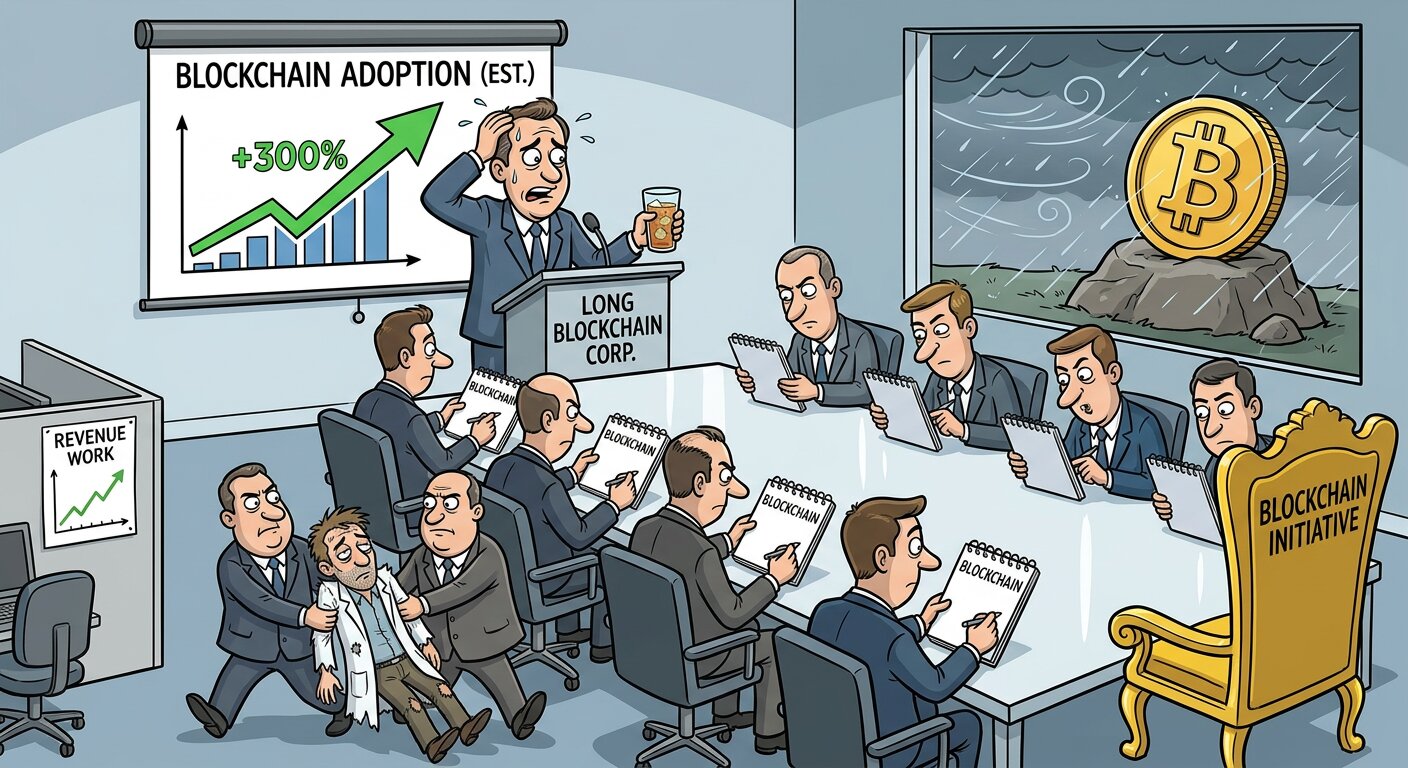
Some years back, a company that sold iced tea renamed itself "Long Blockchain Corp." The stock jumped almost 300% in a single day. They had no blockchain. They had no blockchain engineers. They had, to be fair, very drinkable iced tea. The company was later delisted, the SEC revoked its registration, and the whole episode ended with insider trading charges around the announcement.
Read that again: the announcement moved the price 300%. Not a product. Not a prototype. A word.
That number shouldn't exist. But it does, and it explains the entire era better than any whitepaper ever did.
The meeting I still think about
Mid-hype, a client asked me to evaluate putting their support knowledge base "on the blockchain." I asked my standard opening question, the one that has ended more projects than any budget cut: which problem does this solve that a database with an audit log doesn't?
Long silence. Then, honestly, to their credit: "Our biggest competitor announced a blockchain initiative last quarter."
There it is. The whole mechanism, in one sentence.
Nobody in that room wanted blockchain. Nobody had derived it from a problem, worked backwards from a customer pain, or hit a wall that only a distributed ledger could break through. They wanted it because someone else visibly wanted it. The desire was borrowed. The entire enterprise blockchain wave was one giant chain of companies watching each other's press releases and concluding "they must know something we don't" - while the other side of the chain was thinking the exact same thing about them.
I earned 50k a year and was still broke - here's the physics of getting out
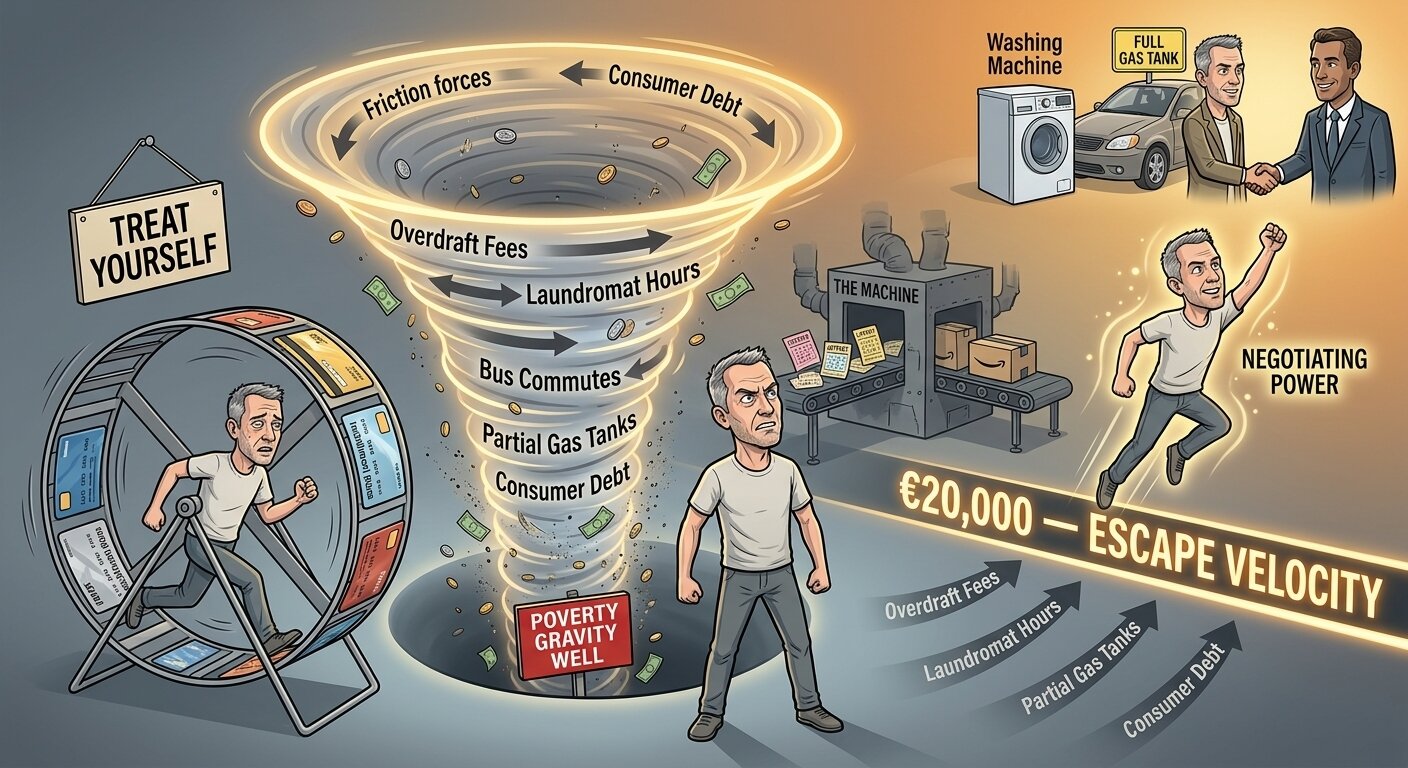
I once earned 50,000€ a year - roughly an average German household income at the time - and I had nothing. No savings, no buffer, overdraft fees every other month. That number shouldn't exist. But it sits in millions of bank accounts, and it proves something uncomfortable: poverty is rarely an income problem. It's a behavior problem wrapped in a physics problem.
This might hurt some feelings. It hurt mine first.
Hand a broke person a pile of money and check back in a few years. Lottery winners do this experiment for us constantly, and plenty end up worse off than before the win. The money didn't change the machine that burns it.
I know the machine from the inside. When I was young, payday meant Amazon order day. A side gig paid me 100€ cash? Straight to McDonald's to celebrate. My family was the hardest-working family I knew, and they lived paycheck to paycheck their entire lives. Not because they were lazy - because they never negotiated, never walked away from an abusive employer, and ruined their bodies for a wet handshake, terrified they'd never find work again.
Ten Things Your Company Should Never Delegate to a Machine, Ranked by Blast Radius
Classic scenario: an executive pasted an entire acquisition contract into a free public chatbot. He wanted a summary because reading twelve pages was, quote, "not a good use of his time." He got a lovely summary. He also got a confidential M&A document uploaded to a third-party server, which - depending on how you read the NDA he had personally signed - was somewhere between "career-limiting" and "please forward all future correspondence to my lawyer."
The best part: the deal was so straightforward that his own legal counsel could have summarized it in the elevator. He didn't save time. He converted a five-minute conversation into a compliance incident.
Everyone asks what AI can do for their company. Almost nobody asks the more profitable question: what should it never do? So let's invert the problem. If I wanted to guarantee an AI disaster, what would I deploy? Here's the list. Count how many your org is already doing. Two or fewer is excellent. Five or more - well, it was nice knowing you.
The hard no's: where lawyers get involved
1. Feeding confidential or regulated data into unvetted tools. GDPR data, health records, trade secrets, customer contracts. Pasting them into a public chatbot is publishing with extra steps. There's no attorney-client privilege for your chat history - it can be subpoenaed, and courts have already gone fishing in exactly those waters. The chatbot will never sit in the deposition. You will. That's the whole test right there: never delegate a decision to something (or someone) that can't be fired, fined, or sued for it. The AI has no skin in the game. Yours is the only skin available.
People occasionally corner me after a talk or in a comment thread and ask, half accusing: "So you're against AI?"
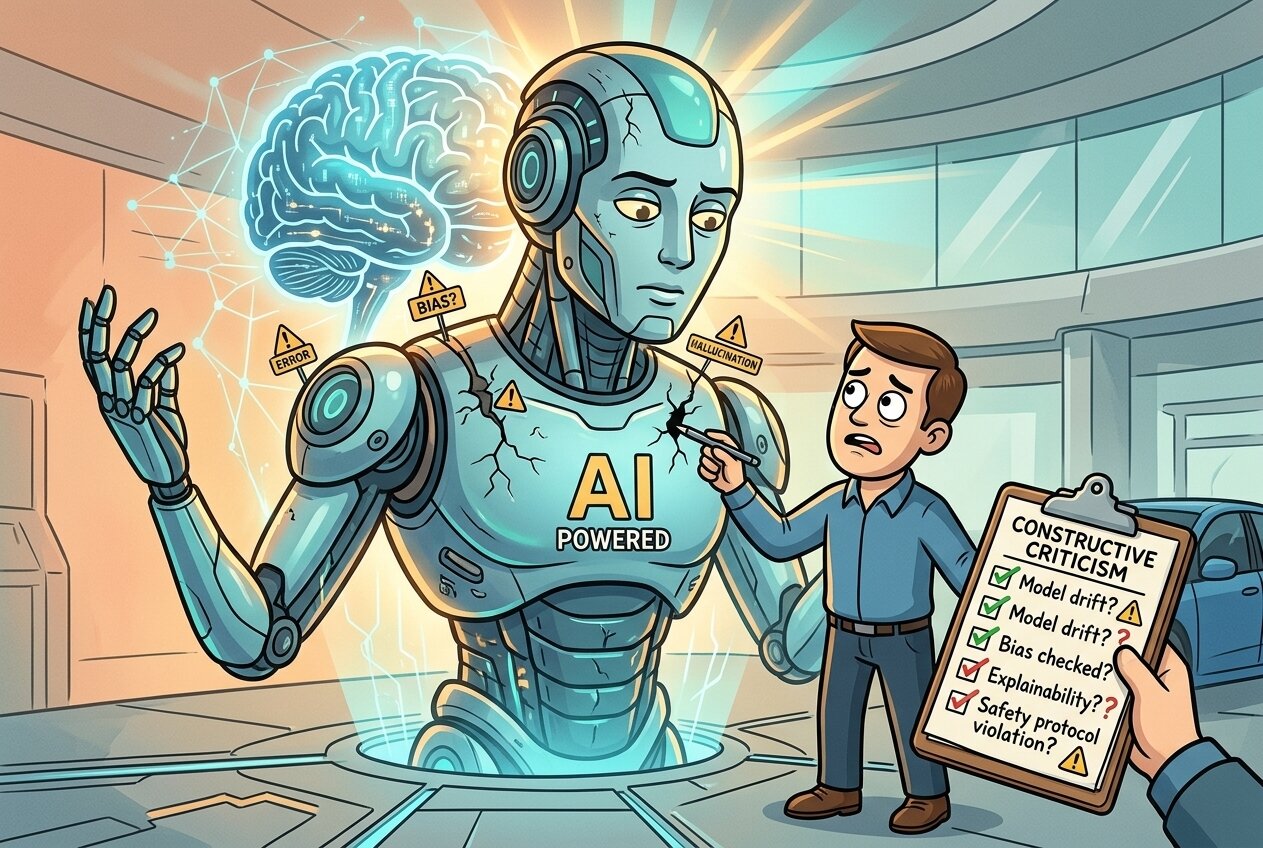
No. Clear no. I think AI is the future. I also think nuclear energy is one of the greatest inventions of the last century. You can build power plants that bring cheap electricity to millions of people. Or you can build the other thing. The technology doesn't care. The people wielding it decide the outcome - and right now, a lot of them are holding the hammer by the wrong end and wondering why the nail keeps laughing at them.
Being honest about a technology's capabilities, shortcomings, and risks is not opposition. It's the minimum requirement for using it well. Nobody calls a nuclear safety engineer "anti-nuclear."
The number that should end every AI keynote
A study published by the National Bureau of Economic Research surveyed almost 6,000 executives across multiple countries. Roughly 90% of companies implementing AI reported no discernible impact on productivity or employment. Not "underwhelming impact." No measurable effect at all. PwC's global CEO survey landed in the same crater: 56% of CEOs saw neither increased revenue nor decreased costs from AI after a year of deployment.
If your European tech company is not making these demands of every vendor, you are subsidizing the offshoring of your own economy and gambling with your sovereignty. I once sat through a postmortem with a German SaaS company that had a Severity 1 outage lasting 38 hours. Their vendor had a platinum support contract with "30-minute first response" but the first response was from Bangalore, asking, "Have you tried restarting the service?" After escalating for 6 hours, they got someone who knew the product - but that someone was in the US and needed to wake up. The contract had no teeth, the data was on AWS us-east-1, and the vendor's escalations went through three continents before reaching someone with decision power.
This is not a support experience. It is a hostage situation.
If you are a larger European tech company, you are actually in a position to make demands. You have the leverage. Use it. Here is the minimum you should enforce with every vendor and service provider. Do not apologize. Do not negotiate on the top items.
Top Priority - Non-Negotiable Core
Data hosted exclusively in Europe
Your PII, your customer data, your telemetry, your configuration, your logs - everything must be stored and processed within the EU. That means no data replication to US regions, no backup in Israel, no disaster recovery in Singapore unless it meets the same standard. The US has the Cloud Act and the Patriot Act. Europe has GDPR, and it is the strongest data protection framework on earth, but it only works if your data never leaves. Include contractual language that forbids data transfer to any territory without adequate protection, with explicit penalties for violating data residency.
 TrenchOps 🐎