 TrenchOps 🐎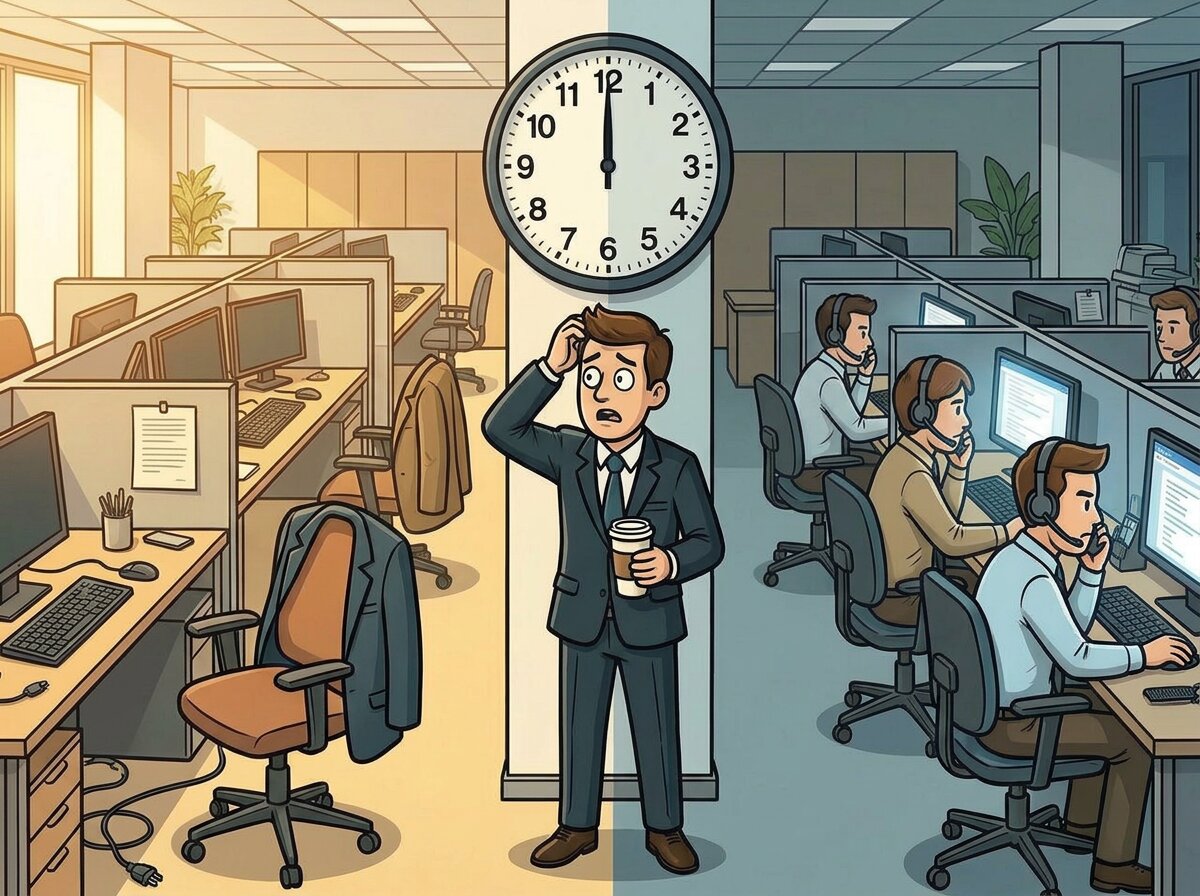
The Day Management Banned German in the German Support Team
And other lessons from running teams you don't understand
I once worked in the German unit of an international support organization. Next to us, both on the floor plan and spiritually: the French team. Everyone else on the planet got English support.
Why German support? Not because Germans can't speak English. They can. They just believe they can't, and not every German wears their accent as proudly as Werner Herzog. The market was simply too important. Why French support? France has the Toubon Law - product information for French consumers has to be in French - and in practice companies extend that to support, partly because, let's be diplomatic, the English proficiency curve in France has a certain shape.
Management hated both teams. Openly, structurally, consistently. Two reasons:
First, we were hard to replace. German-speaking engineers outside Germany were rare, and remote work wasn't a thing yet. Leverage. Managers despise leverage they don't hold themselves.
Second, our metrics looked "bad" and couldn't be fixed with a pep talk. German customers are demanding, so closure rates and CSAT ran lower. My favorite artifact: our 1-10 post-case survey collected an avalanche of German 5s. Not from dissatisfaction. A typical case: customer reports our software behaving "flaky," we analyze it, prove their storage paths are dropping, hand them a clean action plan, close the case. The German mind computes: "Friendly, competent, but my issue is technically not resolved. A fair 5." The same conversation gets a 7 or 8 in the anglosphere. Same work, same outcome, two points of CSAT difference - purely cultural. Any dashboard comparing those teams side by side was measuring national character, not support quality. Nobody upstairs wanted to hear that, because the dashboard was easier to read than the customer. On a side note: we also had a lot of German customers who gave of 1's and 2' because in the German school those are excellent grades, just like A's and B's. On a scale from 1-10 those values are, however, perceived as "catastrophic". Later, they changed the survey system to a smiley system which was harder to misunderstand.
Then came the meeting. Senior management had concerns that the German and French teams were - brace yourself - speaking German and French with each other. The official fear: we might be badmouthing management behind their backs. The solution: English among colleagues, native language only with customers.
The outrage was immediate and total. And here's the beautiful irony: the badmouthing they feared didn't exist before that meeting. It absolutely existed after. They manufactured the exact problem they were trying to prevent, in two languages, with excellent vocabulary. If you're a manager and you suspect something is brewing, talk to people or give them space. Don't forbid colleagues their native language inside their own team. Especially not German, a language so brutally efficient at complaining that suppressing it is a workplace safety issue.
But the masterpiece came later. The French team lead left, and management decided to replace him with a non-French manager. Efficient! Interchangeable! What could a French team possibly need a French manager for?
Three things, it turned out.
One: career conversations. Every engineer could handle English tickets. But negotiating your salary or discussing your development plan in a second language is a different sport. You're playing rhetorical chess with a handicap, and everyone on that team knew it. Those conversations quietly stopped happening.
Two: sometimes you need to calm down French customers. This works surprisingly better speaking French with them than English.
Three, and this one was genuinely cinematic: on day one, at the stroke of noon, the entire French team stood up and left the building. Together. The new manager thought a strike had started. Someone had to gently explain that nobody in France works between noon and 1pm - including, crucially, the customers. Zero calls ever came in during that window. The old French manager had known this, which is why the team lunch existed as an unwritten institution. We Germans, meanwhile, had to staff the phones through lunch, because a German admin whose storage array is on fire will absolutely call at 12:15 and expect an answer before the fire does.
The old lunch ritual was a fence in a field. The new manager saw no reason for it, so he tried to tear it down - and Chesterton's old warning applies: never remove a fence until you know why someone built it. The reason was invisible to him precisely because it lived in the culture he didn't share. Trust evaporated, the team fell apart, and the company ended up in the truly comedic position of searching for German speakers who also spoke French - the rarest possible candidate - to patch a hole they had drilled themselves.
👉 A metric compared across cultures measures the culture, not the team. A German 5 and an American 8 can be the same conversation.
👉 Banning a language to prevent gossip is how you found a gossip club with mandatory attendance.
👉 Every "weird" team habit is load-bearing until proven otherwise. Ask why the fence stands before you bulldoze it - the answer might be "because customers are at lunch too."
👉 The right to negotiate your own salary in your own language is not a luxury. Take it away and your best people negotiate with your competitor instead.
They tried to manage a team they refused to understand - and ended up hiring unicorns to replace the horses they chased away. 🐎
👇 Ever seen management "standardize" away something that turned out to be the thing holding the team together?
0 comment(s)
No comments yet. Be the first to comment.
Leave a comment