A rhetoric crash course for engineers who think being right should be enough
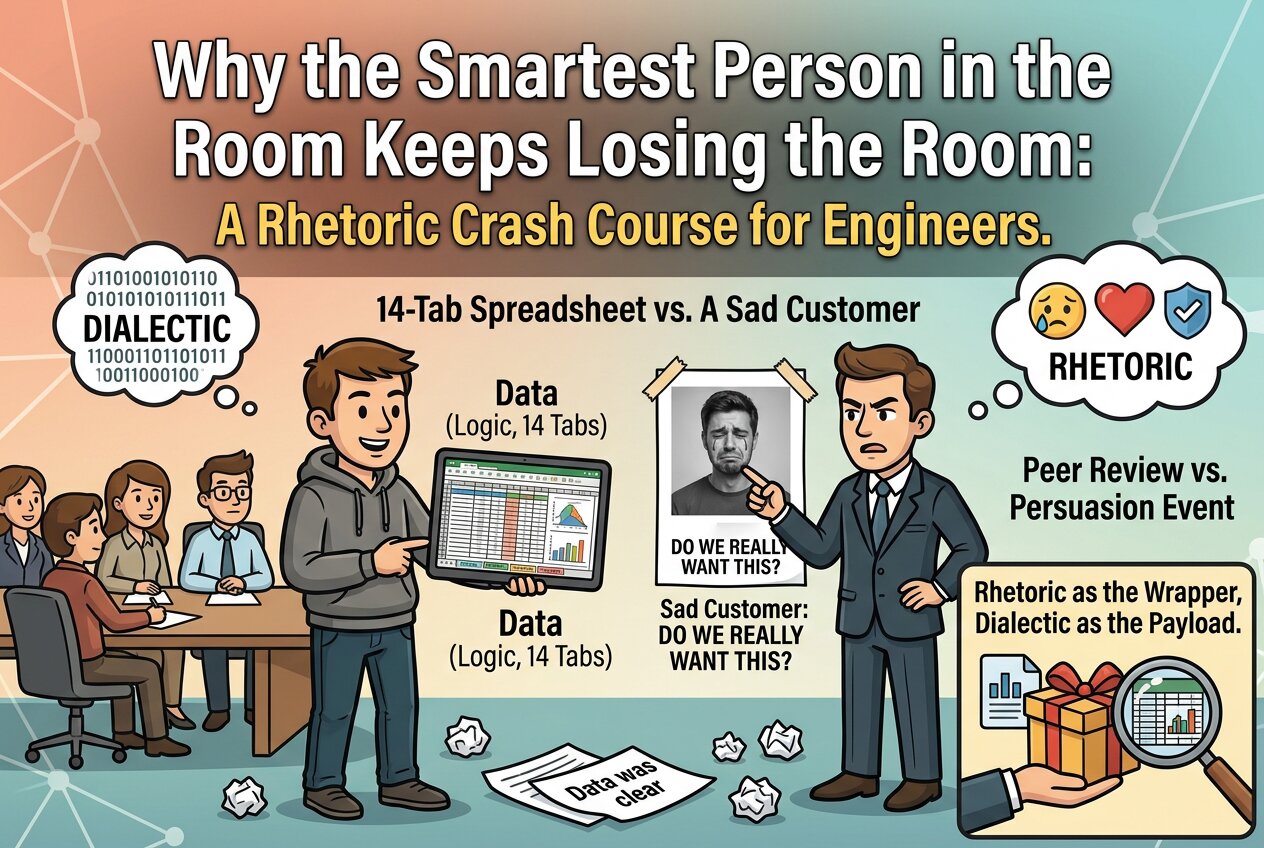
I once watched a brilliant engineer lose a budget fight to a manager armed with nothing but a stock photo of a sad customer and the sentence "Do we really want to be the company that lets this happen?"
The engineer had a spreadsheet. Fourteen tabs. Error bars. He was right about everything. He lost 9 votes to 1, and the one vote was his own.
That day I understood something that took me embarrassingly long in a 20+ year career: being right is a necessary condition for winning almost nowhere. Meetings are not peer reviews. They are persuasion events. And most technical people show up to a persuasion event with the wrong toolset, then walk out confused, muttering "but the data was clear."
This article is the crash course I wish someone had given me. No books, no courses, no Toastmasters. Just the operating manual, translated into engineering speak.
The two operating systems: dialectic and rhetoric
Aristotle - who was, in modern terms, the first systems architect of human communication - split persuasion into two modes.
Dialectic is logic-based debate. Facts, evidence, syllogisms. If A and B, then C. It works beautifully on people who are trained, willing, and incentivized to follow logic. Congratulations: that's you, your fellow engineers, and roughly nobody in your steering committee.
Why the people who scream loudest about "the rich" are the ones keeping the machine running
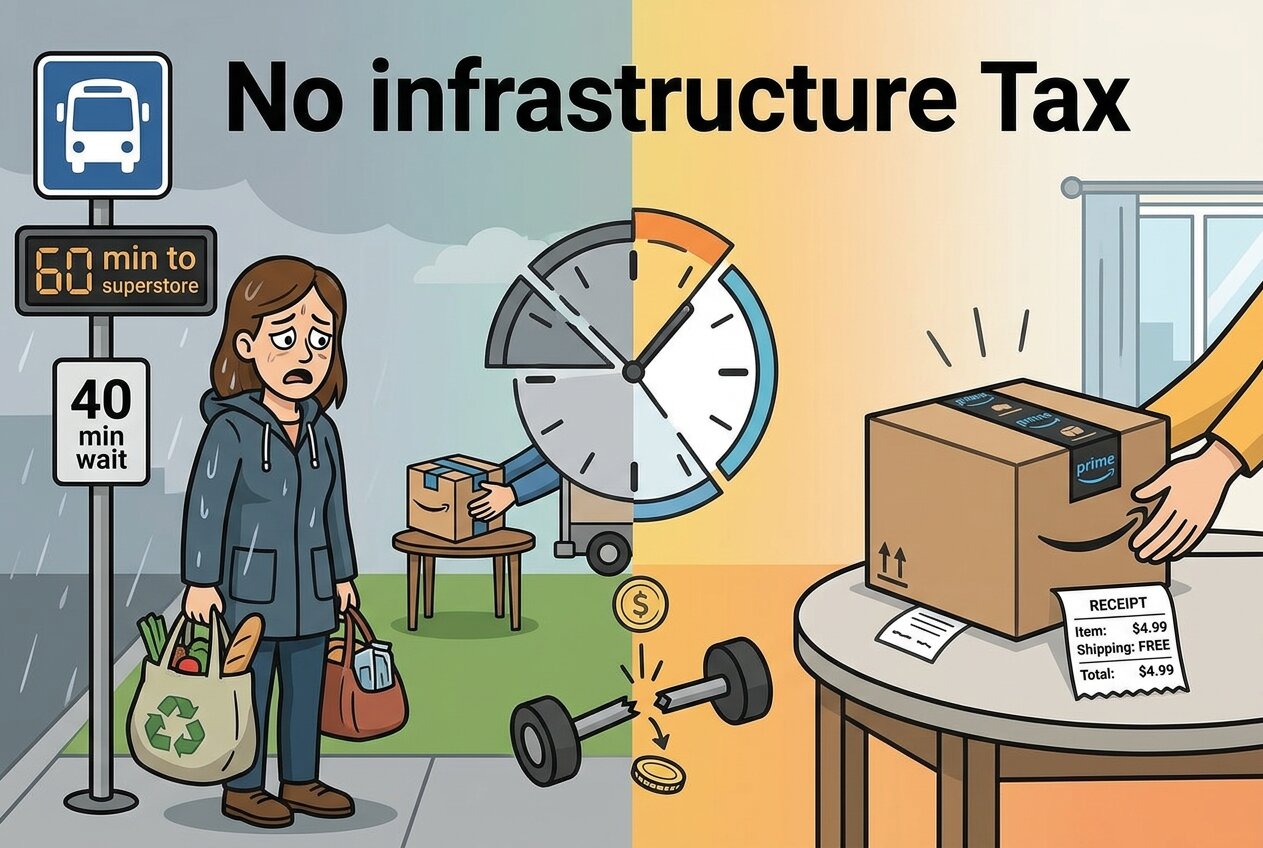
I was chatting with my Amazon delivery driver the other day. Casual stuff - weather, workload, the usual pleasantries you exchange with someone who knows your address better than some of your relatives.
I asked if he was worried about the economy.
He laughed. Not a nervous laugh. The kind of laugh that says buddy, I don't have time to worry about the economy because I can barely get a day off. More packages than he can physically deliver. Routes getting longer, not shorter.
So I said what any reasonable person would say: "The rich keep you busy, huh?"
He laughed again. Harder this time.
"Nah man. The mansions? One, maybe two packages. It's the other neighborhoods that bury me."
And then he drove off to his next stop, completely unaware that he'd just delivered the most concise economics lecture I've heard in years.
The consumption paradox nobody wants to talk about
There's a dominant narrative that says the economy is a machine built by the wealthy to extract from the poor. And there's enough truth in that to make it sticky. But the driver's observation reveals something more uncomfortable - and more useful - than any ideology can offer.
Many moons ago, back when I was an apprentice, a large shoe manufacturer walked into our software shop with a beautifully simple request: make our sole production more efficient.
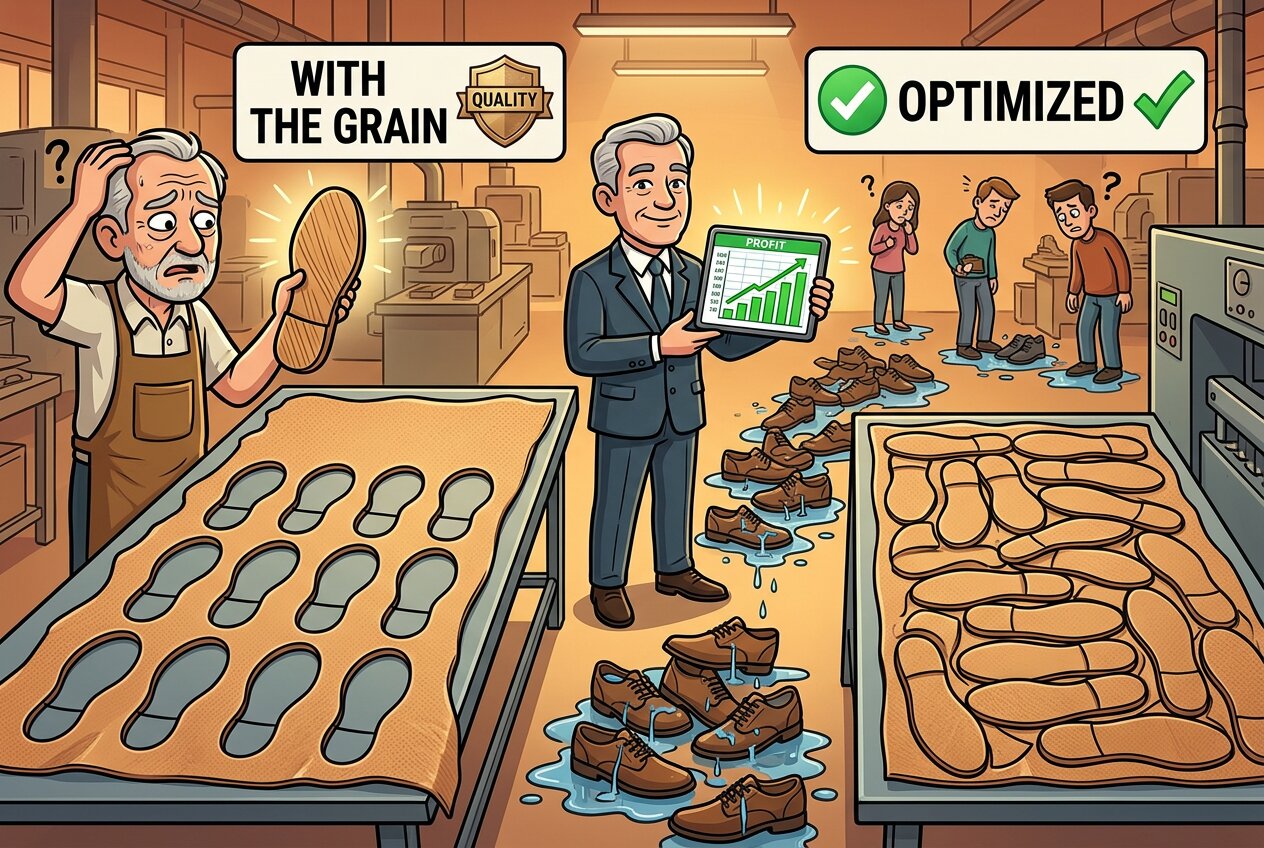
Their process at the time: punch shoe soles out of the raw material in neat, ordered rows. Like cookies. All facing the same direction, with generous gaps in between. The gaps became scrap, the scrap became cost, and the cost became our project. The ask: write software that arranges the sole shapes in a randomized, compressed, rotated layout - Tetris for footwear - so almost nothing goes to waste.
Technically? A fun little optimization problem. A junior could have shipped it in a week.
But our senior developer did something that took twenty seconds and changed the entire meaning of the project. He picked up a piece of the raw material, squinted at it, and asked:
"Excuse me - I know nothing about shoemaking. But the fibers in this material seem to run in one direction. If we punch soles out at random angles, against the grain... could that hurt the quality of the shoe?"
The customer, without a millisecond of hesitation: "Absolutely. Every sole cut against the fiber flow will be subpar. Those shoes will most likely start leaking early."
If your European tech company is not making these demands of every vendor, you are subsidizing the offshoring of your own economy and gambling with your sovereignty. I once sat through a postmortem with a German SaaS company that had a Severity 1 outage lasting 38 hours. Their vendor had a platinum support contract with "30-minute first response" but the first response was from Bangalore, asking, "Have you tried restarting the service?" After escalating for 6 hours, they got someone who knew the product - but that someone was in the US and needed to wake up. The contract had no teeth, the data was on AWS us-east-1, and the vendor's escalations went through three continents before reaching someone with decision power.
This is not a support experience. It is a hostage situation.
If you are a larger European tech company, you are actually in a position to make demands. You have the leverage. Use it. Here is the minimum you should enforce with every vendor and service provider. Do not apologize. Do not negotiate on the top items.
Top Priority - Non-Negotiable Core
Data hosted exclusively in Europe
Your PII, your customer data, your telemetry, your configuration, your logs - everything must be stored and processed within the EU. That means no data replication to US regions, no backup in Israel, no disaster recovery in Singapore unless it meets the same standard. The US has the Cloud Act and the Patriot Act. Europe has GDPR, and it is the strongest data protection framework on earth, but it only works if your data never leaves. Include contractual language that forbids data transfer to any territory without adequate protection, with explicit penalties for violating data residency.
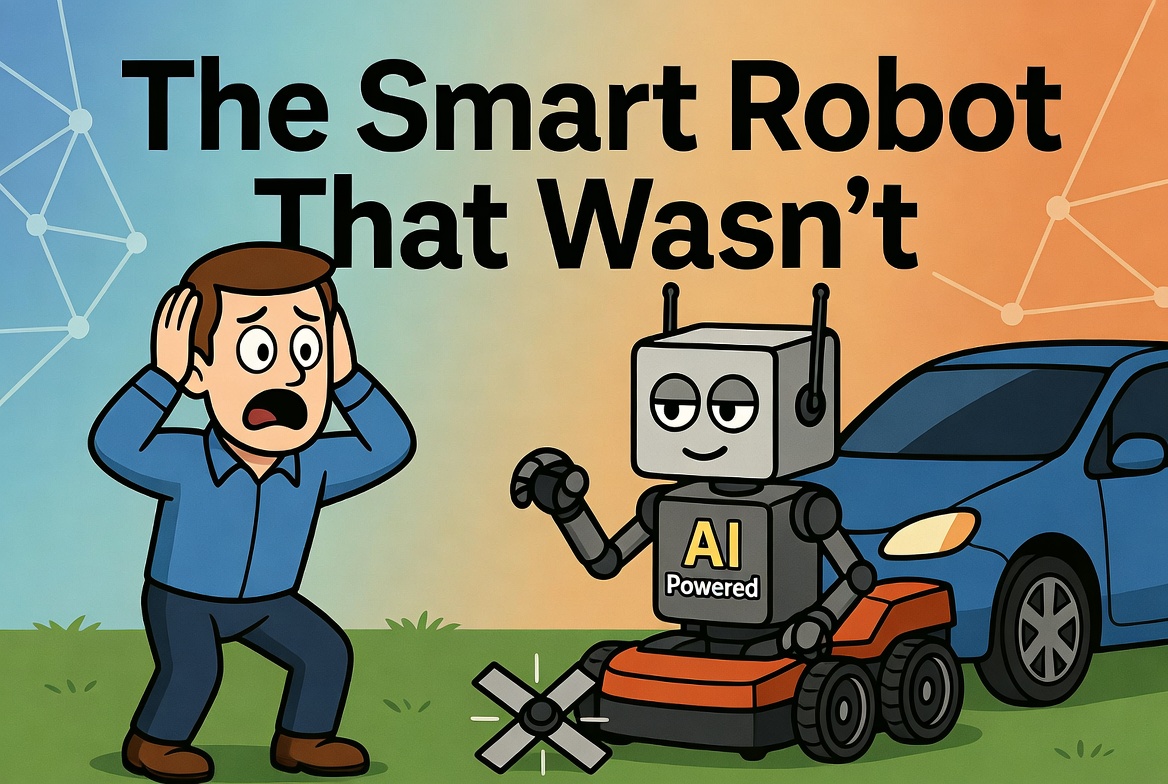
My wife loves our lawn mowing robot. She sees a robot quietly mowing the lawn and thinks "Finally, less work and a pretty lawn." I see a very expensive, very opinionated Roomba with blades that decides on its own which parts of the garden are worth mowing.
The marketing is excellent. It promises a smart, autonomous, AI-powered lawn butler that will handle everything while you sip coffee. The reality is a machine that regularly gets stuck on paths it has driven over a hundred times, parks itself under the car (because apparently cars are not obstacles), and occasionally loses its blades so you can never walk barefoot in your garden ever again.
It also has a special talent: finding the exact same spot to get stuck in, over and over. You rescue it, send it back to the charger, and it immediately heads straight back to the same stupid corner like it's on a personal mission. The RTK antenna is so sensitive that losing the signal makes it panic - but instead of waiting patiently like any sensible machine, it tries to start mowing anyway. And don't even think about tall grass or paths narrower than one meter. The robot itself is only 60 cm wide, yet it still needs a full meter of clearance. So I still end up manually mowing between the raised beds like some kind of 19th-century peasant.
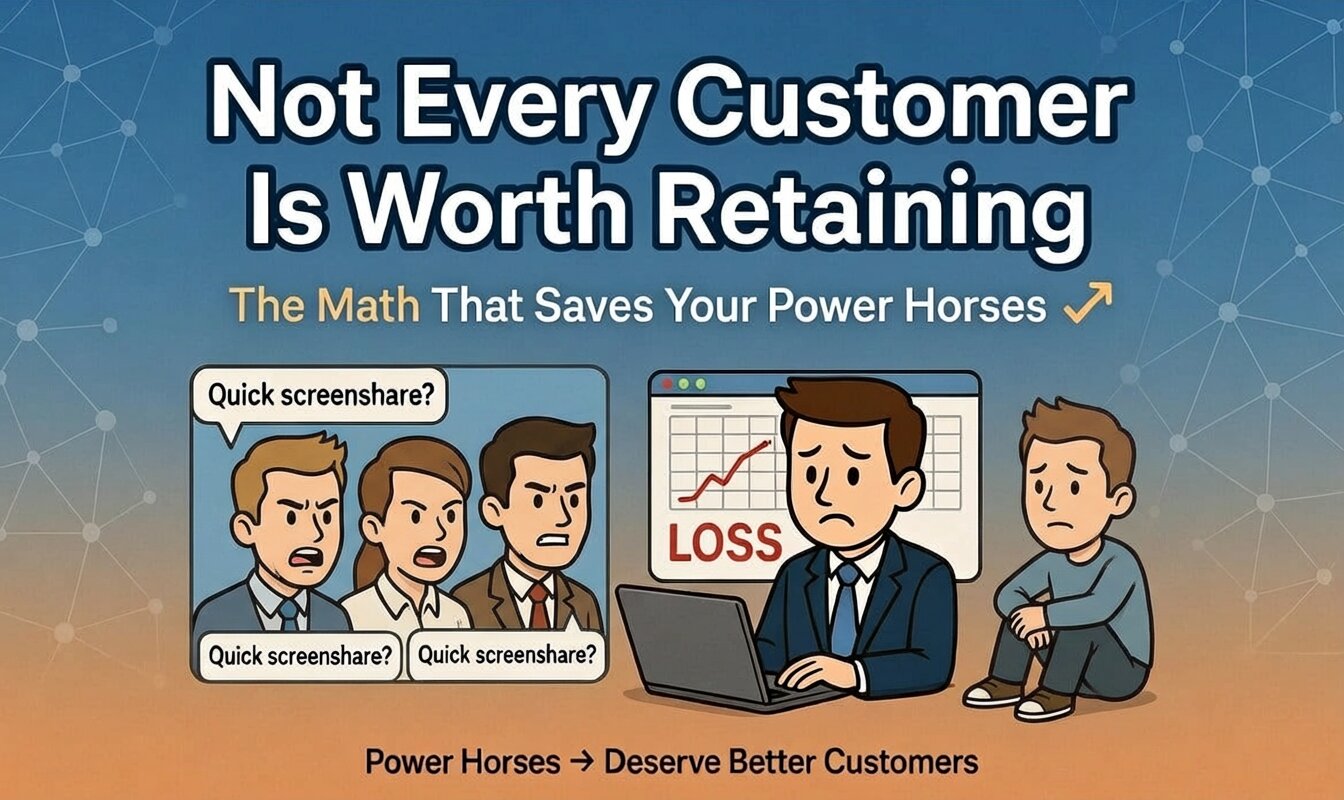
The Math That Saves Your Power Horses 🐎 and Your Bottom Line
We serve customers big and small. Some drop millions with us every year, some just the bare minimum. That's fine - revenue is revenue.
But there comes a point where the relationship stops being about delivering the product and renewing the deal. It becomes a slow bleed.
I once managed a cluster of "small but vocal" accounts. One in particular spent €2,000 a year. After passing the CSP (Cloud Service Provider) fees straight through, we kept roughly €400 in real margin - license plus support.
Now do the simple math every support leader should know by heart: A Level 2 or Level 3 engineer costs the company between €30 and €90 per hour. The average support case takes about two hours. That means every single ticket costs you somewhere between €60 and €180 - and that's before you count the emotional tax.
Two tickets. Just two. And your €400 margin is gone.
The third ticket? You're officially paying the customer to use your product.
Some of those tickets are legitimate - nasty bugs, missing docs, confusing UI. We're happy to help. Misconfigurations happen, and we fix them.
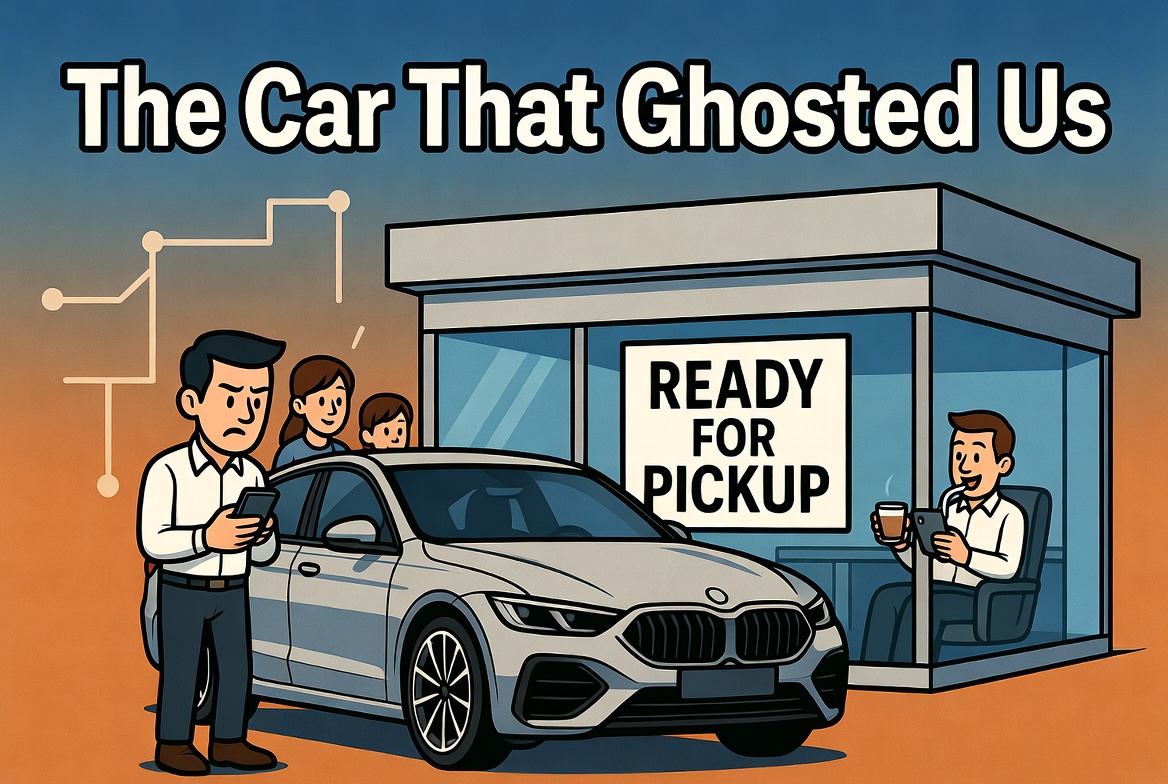
A few months ago our family outgrew our old car. We wanted something practical but a bit more comfortable - proper A/C, decent seats, and some modern safety features. Being the loving husband I am, I let my wife talk me into a German brand instead of my beloved "no unnecessary tech" Dacia special.
The sales guy at the dealership was actually great. Chill, honest about the budget, and patient when we changed our minds three times after the order was placed. We left the dealership excited. The car was ordered, a tracking link appeared, and we even bought accessories in advance like proud new parents.
Then the car arrived at the dealership... and the communication died.
For three full weeks the car sat there while we got nothing but radio silence. I sent polite emails. I called multiple times. Every time the guy said the same thing: "I'll check and get back to you."
He never did.
The car was physically ready. The only thing missing was basic human accountability. All I wanted was a simple update - "It'll be ready in two weeks" "There's a small delay" or even "I don't know yet, but I'll check tomorrow." Instead, we got ghosted by the very person who had been so helpful during the sales process.
 TrenchOps 🐎