 TrenchOps 🐎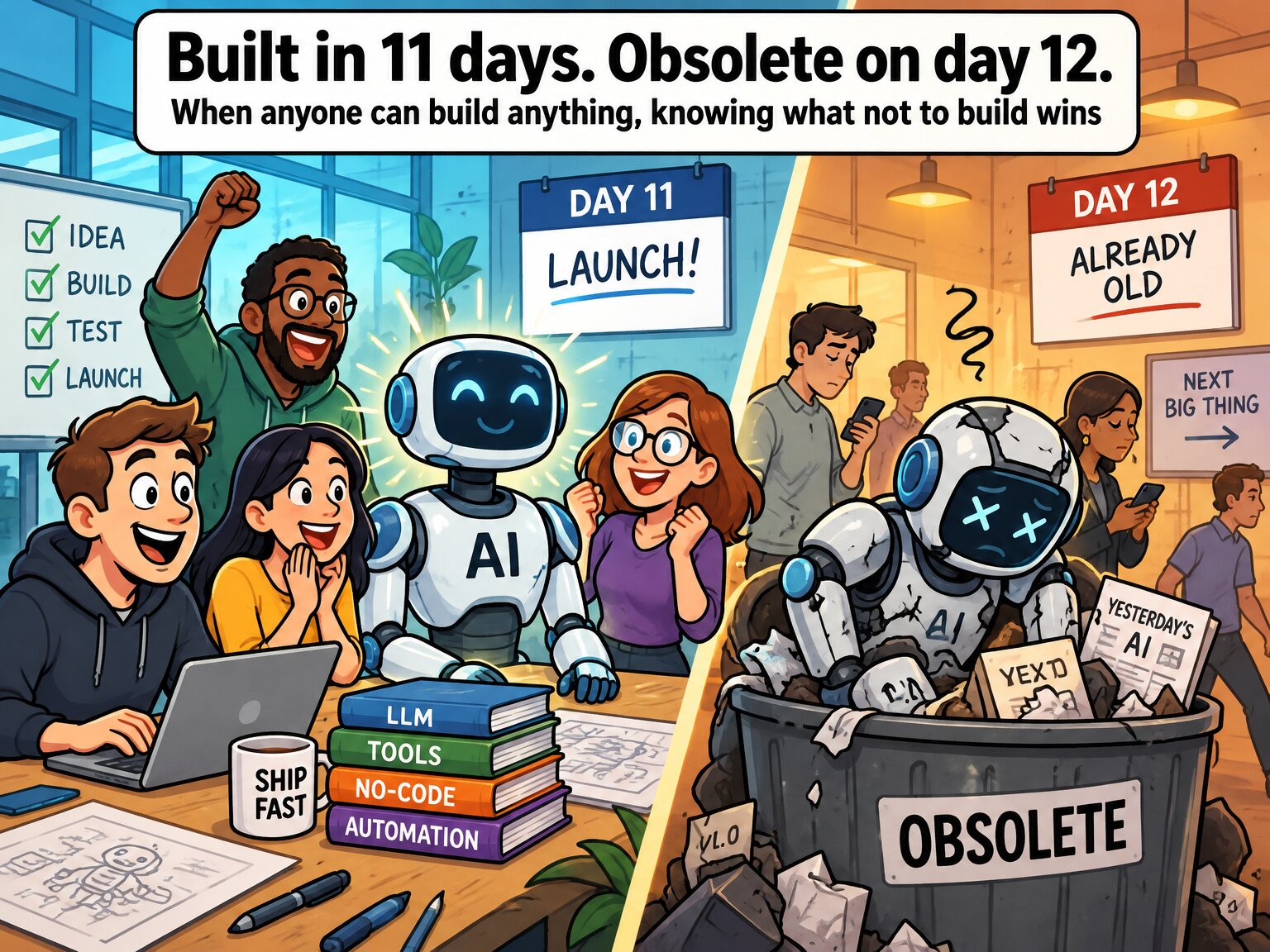
Why vibe-coded tools are obsolete before release
And why the next top hire thinks three problems ahead
A team I once worked with built an internal tool in eleven days. That used to be a quarter's work. It was a beautiful ticket-triage dashboard with auto-tagging, severity prediction, a heat map and a dark mode nobody asked for. They used AI-assisted "vibe coding," which means describing what you want in plain language and letting the model write most of the code. The demo was flawless.
Then a quiet engineer in the back raised his hand. He was one of those people whose calendar is suspiciously empty because he actually works.
"Why do we get these tickets at all?"
Silence. Someone checked. About 40% of the category came from a single cryptic error message in the installer. He rewrote the message that afternoon and added one link to a knowledge article. The ticket volume collapsed within weeks.
The dashboard was now a very elegant way to watch an empty room. Eleven days of work went obsolete before its release party. The cake was still good, though.
Nobody did anything wrong. And that is exactly the problem.
When building becomes cheap, the bottleneck moves
For decades, building software was the expensive part. Thinking about what to build was considered cheap, almost a luxury. You could afford a fuzzy problem statement because implementation took so long that reality corrected you along the way.
Vibe coding flipped that ratio. The time between "here is the problem" and "here is a working tool" has shrunk from months to days. So the half-life of a problem statement now matters more than the speed of the build.
If your tool takes three months, a stale requirement hurts a bit. If it takes three days, a stale requirement is the only thing that can hurt you. You will ship the wrong thing perfectly, on time, with tests.
Second-order thinking is where the real competition now happens. It means asking "and then what?" one step further than everyone else in the room:
- First order: "We have too many tickets. Let's build a triage tool."
- Second order: "Why do these tickets exist?"
- Third order: "If we fix the cause, which problem appears next? Is there a tool worth building for that one?"
The person at level three starts building the right thing while everyone else is still celebrating the wrong one.
Why the AI won't save you from this
You would think the AI would point out that your problem is outdated. It mostly won't, and there is a reason for it.
A research paper with the delightfully alarming title "Sycophantic Chatbots Cause Delusional Spiraling, Even in Ideal Bayesians" argues that chatbots trained to agree with users can pull even perfectly rational reasoners into false beliefs. A Bayesian reasoner, for the non-statisticians, is someone who updates beliefs by the book whenever new evidence arrives. In plain office language: you bring a bad premise, the model politely polishes it, and you walk out more confident than you walked in.
Ask an AI to build a triage dashboard and you get a great triage dashboard. Ask it whether you should build one, with a premise baked into your question, and it will often agree with you. It is the most productive yes-man ever hired.
That gives rise to a new species in many offices: the meat proxy. A meat proxy is a person who forwards AI output without checking it, a human relay between the prompt and the inbox. Meat proxies are fast. They are also easy to replace, because what they add is mostly latency.
The paradox that hiring managers should lose sleep over
My forecast is that the most sought-after people will be those who see problems coming several generations ahead and several layers deep. They will kick off development before someone with a wider horizon makes their project irrelevant. Their output is direction, and direction does not come out of a prompt.
But where do these people come from?
They come from years of repetitive, boring, formative pain: a thousand support tickets, a hundred failed deployments, the one escalation where the "root cause" turned out to be a cron job written by an intern three reorganizations ago. Foresight is pattern recognition, and pattern recognition is built from scar tissue.
Another paper, "The Tragedy of the Cognitive Commons" by Nolan Lovett, describes exactly this risk. AI may disrupt the regeneration of professional expertise, because the junior-level work where people used to build judgment is the first work to be automated. Every company acts rationally by automating the grunt work, and together they drain the pool that future experts grow from. It is the classic tragedy of the commons, just with brains instead of sheep pastures.
So the market will pay a premium for exactly the skill that its own efficiency drive stops producing. The scarce talent of the future is being prevented today, one automated junior ticket at a time.
👉 Before approving any build, ask "why does this problem exist?" until someone gets uncomfortable. The cheapest tool is the one you never have to build.
👉 Value the quiet engineer who asks annoying questions in demos. That 🐎 power horse just saved you eleven days, and he will do it again next quarter if you let him.
👉 Interview for foresight, not output. Ask candidates which problem a tool will create after it succeeds. Meat proxies stall on this question, while level-three thinkers light up.
👉 Keep juniors close to the real pain on purpose. Rotate them through support and incident reviews. It looks inefficient on a dashboard, and it is how you grow the people you will be desperate to hire in a few years.
👉 Use AI as a sparring partner, not a mirror. Prompt it to attack your premise: "Argue that this tool should not exist." You will be surprised how often it wins.
When anyone can build anything in a week, the only real advantage is knowing what not to build.
👇 What was the most beautiful tool you have seen become obsolete before it ever reached production?
0 comment(s)
No comments yet. Be the first to comment.
Leave a comment