For months we've been told the same story in every LinkedIn post, all-hands, and glossy keynote: AI is going to 1000x software engineering. CEOs are high on their own supply, promising 1000x efficiency, vibe-coded features, and a future where humans are mostly optional. Just prompt it, ship it, profit.
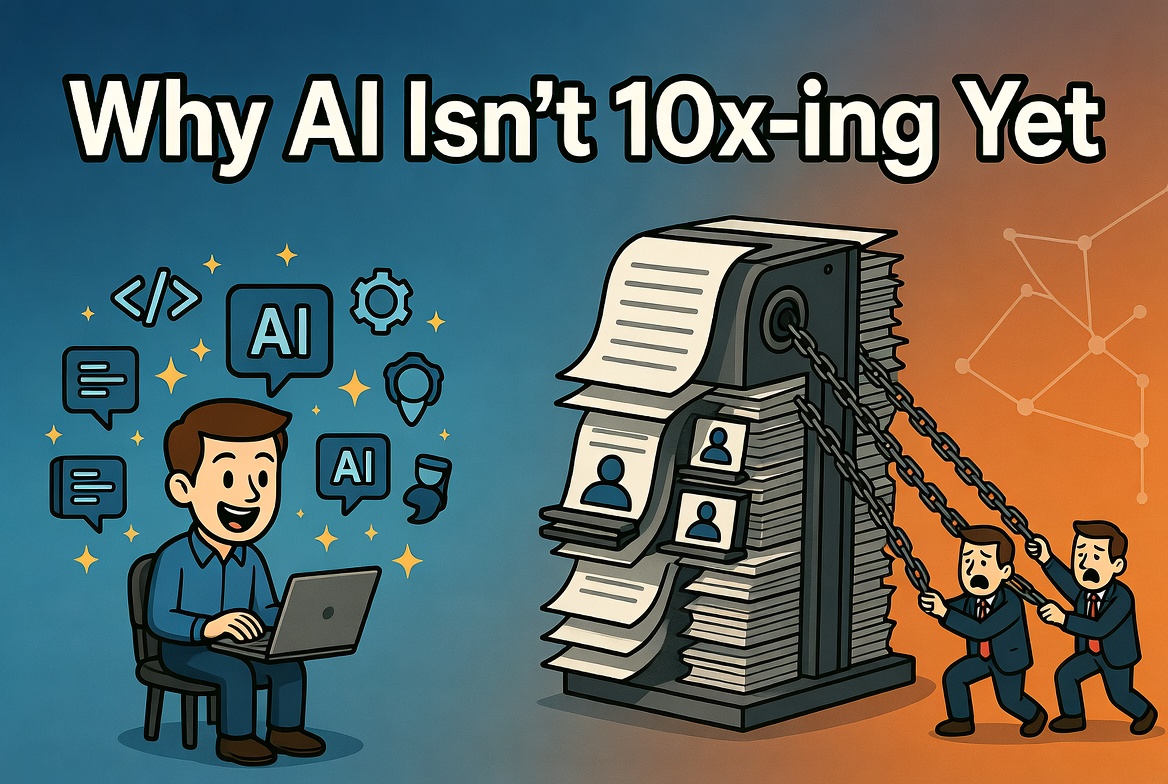
Six months later the dashboards look suspiciously familiar. No 100x. No 10x. Not even a polite 2x that anyone can show without footnotes the size of a small novel.
Funny how that works.
The promise was beautiful: AI writes the code, humans sip coffee, and velocity goes parabolic. The reality is a bit more... human. Vibe coding is genuinely delightful for knocking out a quick 40-line script. But the moment you scale to anything enterprise-shaped - with strict requirements, security audits, scalability, platform support, regression testing, governance, and the whole boring adult checklist - the magic evaporates.
Hallucinations? Still very much a feature, not a bug. Debugging overhead? Massive. Security risks? You're basically playing Russian roulette with production data. And the models start to degrade on complex contexts faster than a free trial on the last day of the month.
But the real killer isn't the AI itself. It's the organizational layer that still moves at 2005 speed while the code generation moves at 2026 speed. Here's the conceptual truth nobody wants to say too loudly in the strategy off-site: the bottleneck was never the developers. It was the organizational overhead sitting on top of them. Processes. Bureaucracy. Decision latency. The six-week email chain to "align on requirements." The three layers of sign-off before anyone can change a single scope item. The safety nets that still exist because regulators and customers have this inconvenient habit of expecting things not to explode in production. AI didn't magically dissolve any of that. It just made the old friction more visible - and a lot more expensive. You still need:
(When "It's Cheaper This Way" Is the Most Expensive Lie in IT)
I was sixteen, still an apprentice, fresh out of school, and my biggest concern in life was whether I had enough money left for the new Pokémon cards after lunch.
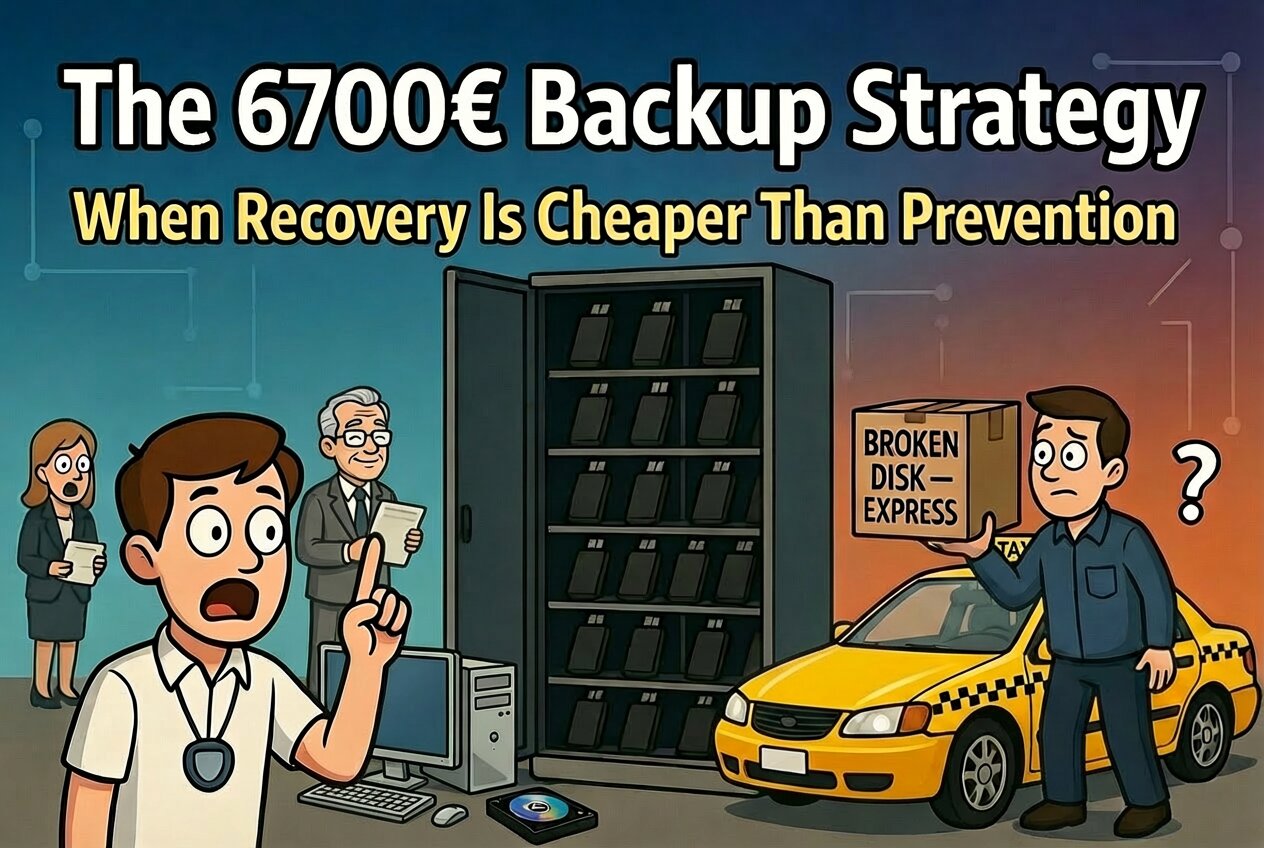
Then HR called in a panic. One of their desktop PCs wouldn't boot. Classic clicking death rattle from a 10k RPM hard drive that had clearly given up on life. I walked in, confirmed the drive was toast, and casually told the lady we'd just swap the machine and restore her data from the network share.
"There are no network shares." she whispered. "This PC holds every single interview question for the 100 applicants coming in tomorrow."
No backup. No off-site copy. No second machine. Just one lonely desktop in the corner of HR, guarding the future hiring plan of the entire company. And tomorrow? One hundred candidates were showing up for interviews.
She was hysterical. I was sixteen. So I did what any smart-mouthed apprentice would do: I joked that we could send the dead disk to a professional data recovery lab... but it would be stupidly expensive.
She didn't laugh. She nodded frantically. "YES - do that. Right now!"
I've spent twenty years in the trenches watching two kinds of people argue about the future.
The social and political optimists say: "If we just pass the right laws, fix the culture, and get the right people in charge, everything will finally get better."
The technological optimists say: "Give humans better tools and they'll figure out the rest."
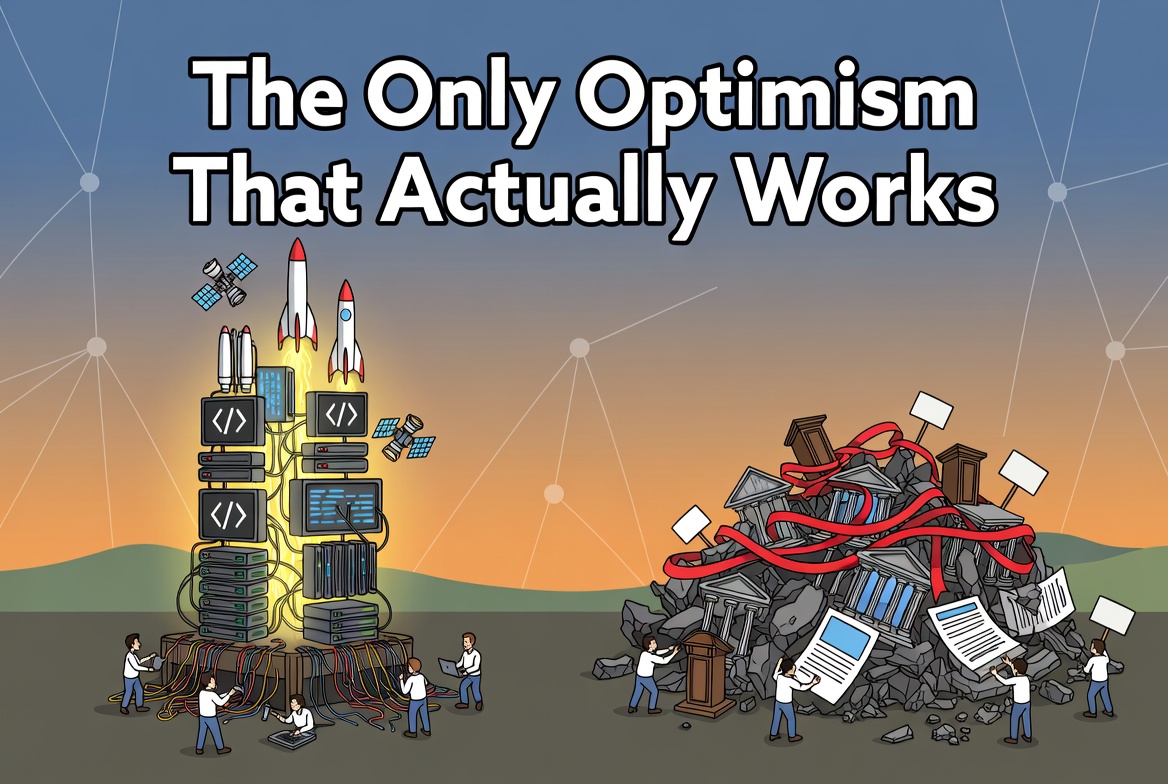
History keeps proving the second group right - and the first group spectacularly wrong.
Look at the pattern. Every decade we get grand promises about how new regulations, new social movements, or new political saviors will solve poverty, inequality, education, or healthcare. The results are usually modest at best, expensive, and sometimes actively harmful. Meanwhile, a few nerds in garages or labs quietly ship a new technology that changes daily life more in five years than ten years of policy ever could.
The smartphone didn't need a government program to connect the world. The internet didn't ask for permission to democratize knowledge. Cheap solar, Starlink, AI, and cloud computing didn't wait for the perfect political moment - they just got built.
In support, we see this every single day. We complain about broken processes, terrible CRMs, and endless bureaucracy. Social optimists would try to "fix" it with more meetings, more policies, and more mandatory training. Technological optimists ship a script, a dashboard, or an automation that actually removes the pain. Guess which one actually moves the needle?
 TrenchOps 🐎