Everyone says "customer first". Almost nobody means it.
Years ago, I shared a few carbonated drinks with an SVP whose management philosophy fit on a bar napkin: "Be employee obsessed."
I was skeptical to the point of rudeness. So I asked him straight: "with that approach, how do you make sure customers get world-class service?"
He didn't blink. "If you hire top performers, you never have to worry about customer satisfaction. I have never once hired a talented support person who wasn't already customer obsessed. Nobody ends up in this job by accident. It's ingrained, or they'd have picked a role where humans don't call you when their week is on fire."
So the model was simple: hire people who are obsessed with customers, then spend your own energy protecting them. Not managing them. Protecting them. From three specific things: corporate nonsense, burnout, and what he cheerfully called "stupid customers".
Let me unpack all three, because each one had teeth.
Burnout is rarely about volume
His claim: information technology has one of the worst burnout rates in white collar work, and the cause is usually misdiagnosed as "too much work". Sometimes it genuinely is too much work. But more often, he said, people are either doing the wrong things, or doing the right things in a broken flow imposed on them by the company.
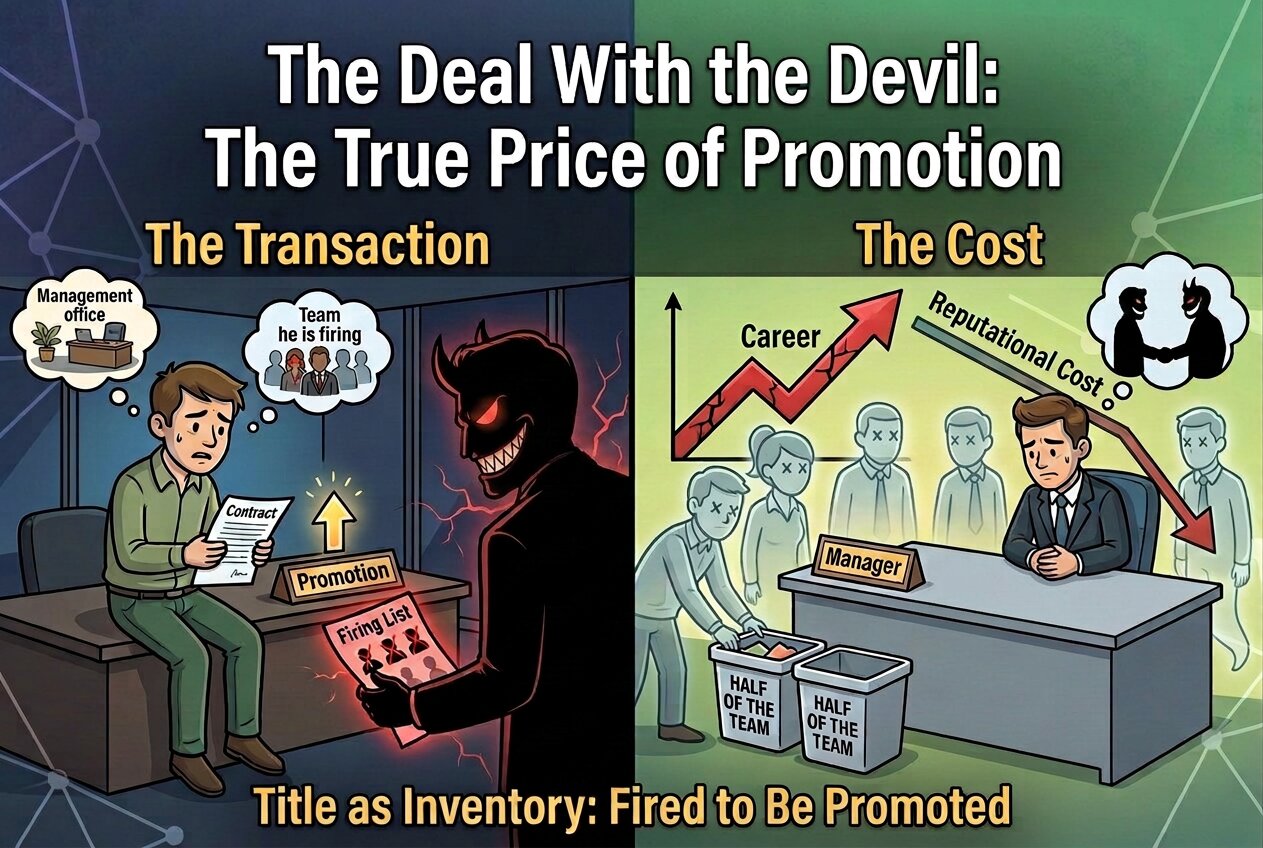
They finally offered him the promotion he had wanted for years. There was one condition.
Fourteen years, no layoffs. That was the company's quiet flex, repeated in every onboarding and printed in every recruiting deck like a family crest. Then one quarter the music stopped and a slide appeared with the word "rightsizing" on it, in a font nobody in the building had ever seen before.
Honestly? Some of it was overdue. Every company that grows fast accumulates sediment: the sloths you politely forgot to fire during probation, the people who mistook a chair for a career, the middle managers who systematically promoted the loudest guy in the room while the actual power horses 🐎 quietly kept the product alive. Cutting that is not cruelty. It's hygiene.
What one department did next was something else entirely.
Late shift
I was on late shift. I loved late shift. Empty office, pizza arriving around eight, and customers who were audibly relieved that a German-speaking human still picked up the phone at 6 PM. Nobody scheduling "quick syncs." Just work, the good kind.
That evening, a colleague from another department came over and sat on the edge of my desk. Senior CSM. Longer tenure than half my team combined. Genuinely excellent at what he did, and stuck, because his role had roughly the career ceiling of a parking garage. He had asked about moving into management before. Repeatedly. The answer had always been a variation of "not right now."
The fastest way to make yourself worth exactly zero
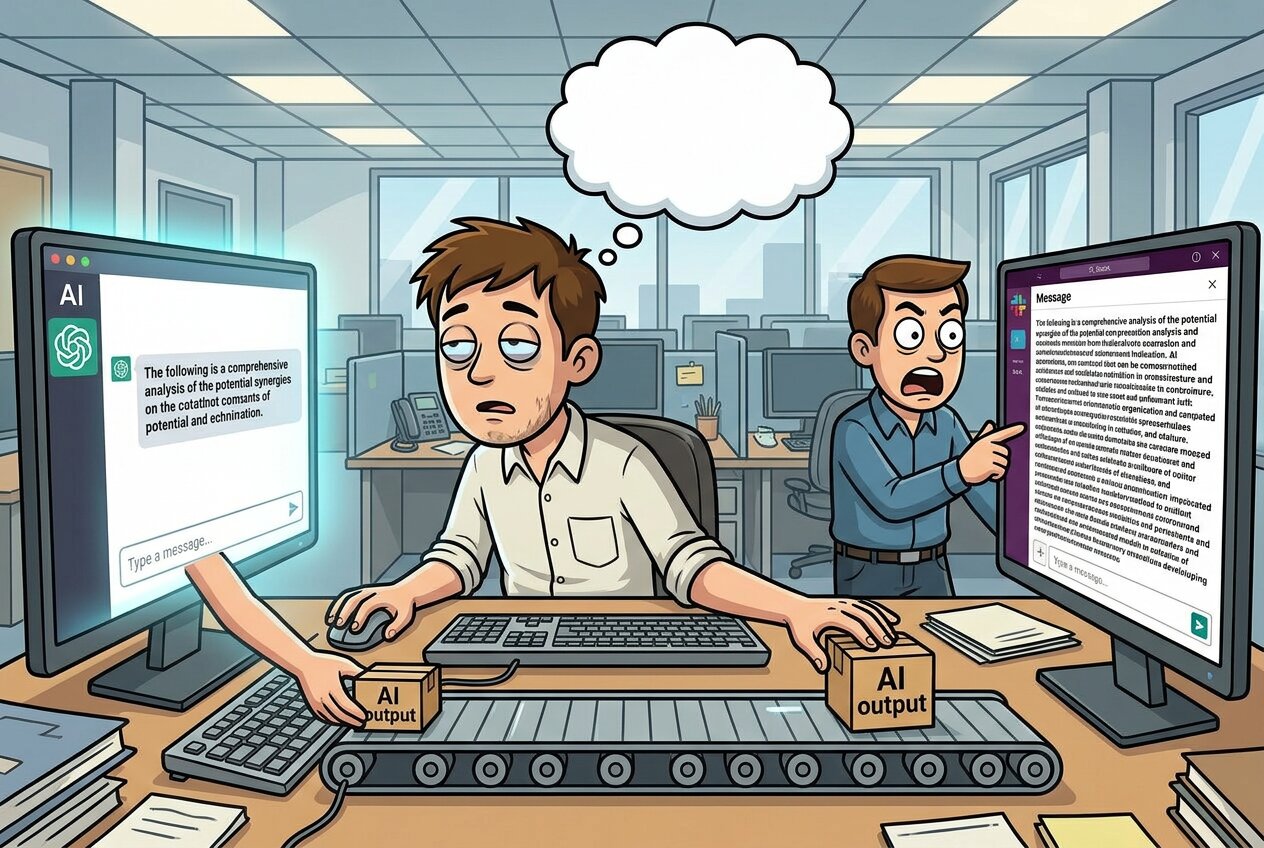
There is a new job title nobody applied for: meat proxy. A person who forwards AI-generated text, code, or output without reading, understanding, or validating it. A relay. A biological USB cable between a language model and a recipient who has the same model open in another tab.
I first noticed one in a ticket queue. A customer escalation, priority high, angry-but-still-polite tone, the kind you can fix in twenty minutes if you actually read the logs. The response that went out was 900 words of immaculate structure. Bullet points. A summary. A "next steps" section. Three suggestions, all technically plausible, none of them relevant, because the product had not behaved that way since two major versions earlier.
The customer replied in one line: "Did a human read this?"
That question is the whole problem. Once it gets asked, you never fully recover. Because the customer's next thought is the dangerous one: if a machine is answering me, why am I paying for you?
The economics are brutal and simple
Value comes from what is scarce. Text is not scarce anymore. Text is now a utility, like tap water, and roughly as expensive.
If your European tech company is not making these demands of every vendor, you are subsidizing the offshoring of your own economy and gambling with your sovereignty. I once sat through a postmortem with a German SaaS company that had a Severity 1 outage lasting 38 hours. Their vendor had a platinum support contract with "30-minute first response" but the first response was from Bangalore, asking, "Have you tried restarting the service?" After escalating for 6 hours, they got someone who knew the product - but that someone was in the US and needed to wake up. The contract had no teeth, the data was on AWS us-east-1, and the vendor's escalations went through three continents before reaching someone with decision power.
This is not a support experience. It is a hostage situation.
If you are a larger European tech company, you are actually in a position to make demands. You have the leverage. Use it. Here is the minimum you should enforce with every vendor and service provider. Do not apologize. Do not negotiate on the top items.
Top Priority - Non-Negotiable Core
Data hosted exclusively in Europe
Your PII, your customer data, your telemetry, your configuration, your logs - everything must be stored and processed within the EU. That means no data replication to US regions, no backup in Israel, no disaster recovery in Singapore unless it meets the same standard. The US has the Cloud Act and the Patriot Act. Europe has GDPR, and it is the strongest data protection framework on earth, but it only works if your data never leaves. Include contractual language that forbids data transfer to any territory without adequate protection, with explicit penalties for violating data residency.
Why Smart Companies Are Mad to Trust Any Foreign Software With Their Crown Jewels
You know the date. A single file pushed by a high-profile cybersecurity vendor turned millions of computers into expensive paperweights. Airlines grounded flights. Hospitals stopped surgeries. Banks locked their vaults. It was the largest digital outage in history.
That file ran at the deepest level of the operating system. It could read every byte of memory, every keystroke, every piece of intellectual property on those machines. And it was delivered silently, automatically, without any human approval.
Now ask yourself: how many other files like that are already on your systems?
This isn't about one company or one country. It's about a structural vulnerability that every organization faces when it outsources its security and operational software to vendors with close ties to any foreign intelligence apparatus. Some of these vendors are based in democracies, which is no guarantee that they don't spy on you or aren't concerned about your sovereignty behind closed doors. Some are based in countries with documented programs to use commercial software as offensive tools. Some have even been caught using shell companies to corrupt the supply chain itself.
You don't need to know which ones. You only need to know that the risk exists, and the only safe move is to reduce your dependency.
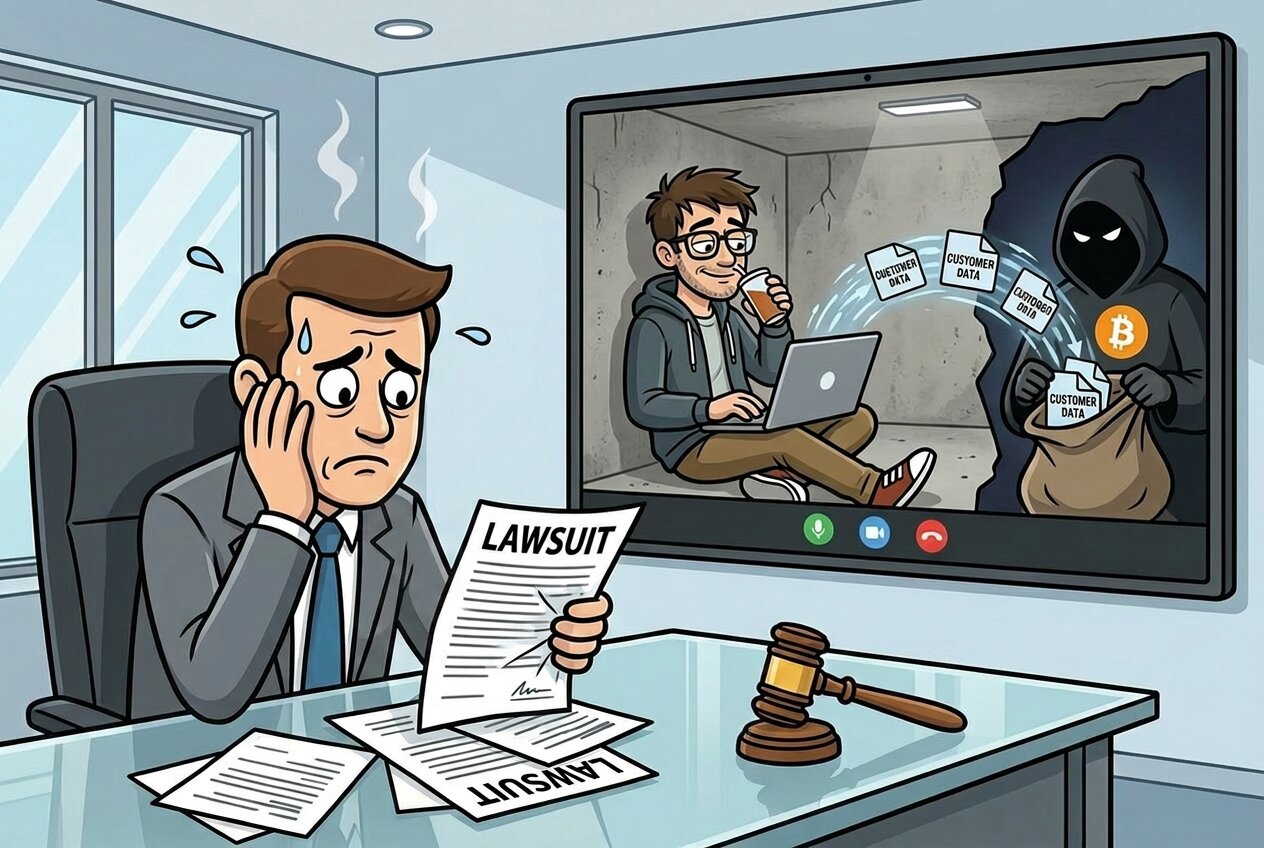
A friend told me this story about a Company that hired a remote support engineer from a country with beautiful beaches and terrible rule-of-law. They worked European hours, had full access to the CRM, and handled tickets for enterprise customers across Germany, France, and the UK. On paper, it was a perfect hire: talented, responsive, and cheap.
After a few months, they noticed an odd pattern. Customer churn was increasing in a way that correlated with this engineer's shift. No obvious cause in the tickets themselves. But an elaborate security audit revealed that a competitor had started approaching their customers with suspiciously accurate knowledge of their infrastructure, decision-makers, and contract terms.
That engineer had been quietly exporting customer data from the CRM during his shift for three months. He just looked into the account data, wrote it in a notepad, typed it back into his personal computer, and then sold it to a shady data broker who resold it to the competitor. The total payout to the engineer was probably a few thousand dollars (or the equivalent in Bitcoin). A fraction of their annual salary.
The company found out. They fired the engineer. They contacted local law enforcement. And then they hit a wall.
 TrenchOps 🐎