Why a five-stage interview process tells you everything about the job - before you even get it
The job post says "fast-paced environment." The process says recruiter screen, hiring manager call, take-home assignment, technical deep dive, second technical deep dive, "culture add" panel, psychometric questionnaire, and a final chat with a VP who will ask you where you see yourself in five years.
That's eight rounds. For a company that claims to "move fast".
Believe the process, not the post.
Times are rough. Plenty of good people lost their jobs to the AI wave, and plenty more are quietly refreshing job boards at their desks. My personal bet is that once the AI honeymoon ends, a lot of companies will discover that their institutional knowledge left in a cardboard box, and they'll be rehiring. Until then, desperation is a terrible career advisor. It tells you to say yes to every round, every test, every "just one more quick call with a stakeholder."
Don't. Here's why.
What an interview is actually for
A competent company reads your CV and can map your skills to its needs. With a little effort, it can verify most of your history. So the interview only has three real jobs.
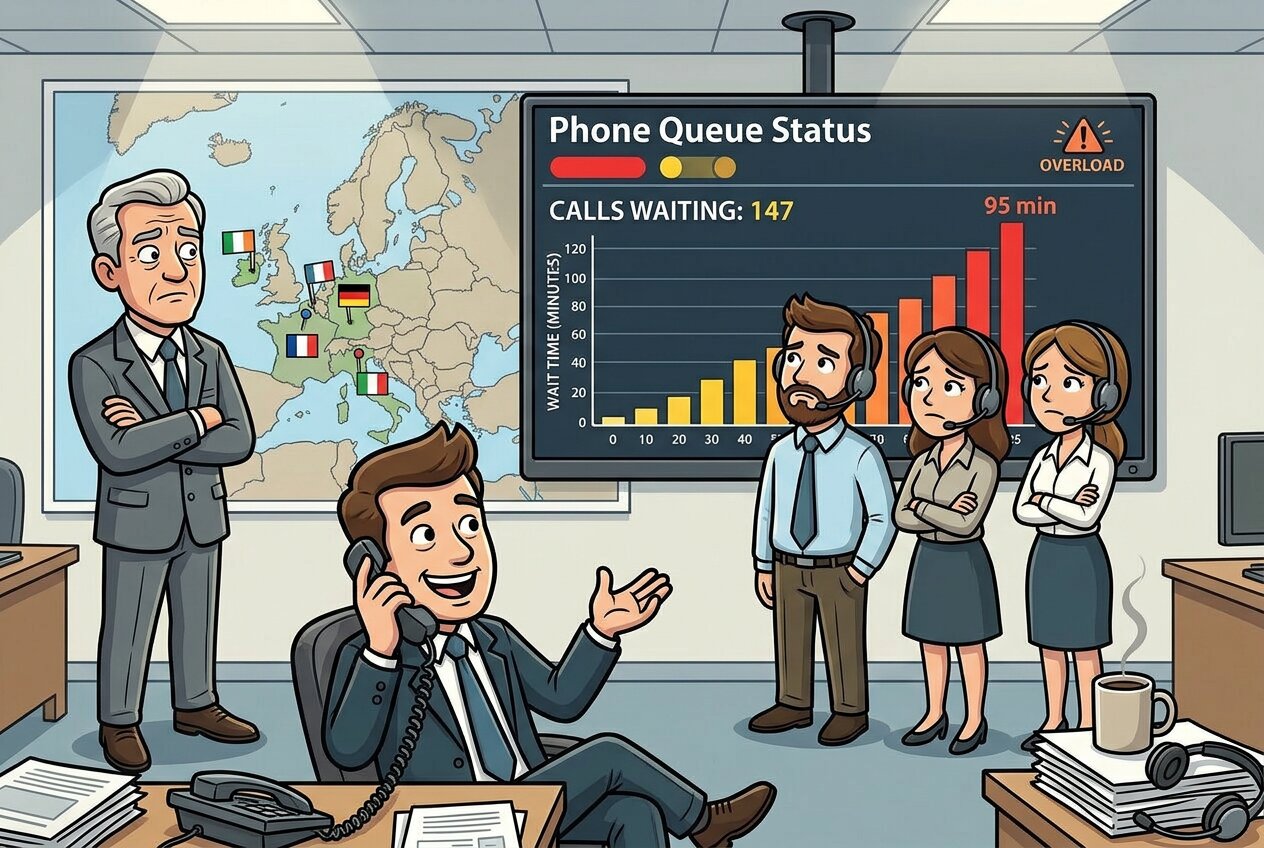
What happens when a company discovers that other countries are not just America with worse coffee
Years ago I moved from Germany to Ireland for work. My actual plan had been Sweden - some call it Germany without the historical baggage - but the offer came from Ireland, which is also green, also rainy, and considerably more relaxed about deadlines. Fine. Adventure accepted.
What I got was a masterclass in something no onboarding deck ever covers: how much money a company will burn to avoid learning that other cultures exist.
Exhibit A: the man who discovered Italy
A colleague came back from his first holiday on the European mainland genuinely shaken. Not by the food, not by the driving (the Irish drive on the wrong side like the British). By the fact that Italians, in Italy, mostly speak Italian.
He had assumed English was the continental default. Second language, worst case. The idea that a bakery in Naples might not have a fluent English speaker on staff had never crossed his mind. I like to think he still managed to relax. Eventually. Somewhere around day four, probably with the help of the wine, which needs no translation.
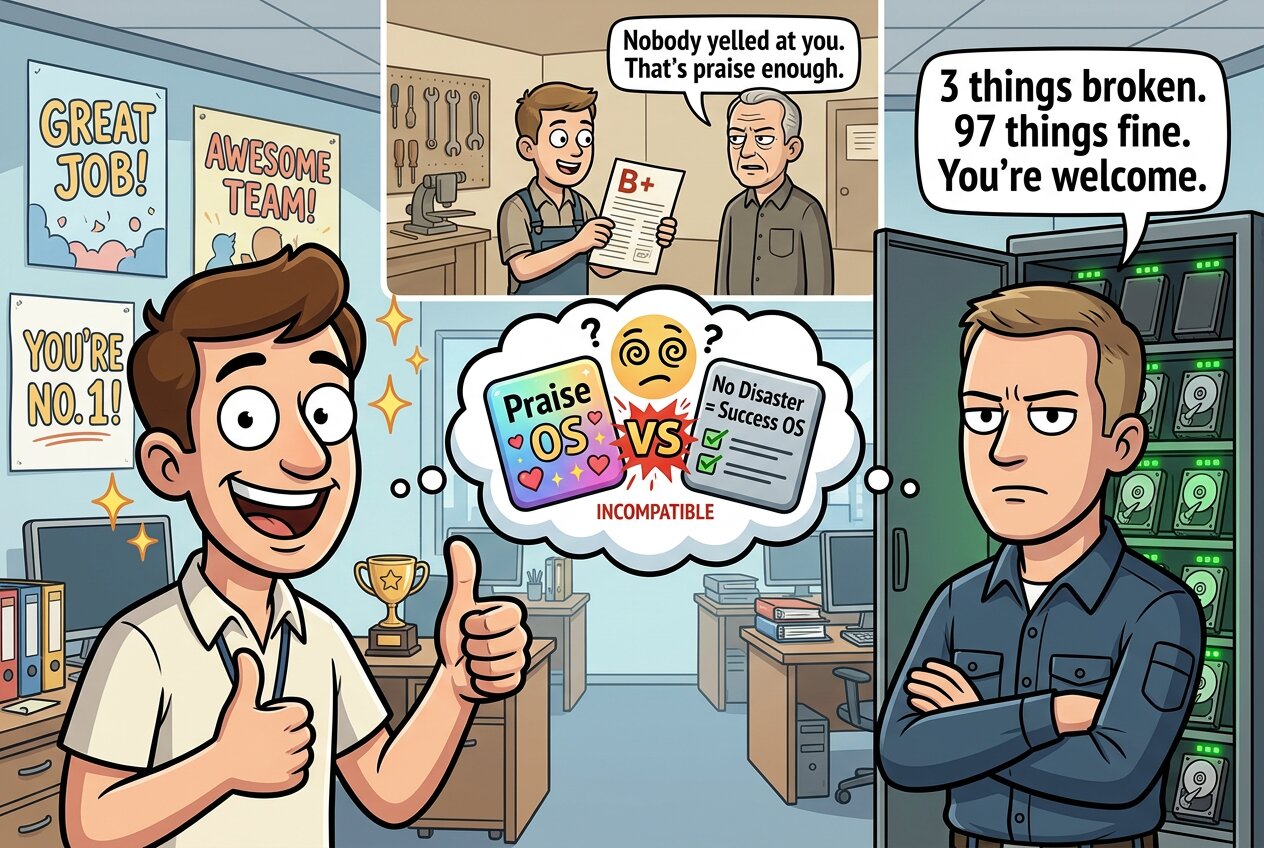
When I was 17 and still an apprentice, I once walked into the office holding a B+ from business school like a cat presenting a dead bird. Proud. Expecting a head pat.
My team lead looked at it, looked at me, and said: "Well. Nobody yelled at you. That's praise enough."
No joke. That sentence raised a generation of German professionals.
And if you've ever managed, hired, or simply tried to befriend a German colleague and walked away thinking "this person is mildly broken" - congratulations, you've met us. Let me translate.
👉 Why your German only reports bad news
Here's the operating system you need to understand: in the German mind, the good is assumed. It's the default. Things working correctly is not an event worth mentioning. Why would you celebrate a server that's up? It's supposed to be up.
So your German engineer walks into the standup and reports only the three things that are broken. To an American manager, this reads as negativity, low morale, maybe even a flight risk. To the German, it's a complete and efficient status report. The other 97 things are fine. You're welcome.
This is conflict number one, and it's a brutal one. American culture runs on positive reinforcement and "great job, team!" German culture runs on the absence of disaster. One side feels starved of praise. The other feels buried in pointless noise. Neither is wrong. They're just running incompatible firmware.
I've spent twenty years in the trenches watching two kinds of people argue about the future.
The social and political optimists say: "If we just pass the right laws, fix the culture, and get the right people in charge, everything will finally get better."
The technological optimists say: "Give humans better tools and they'll figure out the rest."
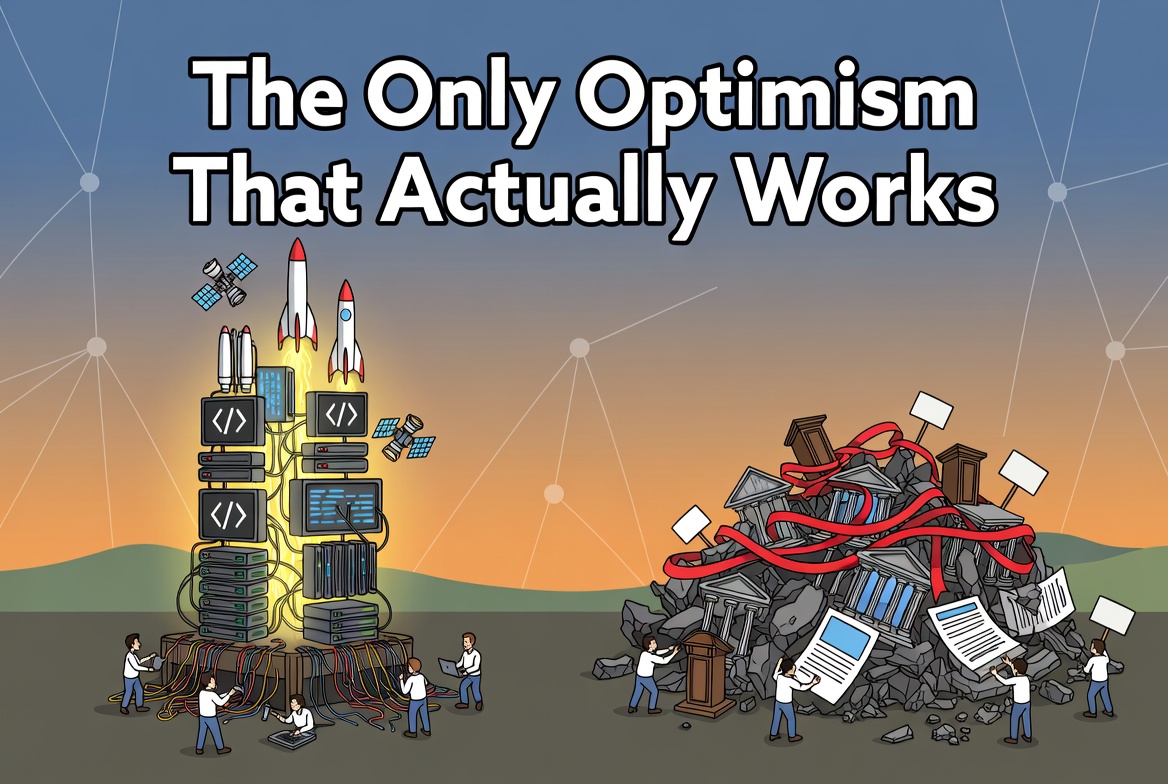
History keeps proving the second group right - and the first group spectacularly wrong.
Look at the pattern. Every decade we get grand promises about how new regulations, new social movements, or new political saviors will solve poverty, inequality, education, or healthcare. The results are usually modest at best, expensive, and sometimes actively harmful. Meanwhile, a few nerds in garages or labs quietly ship a new technology that changes daily life more in five years than ten years of policy ever could.
The smartphone didn't need a government program to connect the world. The internet didn't ask for permission to democratize knowledge. Cheap solar, Starlink, AI, and cloud computing didn't wait for the perfect political moment - they just got built.
In support, we see this every single day. We complain about broken processes, terrible CRMs, and endless bureaucracy. Social optimists would try to "fix" it with more meetings, more policies, and more mandatory training. Technological optimists ship a script, a dashboard, or an automation that actually removes the pain. Guess which one actually moves the needle?
 TrenchOps 🐎