The internet already ran this experiment. We just didn't like the results.
Do you remember dial-up? Paying per minute to access the sum of human knowledge, and using those precious minutes to download a 400x300 JPEG of a cat in a shoebox?
Then the meter went away. Flat rate. Then mobile. Then free WiFi in the average bakery. Suddenly every human on the planet had a portal to every library, every lecture, every tutorial, every trade skill ever documented. Universities put their entire curriculum online for free. MIT did it. Harvard did it. Nobody had to ask permission anymore.
And what happened?
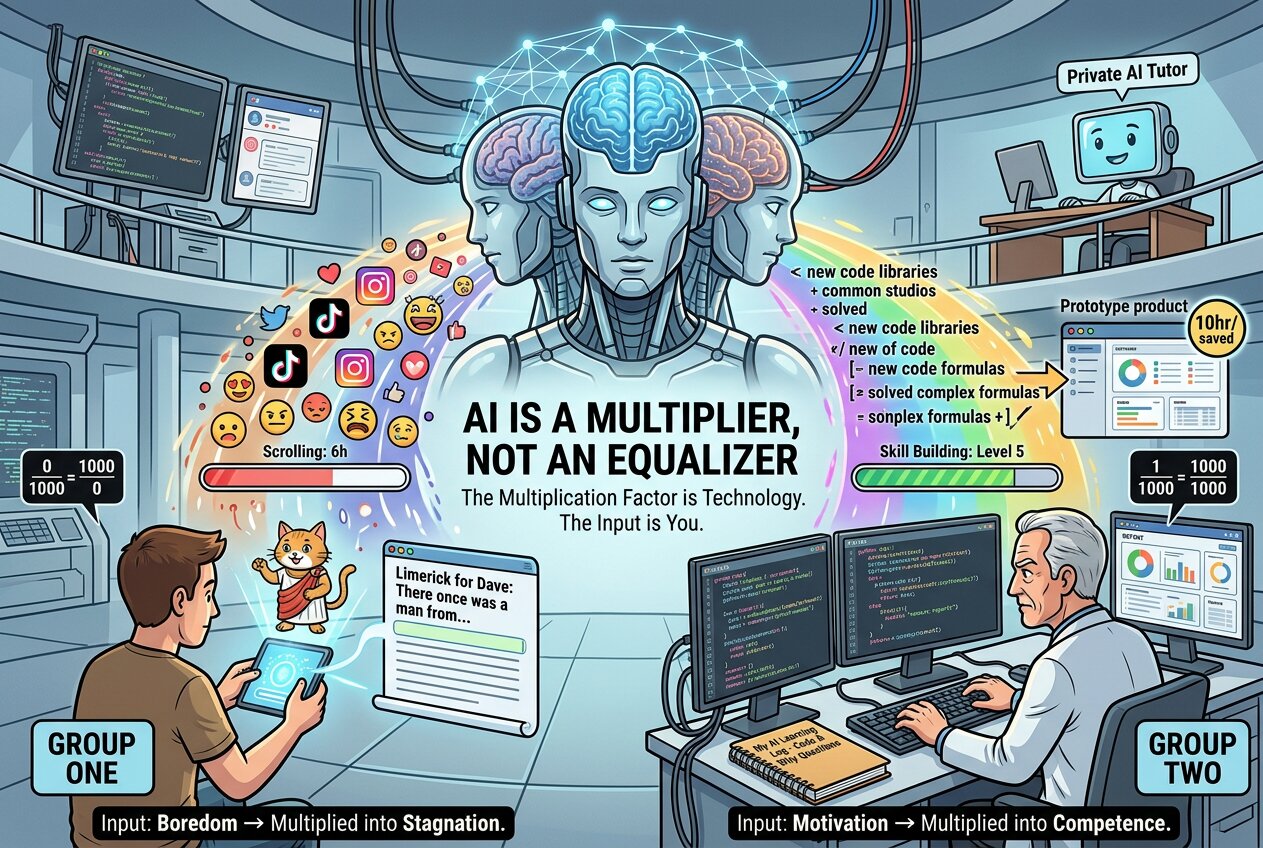
TikTok happened. Instagram happened. LinkedIn happened, which is basically Instagram for people who own a blazer. Millions of educational videos exist on YouTube, and the most watched content is people reacting to other people reacting to video games.
This is not a rant. I like cat pictures. I have watched a man restore a rusty axe for 22 minutes and felt genuine peace afterwards. The observation is colder than judgment: unlimited access to knowledge did not redistribute outcomes. The people who were competent before the internet were mostly competent after it. The people who were drifting kept drifting, just with better graphics.
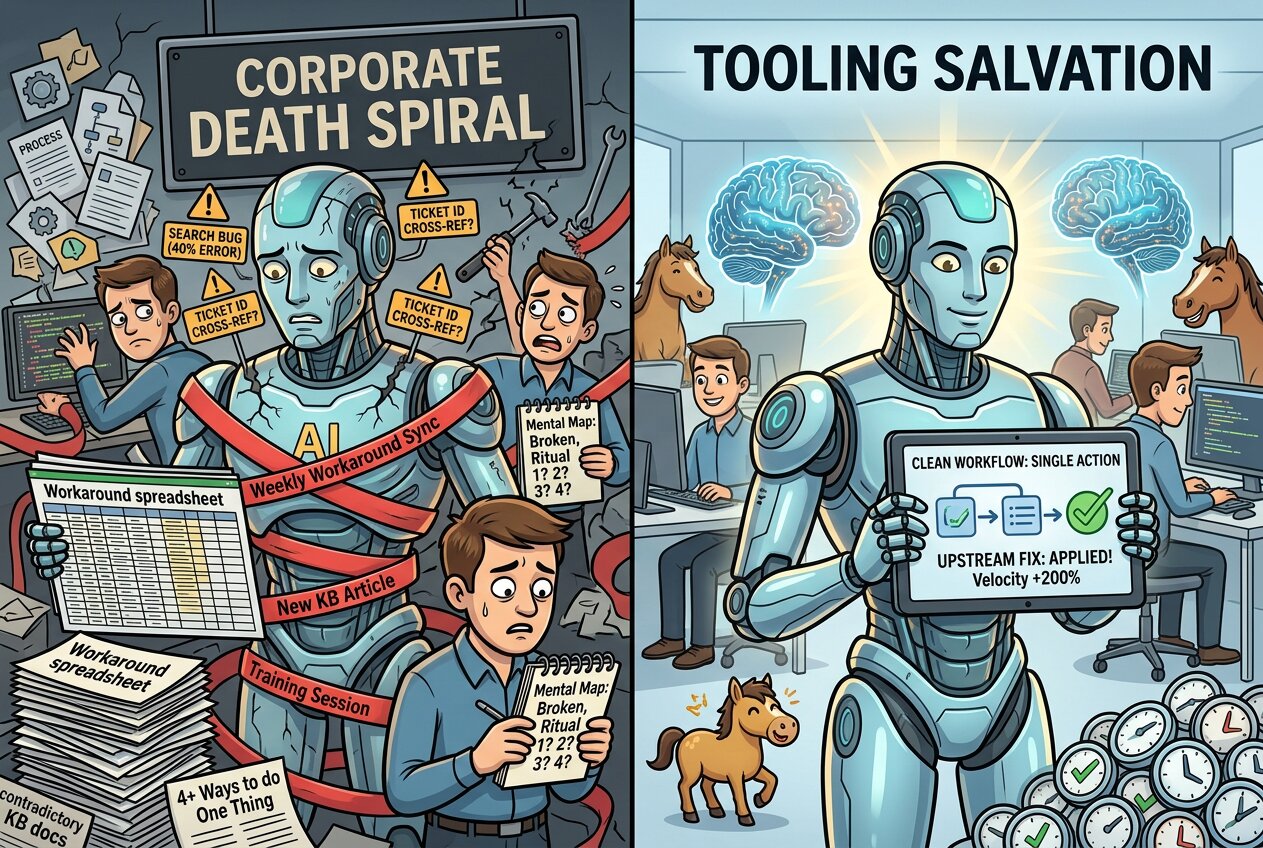
There's one unmistakable smell that tells you a company has quietly entered its death spiral. It isn't mass layoffs or missed earnings. It's the moment management looks at a genuinely broken tool, UI, script, or workflow and decides the easiest fix is... another process.
An email goes out. A new KB article appears. Someone records a TOI video. A fresh Slack channel is born. The wiki gets another page that nobody will read after next week. And just like that, the organization has chosen to compensate for bad tooling with human friction.
I watched this exact pattern play out at a mid-sized software company that, on paper, still looked healthy.
The internal escalation tool had a nasty bug in its search function. Simple queries returned incomplete results about 40 % of the time. It had been that way for months. Instead of fixing the underlying indexing issue (which the devs swore would take "only a couple of sprints"), leadership sent the classic memo: "Please use this new workaround when searching for escalations." The workaround involved three extra steps, copying ticket IDs into a separate spreadsheet, cross-referencing with another system, and then posting in a dedicated Slack channel so someone else could verify you hadn't missed anything.
Why "the teacher will notice" is not a talent strategy
The most important talent scout in the history of physics was a random customer with spare tickets.
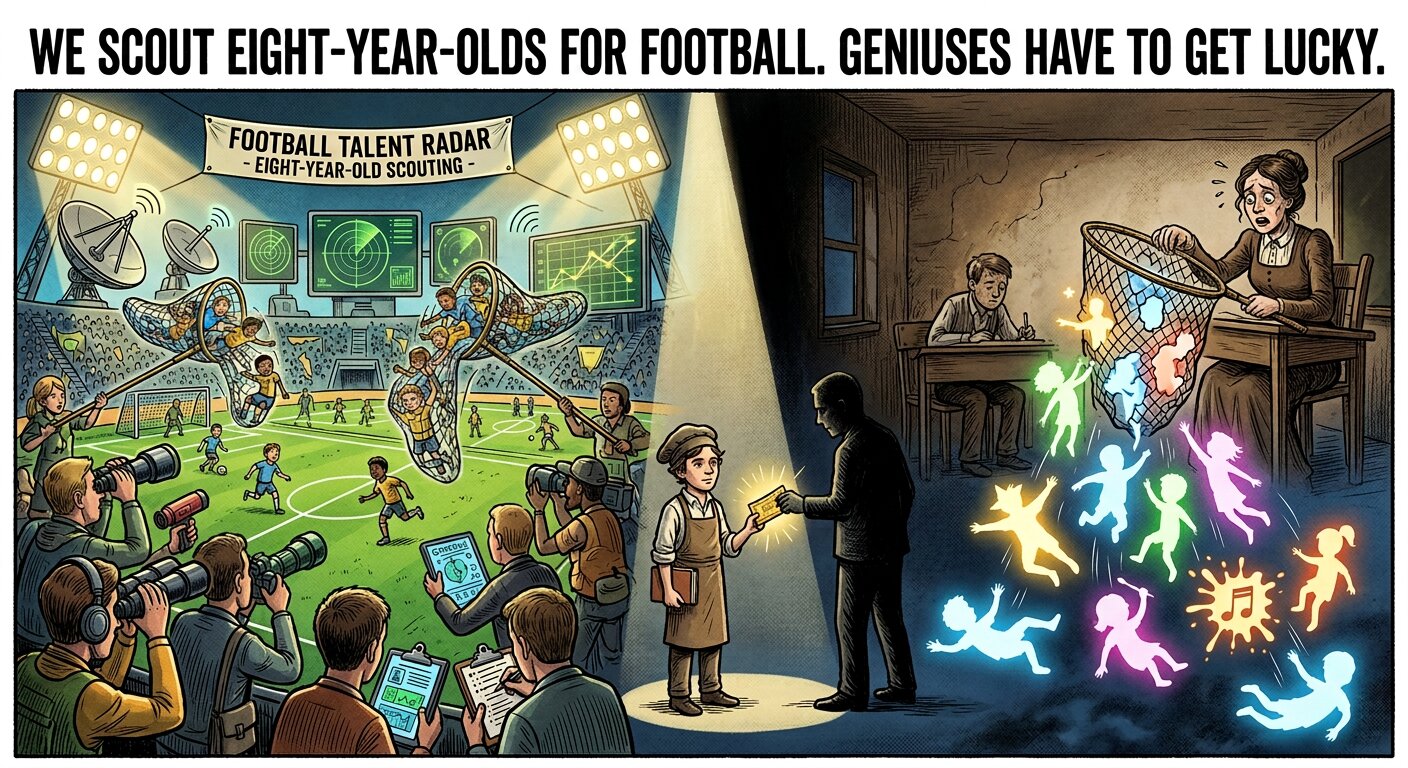
London, 1812. A blacksmith's son named Michael Faraday is apprenticed to a bookbinder. No formal education worth mentioning. But he reads what he binds, and one day a customer hands him tickets to Humphry Davy's lectures at the Royal Institution. Faraday goes, takes obsessive notes, binds them into a book - of course he does - and sends them to Davy. Davy, who has just injured his eyes in a lab explosion and needs an assistant, hires him.
The result: electromagnetic induction, the electric motor, the generator. The device you are reading this on traces back to a stranger's spare tickets.
That was the net. One man's generosity. And here is the uncomfortable part: two centuries later, the net is still mostly luck. We just added paperwork.
In most countries, the entire identification infrastructure for exceptional young minds is this: a teacher notices. One adult, 25 to 30 kids, measured on class averages and standardized test results, with exactly zero KPIs called "outliers surfaced." A system does what it is paid to do. This one is paid to move the middle of the curve. The edges are rounding errors. Goodhart's law with a school bell, if you want the technical term.
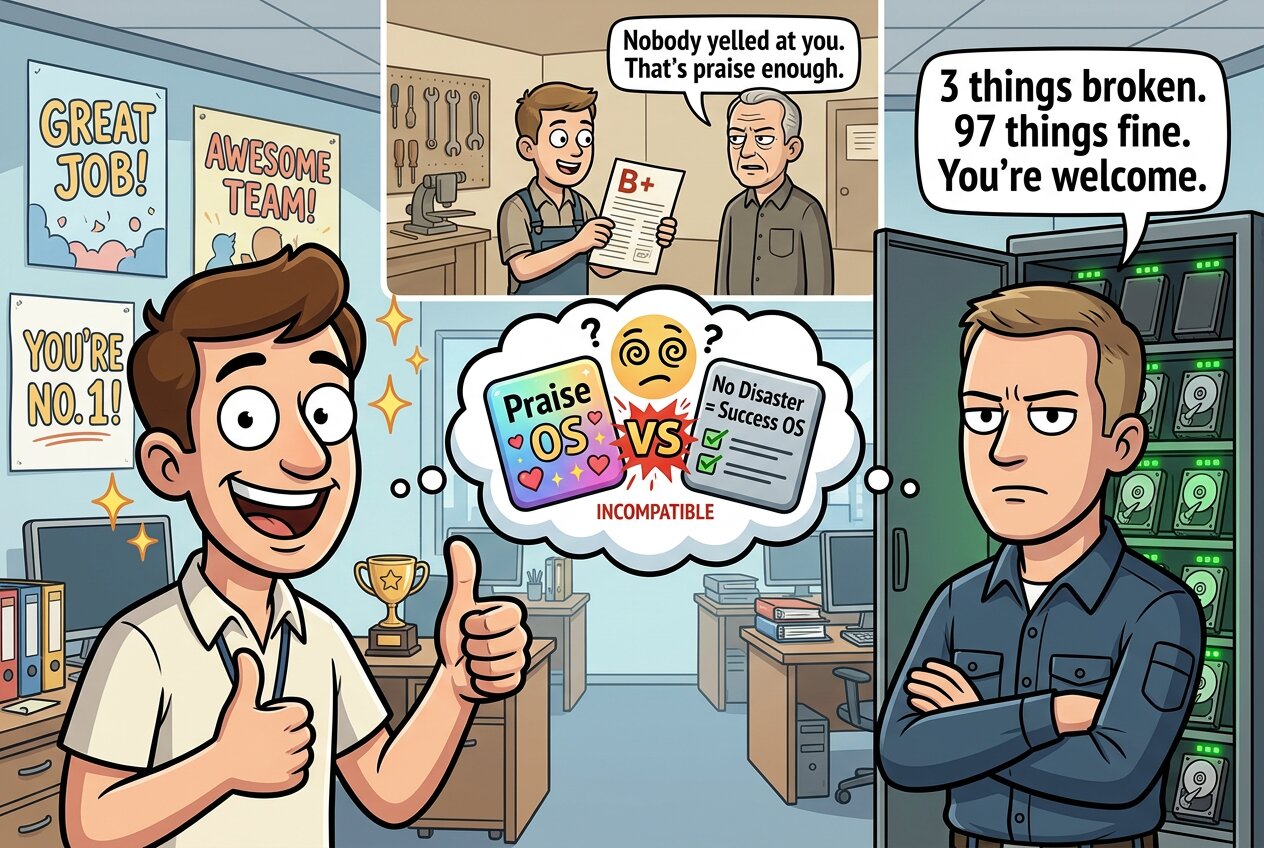
When I was 17 and still an apprentice, I once walked into the office holding a B+ from business school like a cat presenting a dead bird. Proud. Expecting a head pat.
My team lead looked at it, looked at me, and said: "Well. Nobody yelled at you. That's praise enough."
No joke. That sentence raised a generation of German professionals.
And if you've ever managed, hired, or simply tried to befriend a German colleague and walked away thinking "this person is mildly broken" - congratulations, you've met us. Let me translate.
👉 Why your German only reports bad news
Here's the operating system you need to understand: in the German mind, the good is assumed. It's the default. Things working correctly is not an event worth mentioning. Why would you celebrate a server that's up? It's supposed to be up.
So your German engineer walks into the standup and reports only the three things that are broken. To an American manager, this reads as negativity, low morale, maybe even a flight risk. To the German, it's a complete and efficient status report. The other 97 things are fine. You're welcome.
This is conflict number one, and it's a brutal one. American culture runs on positive reinforcement and "great job, team!" German culture runs on the absence of disaster. One side feels starved of praise. The other feels buried in pointless noise. Neither is wrong. They're just running incompatible firmware.
The annual self-review season rolls around again like a bad case of the corporate flu. You know the drill. The calendar invite lands with all the charm of a root canal reminder. "Reflect on your achievements." "Set SMART goals for the coming year." Meanwhile, your real goal hasn't changed since you started: collect the paycheck, keep the lights on, and maybe sneak out early on Friday before the European colleagues log off.
I've sat on both sides of that table in my time. The engineer staring at a blank form, wondering how to spin "kept production running while the business doubled the ticket volume and halved the headcount" into something that sounds humble yet heroic. And the manager on the other side, secretly praying the whole process finishes before their own review deadline. Nobody wins. Except maybe HR, who gets to file another folder of perfectly formatted theater.
One particular year stands out. Picture a solid power horse 🐎 in second-line support. This guy had spent the last twelve months single-handedly nursing a legacy system that should have been retired in 2012. He handled escalations that made senior architects sweat, documented workarounds so good the product team quietly copied them, and still found time to mentor the new hires who kept quitting for better pay. Come review time, he sits down, opens the template, and writes the honest version first: "Continued delivering under increasing load with static resources. KPI: didn't rage-quit on a Monday." Then he deletes it and replaces it with the approved corporate dialect. "Demonstrated commitment to operational excellence while embracing cross-functional synergies."
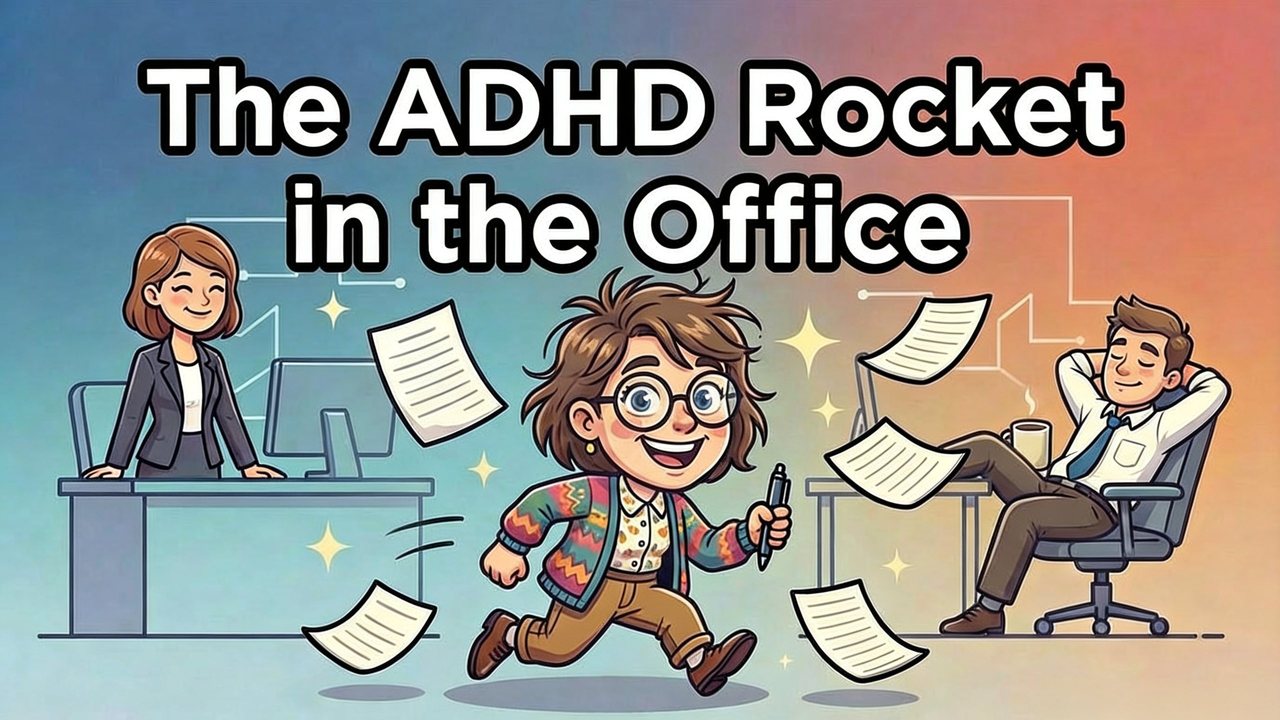
(How to Turn Restless Energy Into Rocket Fuel Instead of Chaos)
I've worked with some truly brilliant people who could come up with ten creative ideas before breakfast, pitch them with infectious enthusiasm, and then completely forget where they put their laptop by lunch.
They weren't lazy. They weren't undisciplined. They had ADHD.
And in the right environment, they were absolute rockets. In the wrong one they looked like walking natural disasters.
ADHD brains in the workplace are a bit like a high-performance sports car with no brakes and a very enthusiastic driver. When you point them at the right road (creative, varied, people-facing work), they fly. When you put them on a long, straight, repetitive highway (endless spreadsheets, monotonous tickets, same task for eight hours), they start doing donuts in the parking lot and eventually stall out.
The good news? You don't have to "fix" them. You just have to stop trying to turn a rocket into a reliable delivery van.
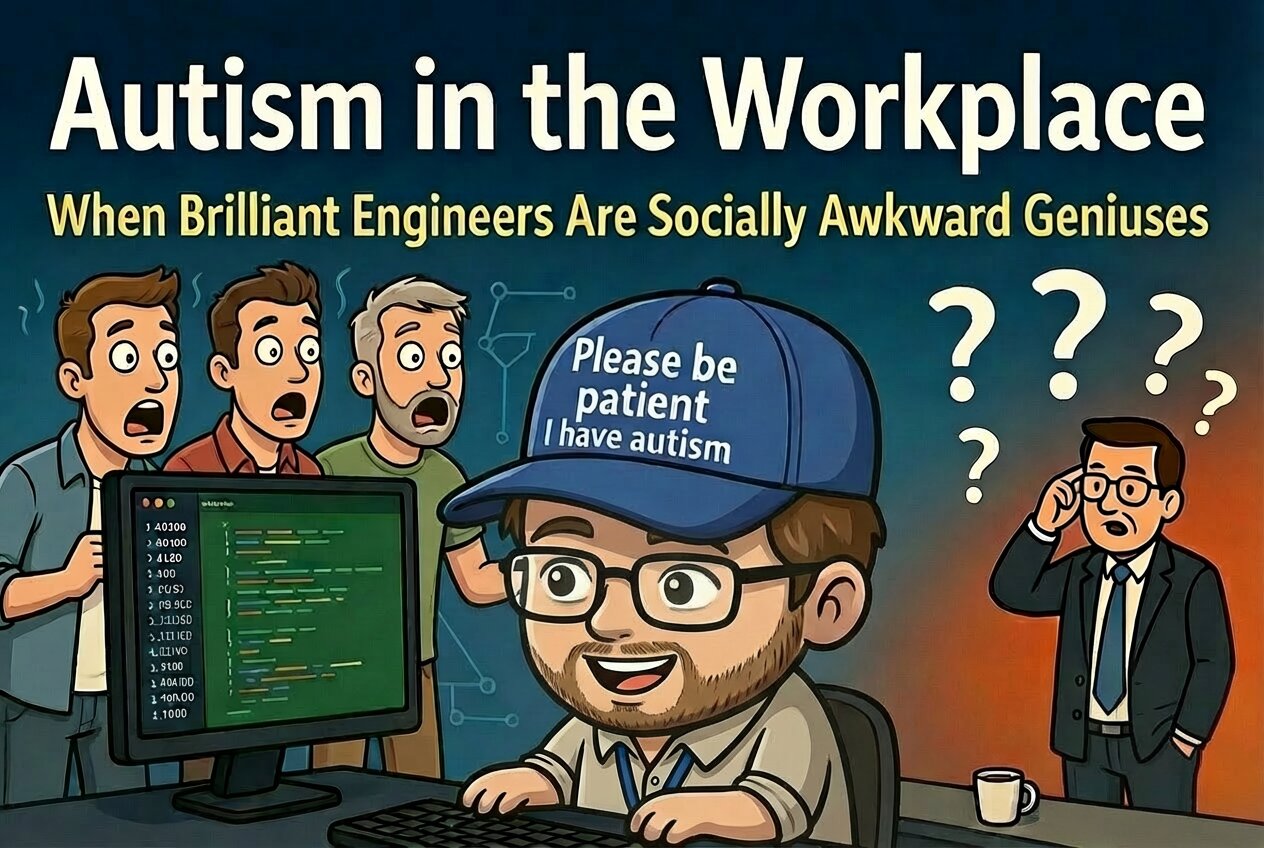
(Or: Why Your Most Valuable Engineer Sometimes Needs a 47-Page Instruction Manual for Small Talk)
I've been in tech support long enough to know that probably around 40 % of the best engineers I've ever worked with are somewhere on the spectrum.
The rest just hide it better.
We're the ones who can debug a nightmare cluster while everyone else is panicking, but we'll also spend 25 minutes in a meeting wondering if "sounds good" was sarcastic or if we're supposed to reply with an emoji. We're brilliant at systems. We're occasionally terrible at humans.
And the workplace? It's a minefield designed by extroverts who think "read the room" is helpful advice instead of a cruel joke.
Here's the honest, slightly uncomfortable truth from someone who's lived both sides of it:
The superpowers are real.
Autistic brains in support roles are absolute weapons. Pattern recognition on steroids. Hyper-focus that turns impossible tickets into solved ones. Zero tolerance for BS processes. We remember the one obscure log line from three years ago that just saved the customer's entire production environment. Companies literally profit from this wiring.
The challenges are also real.
We sometimes say things that land like a brick through a window. We miss sarcasm. We take instructions literally. We get overstimulated in open offices and need to go full hermit crab for 30 minutes just to reset. And yes - sometimes our "joke" is only funny to the three other autistic people in the building.
 TrenchOps 🐎