 TrenchOps 🐎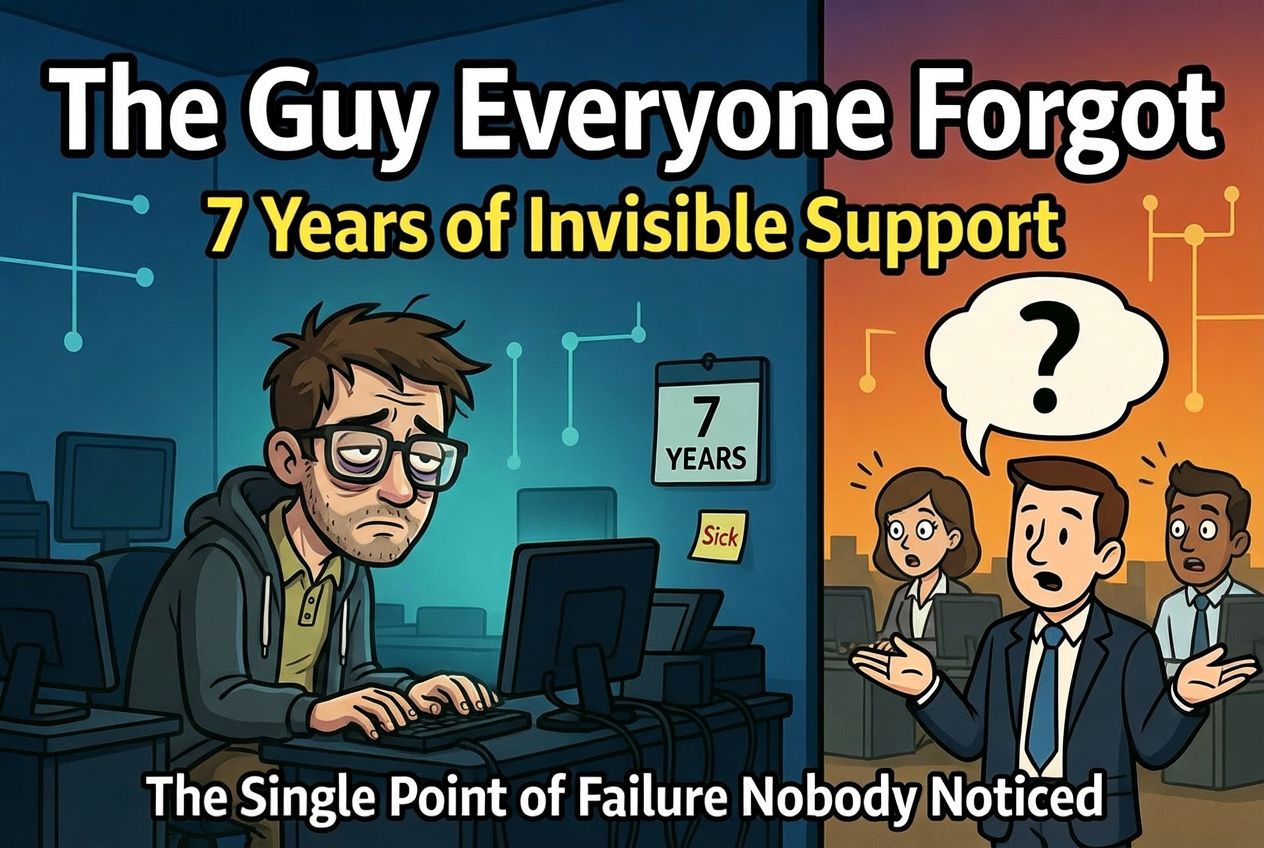
The Guy Everyone Forgot
I was still a green apprentice when the director pulled me into his office with that special "this is bad" face.
"We have a problem," he said. "One of our most important customers is completely dark. Their dedicated support engineer has been out sick for a week and... nobody else knows what he actually does."
Seven years.
For seven straight years this one guy had been the entire support relationship for a major customer. He showed up, did his thing, kept the customer happy, generated serious revenue, and quietly collected his paycheck. No one checked in. No documentation. No handoff plan. No manager who could even explain his daily work. He was invisible - until the day he wasn't.
Suddenly the customer was calling in panic. Suddenly leadership realized this one quiet engineer had become a single point of failure the size of a small country.
They threw me - the 16-year-old apprentice who still thought CRT monitors were cool - into the breach. "Go to the customer site, do what you can, buy us time until he comes back." I had no clue what I was walking into, but I went.
When the engineer finally returned, the company did the only smart thing they could: they made me his official apprentice. Not to replace him, but to make sure someone else could cover when he got sick again... or finally took a vacation, he'd apparently been negotiating directly with the customer for seven years because no internal manager even knew he existed.
That story has stayed with me ever since.
Because every company has (or had) "the guy everyone forgot." The quiet expert who owns a critical process, a legacy system, or a key customer relationship. He's not loud. He doesn't send status reports. He just keeps the lights on while everyone else assumes "it just works."
Until the day he doesn't.
The fix is boring, unglamorous, and still wildly unpopular in most places:
- Never let any single person become the only human who knows how something important actually works.
- Force knowledge transfer and documentation even when it feels unnecessary. The best time to document is while the expert is still healthy and happy.
- Build real coverage plans for your invisible experts before life forces you to improvise with an apprentice and a prayer.
- Treat these quiet power horses 🐎 with respect. They're often carrying more than anyone realizes.
Leadership loves to talk about "key person risk." In practice, they usually discover it the hard way - when the guy everyone forgot finally gets sick, retires, or just decides he's done negotiating his own vacation.
The companies that survive are the ones that stop treating their best invisible experts like background processes and start treating them like the critical infrastructure they actually are.
Because one day that infrastructure will need maintenance.
And you really don't want the only person who knows how to fix it to be out sick for seven weeks.
Ever worked with (or been) "the guy everyone forgot" - the invisible expert whose absence suddenly exposed how much actually depended on one person? Or seen a team finally fix that single-point-of-failure problem before it exploded? Drop the real stories below 👇 - the more painful or the more quietly heroic, the better. We've all had at least one of these moments.
This article is also available in German.
0 comment(s)
No comments yet. Be the first to comment.
Leave a comment